

Sustainability · 2025
In this section52 topics
- Sustainability Policy4 items
- Sustainability Goals & UN SDGs3 items
- Policy Review3 items
- Business Value Chain1 item
- Stakeholder Analysis2 items
- Environmental Sustainability — Overview1 item
- Environmental Policy & Guidelines5 items
- Environmental Policy Review3 items
- Energy — Plan & Guidelines2 items
- Energy — Electricity Consumption1 item
- Energy — Fuel Consumption1 item
- Energy — Targets2 items
- Energy — Performance & Outcomes2 items
- Water — Plan & Guidelines4 items
- Water — Withdrawal, Discharge & Consumption1 item
- Water — Targets2 items
- Water — Performance & Outcomes2 items
- Waste — Plan & Guidelines4 items
- Waste — Generation, Disposal & Recycling1 item
- Waste — Targets2 items
- Waste — Performance & Outcomes2 items
- GHG — Plan & Guidelines4 items
- GHG — Emissions1 item
- GHG — Emissions Verification4 items
- GHG — Principles & Standards1 item
- GHG — Targets1 item
- GHG Targets — Carbon Neutrality1 item
- GHG Targets — Other Targets1 item
- GHG — Performance & Outcomes2 items
- Environmental Legal Incidents1 item
- Other Environmental Management1 item
- Social Policy & Guidelines5 items
- Social Policy Review3 items
- Social — Principles & Standards Practised2 items
- Human Rights Due Diligence3 items
- Employees — Plan & Guidelines3 items
- Employees — Workforce1 item
- Employees — Remuneration & Provident Fund1 item
- Employees — Training & Development1 item
- Employees — Occupational Health & Safety1 item
- Employees — Labour Relations1 item
- Employees — Employee Representation3 items
- Employees — Targets2 items
- Employees — Performance & Outcomes2 items
- Customers — Plan & Guidelines3 items
- Customers — Satisfaction Results1 item
- Customers — Targets2 items
- Customers — Performance & Outcomes2 items
- Community & Social — Plan & Guidelines3 items
- Community & Social — Targets2 items
- Community & Social — Performance & Outcomes2 items
- Law Violation Incidents1 item
Sustainability Policy
Has a Sustainability Policy
Yes
Policy Description
The Company is committed to driving long-term sustainable growth through its mission to create balanced shared value for all stakeholders, anchored by the United Nations Sustainable Development Goals (UN SDGs 2030) as the primary framework for organizational progress. In tandem with elevating quality of life and society, project development and service delivery are conducted in accordance with corporate excellence standards that align with international environmental benchmarks, serving as a vital foundation for business conduct with partners and stakeholders across the entire value chain. Accordingly, the Company has established a Sustainable Development Policy to comprehensively address three key dimensions - Environmental, Social, and Governance & Economic (ESG) - with the ultimate objective of fostering an inclusive, high-quality society, promoting well-being, and generating lasting benefits for all individuals and stakeholders.
Environmental Dimension
The Company focuses on protecting and preserving natural resources and existing ecosystems to ensure their long-term sustainability. Priority is given to minimizing the negative environmental impacts of business operations, covering land-based, water-based, and air-based activities. Furthermore, the Company promotes the transfer and expansion of environmental conservation knowledge to all stakeholder groups. Specific goals have been established to reduce natural resource consumption through the application of innovation to maximize operational efficiency. These efforts are pursued in tandem with strengthening collaborations with strategic partners to reduce carbon emissions, aligning with national strategic goals and international agreements.
Social Dimension
The Company is committed to strict compliance with relevant laws, regulations, and international agreements, with a core focus on respecting human rights, diversity, and individual rights. Emphasis is placed on protecting labor rights and ensuring fair treatment for both S Group employees and third-party workers throughout the supply chain. The Company promotes occupational health and safety in the workplace and supports equal opportunities for professional development and career growth. Additionally, business operations are conducted with consideration for geo-social diversity, community engagement in preserving local culture, and support for job creation and local employment to enhance quality of life and build a sustainable, value-driven society for future generations.
Governance & Economic Dimension The Company is dedicated to developing a resilient business capable of adapting to global shifts through robust risk management systems and a balanced diversification of business portfolios. These operations are conducted under the principles of Good Corporate Governance and ethical business conduct, maintaining an unwavering commitment to transparency, accountability, and anti-corruption in all forms. Furthermore, the Company prioritizes sustainable supply chain management in collaboration with business partners to develop strong social and physical infrastructure. This approach leads to the creation of shared value through economic activities at both national and international levels, building stakeholder trust and driving the organization toward stable and sustainable growth.
Policy Document Link
https://investor.singhaestate.co.th/storage/document/governance/01-s-2022-sustainable-development-policy-en.pdf
Page Number in Report
1-10
Sustainability Goals & UN SDGs
Has Sustainability Goals
Yes
Goals Description
Singha Estate remains steadfast in building a strong foundation to serve as a vital engine for sustainable growth. We integrate the dimensions of Environmental, Social, and Governance & Economy (ESG) as a core component of the business strategies across all business units. Under the philosophy “A Stable Foundation Drives Sustainable Growth,” we focus on balancing economic expansion with the delivery of sustainable positive value to all stakeholder groups through project development that meets real-world needs and appropriate sustainability initiatives.
Carbon Neutrality 2030 - We aim to achieve Carbon Neutrality by 2030 through our "Climate Resilience Model." This strategy prioritizes enhancing energy efficiency, supporting the transition to renewable energy, and adopting low-carbon innovations to build resilience against climate change risks and strengthen climate change adaptation.
Nature & Biodiversity Conservation - We are dedicated to protecting and restoring Key Biodiversity Areas (KBA), with a target to cover 30% of our total project areas by 2030. By utilizing Nature-based Solutions and establishing biodiversity impact assessments as a core standard, we ensure the preservation of natural resources for future generations.
Circular Economy & Eco-Design - We drive efficient resource management toward a Zero Waste to Landfill goal. This is achieved by elevating building standards through Eco-Design principles, which emphasize "Reduction by Design," the selection of eco-friendly materials, and systematic waste management across construction sites and office buildings to foster a tangible circular economy.
Robust Governance & Stakeholder Trust - We build confidence through transparent and fair operations across the entire value chain. By adhering to Good Governance and comprehensive risk management, we foster an organizational culture of integrity and anti-corruption. This ensures the creation of Shared Value and sustainably meets the expectations of all stakeholder groups.
UN Sustainable Development Goals
| SDG Goal |
|---|
| Goal 3 Good Health and Well-being |
| Goal 4 Quality Education |
| Goal 5 Gender Equality |
| Goal 6 Clean Water and Sanitation |
| Goal 7 Affordable and Clean Energy |
| Goal 8 Decent Work and Economic Growth |
| Goal 9 Industry, Innovation and Infrastructure |
| Goal 10 Reduce Inequalities |
| Goal 11 Sustainable Cities and Communities |
| Goal 12 Responsible Consumption and Production |
| Goal 13 Climate Action |
| Goal 14 Life below Water |
| Goal 16 Peace, Justice and Strong Institutions |
| Goal 17 Partnerships for the Goals |
Policy Review
Policy Reviewed This Year
Yes
Policy Changed This Year
Yes
Review Details
In 2025, the Company reviewed, updated, and enacted various key frameworks and policies to elevate corporate governance and sustainability standards. These updates ensure alignment with the evolving social and environmental context. The revisions were endorsed by the Corporate Governance and Sustainable Development Committee and subsequently approved by the Board of Directors. The key highlights are summarized as follows:
Sustainable Development Policy - The Company has enhanced its guiding principles to comprehensively cover the creation of shared value for stakeholders in a tangible manner. The key amendments are as follows:
Social Dimension: Supporting job creation and career opportunities for underprivileged groups within the communities surrounding our operating areas. This includes sponsoring vocational training programs for the younger generation to prepare them for future employment, as well as promoting community engagement in urban renewal and development.
Environmental Dimension: Extending the scope of responsibility across the value chain by encouraging business partners and tenants to adopt and integrate environmental policies into their own operations.
Climate Change: Enhancing energy management by prioritizing an increased proportion of renewable energy usage and aligning the organization’s greenhouse gas (GHG) reduction targets with international standards.
Human Rights Policy - The policy has been updated to be more comprehensive and stringent, in alignment with international standards. Key amendments include:
Scope Expansion: The policy now applies to all operations under S Group’s management control. Additionally, the Company actively promotes and supports business partners throughout the value chain in adhering to these same standards.
Labor Rights: Emphasis is placed on providing fair compensation and benefits (Living Wage) that consider the basic cost of living. It also includes specific provisions for the health and safety of pregnant employees and strictly upholds a zero-tolerance policy against illegal labor.
Community and Customer Rights: Impact assessments regarding community human rights and consumer rights have been established as core pillars to prevent all forms of rights violations.
Whistleblowing Policy - Updated to strengthen transparent investigative mechanisms and protection for whistleblowers, with key amendments as follows:
Reporting Rights: The scope covers both internal and external individuals who witness misconduct by personnel or representatives of S Group.
Whistleblower Protection: Enhanced non-retaliation measures have been implemented to protect individuals from bullying, intimidation, or unfair treatment related to their employment.
Anonymous Reporting: The introduction of anonymity channels to ensure maximum confidence and safety for those reporting grievances.
Safety, Occupational Health, and Environmental Policy (SHE Policy) - The policy has been reviewed and updated to align with current international standards and legal requirements. It focuses on elevating workplace environment management to ensure the highest levels of health and safety for employees and all stakeholders, while fostering a sustainable, proactive safety culture within the organization.
Procurement Policy and Supplier Code of Conduct - The Company has updated its Procurement Policy to integrate Environmental, Social, and Governance (ESG) criteria while elevating the Supplier Code of Conduct to a "Corporate-level Policy" to enhance enforcement clarity and efficiency. Key revisions to the supplier selection process include intensified requirements for environmental performance and efficient resource management, as well as mandatory human rights due diligence and labor standard assessments for suppliers prior to entering contracts. These enhancements ensure that the Company’s supply chain management remains transparent, strictly prevents rights violations, and ensures no involvement in environmental degradation.
Human Resources Management Policy This newly established policy serves as a comprehensive framework for systematic, transparent, and equitable human resources management, encompassing recruitment, employment, development, performance evaluation, compensation, and benefits, while fostering a safe work environment that promotes employee well-being. The policy places a strong emphasis on two core pillars: (1) fair employment practices and non-discrimination, and (2) the prevention and management of bullying and harassment, both of which are fundamental to upholding human rights within the workplace.
Business Value Chain
Value Chain Description
Singha Estate prioritizes systematic value chain management by integrating risk management and considering Environmental, Social, and Governance (ESG) issues throughout S Group’s entire value chain. This coverage spans from pre-project development and processes during development and operation to service delivery and/or post-delivery management. The objective is to prevent and mitigate potential impacts from business activities while promoting long-term value creation for all stakeholder groups. Such management is conducted under good corporate governance guidelines in alignment with international standards, reflecting responsible and transparent business operations and the appropriate management of sustainability risks and opportunities through activities across the business process as follows:
Stakeholder Analysis
Introduction
S Group conducts its business with a profound commitment to all stakeholder groups across the entire value chain, recognizing this as the fundamental pillar of good corporate governance and sustainable value creation for both the present and the future. Accordingly, the Company emphasizes systematic stakeholder engagement, encompassing all relevant parties across every dimension of our business. This engagement is facilitated through diverse online and offline channels - including face-to-face dialogues, conferences, seminars, stakeholder forums, and comprehensive surveys - to accurately identify expectations, concerns, and potential impacts related to Environmental, Social, and Governance & Economic (ESG) dimensions. The insights and feedback gained are integral to the analysis, identification, and prioritization of material topics. Furthermore, they inform our impact assessments for each stakeholder group, risk and opportunity management, and the formulation of our sustainability strategies and operational frameworks, ensuring that we mitigate negative impacts while consistently enhancing positive contributions.
The Company regularly monitors performance and reviews the effectiveness of the stakeholder engagement process to ensure that responses to stakeholder issues and expectations are appropriate, transparent, and aligned with good corporate governance. This further enables the creation of long-term value for all stakeholders. S Group’s stakeholders consist of: (1) Executives and Employees, (2) Shareholders and Investors, (3) Customers, Residents, Tenants, and Building Users, (4) Business Partners and Service Providers (Sub-contractors/Construction Workers), (5) Creditors, (6) Communities and Society, (7) Competitors, and (8) Government Agencies and Civil Society.
Stakeholder Analysis
| Stakeholder Type | Stakeholders | Stakeholder Expectations | Response to Expectations | Communication Activities |
|---|---|---|---|---|
| Internal stakeholders | 2921 · Description: Employees | • Business direction and growth trends of S Group
• Provision of knowledge and skill development beneficial to career performance
• Fair and competitive compensation and benefits aligned with economic conditions
• Work processes, tools, and equipment that support operational efficiency
• Work-life balance
• Career path advancement and progression
• Occupational health, safety, and work environment management
| • Strictly comply with labor and social welfare laws, as well as international human rights principles.
• Cultivate a positive attitude among all employees, fostering a sense of duty, responsibility, and professional pride, as well as trust in the organization and effective teamwork.
• Instill and integrate the corporate core values, “PRIDE,” into the organizational culture through consistent practice.
• Promote equal opportunity for all employees to access training and capability development in areas relevant and beneficial to their work.
• Prioritize work-life balance by encouraging employees to complete tasks within standard working hours to minimize overtime and/or excessive working hours.
• Maintain workplace safety and hygiene while providing an optimal and appropriate working environment.
• Provide compensation and benefits that ensure an adequate quality of life, aligned with both individual performance and the Company's short-term and long-term results, and benchmarked against industry peers.
| 2941 · Description: Online Communication · 2942 · Description: Internal Meeting · 2945 · Description: Complaint Reception · 2946 · Description: Employee Engagement Survey · 2948 · Description: Training / Seminar |
| External stakeholders | 2904 · Description: Investors or investment institutions · 2913 · Description: Shareholders | • Shareholder rights
• Strong and satisfactory financial performance and returns
• Equitable, complete, accurate, transparent, and verifiable disclosure of information
• Adherence to Good Corporate Governance principles
• Disclosure of operational performance through appropriate channels
• ESG integration and strategic direction in business operations
| • Treat all shareholders and investors with strict equity and impartiality.
• Conduct business operations with a primary focus on the best interests of shareholders.
• Refrain from any actions that may lead to potential conflicts of interest.
• Prohibit the use of inside information for the personal gain of oneself or associated parties.
• Strictly maintain the confidentiality of sensitive information and prevent disclosure to unauthorized third parties.
• Recognize and respect the right of shareholders to receive comprehensive and regular updates regarding the Company's operational performance.
• Manage sustainability-related issues and ensure business decisions are made with careful consideration of ESG impacts.
| 2938 · Description: Visit · 2939 · Description: Press Release · 2941 · Description: Online Communication · 2943 · Description: External Meeting · 2944 · Description: Annual General Meeting (AGM) · 2945 · Description: Complaint Reception |
| External stakeholders | 2906 · Description: Tenants · 2923 · Description: Customers · 2924 · Description: Residents · 2936 · Other name: Building Users · Description: Others | • Provision of comprehensive and accurate information regarding products and services
• Quality products and services that demonstrate social responsibility and environmental friendliness
• Prevention of any infringement on customer privacy and personal data rights
• Efficient and reliable service delivery and after-sales support
• Opportunities for engagement, feedback, and suggestions concerning products and services
• Offering products and innovations that promote sustainability initiatives
| • Conduct business with integrity, following good corporate governance and ethics, while strictly adhering to the terms, conditions, and promises made to customers.
• Maintain strong customer relationships through high-quality, standardized services.
• Deliver products and services that offer optimal price-to-quality ratios under the "Best in Class" standard.
• Strictly safeguard customer confidentiality and prohibit the disclosure of sensitive information.
• Conduct regular satisfaction surveys among customers, residents, tenants, and building users.
• Utilize customer feedback and insights to continuously develop and improve products, services, and delivery processes.
| 2941 · Description: Online Communication · 2943 · Description: External Meeting · 2945 · Description: Complaint Reception · 2947 · Description: Satisfaction Survey · 2948 · Description: Training / Seminar |
| External stakeholders | 2899 · Description: Suppliers · 2918 · Description: Contractors · 2919 · Description: Subcontractors | • Policies and operational guidelines based on fairness and equity, coupled with clear business growth directions.
• Trust and long-term relationships fostered through the provision of accurate, clear, sufficient, and equitable information.
• Strict maintenance of business partner confidentiality.
• Occupational health and safety within labor camps, ensuring quality of life for contractors and workers.
• Promotion of mutual knowledge exchange and learning to drive long-term sustainable growth.
| • Treat all business partners with equality and impartiality.
• Maintain transparent, fair, and systematic supplier selection and procurement processes, complemented by clearly defined operational regulations.
• Adhere to ethical business frameworks, strictly prohibiting dishonest practices and the solicitation, acceptance, or payment of any undue benefits to business partners.
• Foster strong relationships with business partners and support mutual sustainable growth.
• Prioritize the creation of shared value and mutual trust.
• Strictly observe and comply with all contracts, agreements, and commercial terms.
• Safeguard the confidential information of business partners, including copyrights, patents, and other intellectual property, ensuring such data is not utilized for the personal gain of oneself or associated parties.
| 2941 · Description: Online Communication · 2943 · Description: External Meeting · 2945 · Description: Complaint Reception · 2948 · Description: Training / Seminar |
| External stakeholders | 2894 · Description: Creditor | • Complete and punctual debt repayment according to the specified schedule
• Strict compliance with the terms and conditions of relevant contracts and agreements
• Utilization of funds in accordance with the defined objectives
• Conducting business with responsibility toward Environmental, Social, and Governance (ESG) principles
| • Strictly comply with all contracts, agreements, and loan conditions, including guarantee obligations held with creditors, and ensure the punctual repayment of principal and interest.
• Manage loan utilization in strict accordance with the objectives specified in the agreements.
• Practice prudent capital management to strengthen the Company’s financial stability and debt-servicing capability.
• Proactively notify creditors in the event of an inability to fulfill contractual obligations to collaboratively determine appropriate resolutions.
• Maintain continuous ESG performance to achieve the objectives and conditions specified in Sustainability-Linked Loan (SLL) agreements.
| 2949 · Other name: Maintain regular communication and hold consistent meetings with creditors · Description: Others |
| External stakeholders | 2902 · Description: Community · 2928 · Description: Society | • Operations that do not cause negative impacts on the community and environment
• Enhancement of community and societal quality of life and well-being through local employment and procurement, community investment, and joint activities to promote overall well-being.
• Preservation and promotion of local culture and traditions
• Stewardship and conservation of the environment within the areas where the Group operates.
• Support for education and knowledge exchange within the community.
| • Recognize and uphold responsibility toward the community, society, and the environment throughout all business operations.
• Create Shared Value (CSV) between the business sector and society, while prioritizing environmental conservation.
• Promote the efficient use of resources to ensure maximum benefit and minimal waste.
• Prevent and mitigate operational impacts that may adversely affect the quality of life within communities, society, and the environment.
• Operate business in a balanced manner aligned with the United Nations Sustainable Development Goals (SDGs 2030) and relevant international frameworks, integrating these into the Company’s sustainability philosophy and policies.
| 2938 · Description: Visit · 2940 · Description: Social Event · 2941 · Description: Online Communication · 2945 · Description: Complaint Reception · 2947 · Description: Satisfaction Survey |
| External stakeholders | 2898 · Description: Competitors | • Treat competitors strictly within the framework of the law.
• Adhere to the principles of fair and honest competition.
| • Adhere to the framework of fair competition and refrain from taking unfair advantage of business competitors.
• Do not seek confidential information through dishonest or inappropriate means.
• Support and promote free and fair competition.
• Refrain from damaging the reputation of business competitors.
| 2945 · Description: Complaint Reception |
| External stakeholders | 2931 · Description: Government agencies and Regulators | • Strict compliance with laws and operational transparency
• Responsible business operations toward society, communities, and the environment
• Cooperation and participation in various initiatives and activities
| • Strictly comply with relevant laws, rules, regulations, and corporate policies, ensuring that business is conducted with integrity and transparency.
• Collaborate on various initiatives and projects initiated by government agencies and consistently support public-sector social activities.
• Maintain constructive relationships with government representatives, community leaders, and civil society organizations within operational areas.
| 2940 · Description: Social Event · 2945 · Description: Complaint Reception |
Environmental Sustainability — Overview
Operating Results — Introduction
In 2025, the Company is committed to enhancing energy management efficiency and reducing electricity consumption by increasing the proportion of renewable energy integration tailored to each business unit. To drive tangible progress, the Company has established proactive strategies to achieve Carbon Neutrality by 2030, while simultaneously upholding its commitment to biodiversity. This includes the protection, preservation, and restoration of both terrestrial and marine ecosystems through environmentally friendly business practices and the continuous implementation of projects and activities designed to foster meaningful engagement with all groups of stakeholders.
Environmental Policy & Guidelines
Has an Environmental Policy
Yes
Policy Description
The Company recognizes that each type of business has unique potential to contribute to sustainable development goals. As such, the Company has established specific environmental policies and practices tailored to each business segment, as outlined below:
Business | Key Environmental Practices |
Residential Business | Eco-friendly design, construction, and material management. Effective environmental impact management, particularly waste management during and after project completion. Collaboration with external agencies for efficient construction waste management. Increasing solar energy usage through solar panel installations in low-rise residential property projects. Preserving existing large trees. Selecting appropriate greenery for project landscapes. |
Commercial Business | Efficient management of energy and water resources in all buildings. Waste management based on the 4R principles: Rethink, Reduce, Reuse, Recycle, and waste segregation. Encouraging building users to participate in environmental conservation. Creating accessible green public spaces for all. |
Hospitality Business (only hotels under SHR Group’s management) | Protecting and restoring natural resources, maintaining ecological balance, and preserving biodiversity on land and at sea. Operating eco-friendly hotels certified to international standards (Green GlobeTM Certificate) across 6 locations (3 in Thailand and 3 in the Republic of Maldives). Efficient management of energy and water resources in all hotels. Reducing greenhouse gas emissions and utilizing clean energy where feasible. Upgrading electrical systems to energy-efficient models and increasing renewable energy usage where appropriate. |
Industrial estate and infrastructure Businesses | Utilizing advanced technology and innovations for project development while maintaining eco-friendly operations to support business and economic growth. Leveraging infrastructure strengths, including environmental management, resource efficiency, and reduced greenhouse gas emissions, to create investment opportunities and enhance customer capabilities. |
Policy Document Link
https://investor.singhaestate.co.th/storage/document/governance/01-s-2022-sustainable-development-policy-en.pdf
Page Number in Report
7-10
Environmental Guidelines
| Guideline | Other — Please Specify |
|---|---|
| Renewable/Clean Energy Management | |
| Water Management | |
| Waste Management | |
| Biodiversity Management | |
| Greenhouse Gas and Climate Change Management | |
| Air Quality Management | |
| Others | Construction Material Management |
Environmental Policy Review
Policy Reviewed This Year
Yes
Review Details
In 2025, the Company conducted a comprehensive review and amended its Environmental Policy as an integral part of the overarching Sustainable Development Policy. This strategic update aims to enhance the integration of environmental and climate change dimensions in alignment with evolving global landscapes and international sustainability standards. The core objective of this policy refinement is to elevate the Company’s operational framework, ensuring greater clarity, systematic coherence, and effective practical implementation across all business units.
Further information is available in the Sustainable Development Policy, which is disclosed on the Company’s website.

Policies & Guidelines Changed
| Change |
|---|
| Renewable/Clean Energy Management |
| Greenhouse Gas and Climate Change Management |
| Air Quality Management |
Energy — Plan & Guidelines
Has an Energy Management Plan
Yes
Plan Description
The Company has established energy reduction targets across all business units and formulated action plans to increase the proportion of renewable and eco-friendly energy sources. These initiatives are designed to replace traditional energy consumption in alignment with both short-term and long-term strategic goals, effectively supporting the organization’s greenhouse gas (GHG) emission reduction targets.
Energy — Electricity Consumption
Electricity Consumption
| Metric | Current Year | Previous Year | Two Years Ago |
|---|---|---|---|
| Total electricity consumption within the organization (Kilowatt-Hours) | 34,186,772.12 | 45,754,866.57 | 44,938,745.78 |
| Electricity purchased for consumption from non-renewable energy sources (Kilowatt-Hours) | 32,613,230.12 | 44,313,899.36 | 44,938,745.78 |
| Electricity purchased or generated for consumption from renewable energy sources (Kilowatt-Hours) | 1,573,542 | 1,440,967.21 |
Energy — Fuel Consumption
Fuel Consumption
| Metric | Current Year | Previous Year | Two Years Ago |
|---|---|---|---|
| Crude oil (Barrels) | |||
| Coal (Metric tonnes) | |||
| Jet fuel (Litres) | |||
| Diesel (Litres) | 93,597 | 105,394.51 | 87,243.76 |
| Gasoline (Litres) | 281,070.64 | 242,999.05 | |
| Fuel oil (Litres) | |||
| Natural gas (Standard cubic feet) | |||
| LPG (Kilograms) | 208,952.29 | 221,558.83 | 247,570.09 |
| Steam (Metric tonnes) |
Energy — Targets
Has Set Targets
Yes
Targets
| Target | Base Year | Target Year | Target Change (%) | Unit | Unit — Please Specify |
|---|---|---|---|---|---|
| Increase of electricity consumption from renewable energy sources | 2,023 | 2,030 | 5 | Others | % |
Energy — Performance & Outcomes
Has Performance Results
Yes
Performance Description
In the past year, S Group’s total electricity consumption amounted to 143,228.69 Gigajoules (equivalent to 39,786,066.77 kWh). Renewable energy generated from solar PV systems accounted for 4.82% of the total electricity usage, reflecting the Company’s progress in integrating clean energy into its operations.
In 2025, the Company remains committed to driving energy efficiency through the optimized control of air conditioning, wastewater treatment, and lighting systems. Key initiatives include the expanded installation of solar PV systems on car park rooftops and the implementation of an Energy Storage System (ESS) to power the lighting infrastructure within the S Angthong Industrial Estate Project. Furthermore, the hospitality business has integrated "Sensor Flow" energy management technology at SAii Lagoon Maldives to enhance air conditioning efficiency. By utilizing occupancy-based controls, the system automatically adjusts settings when guestrooms or areas are vacant, thereby eliminating unnecessary compressor operation and reducing the building's overall energy consumption. These concerted efforts directly support S Group’s overarching greenhouse gas emission reduction targets.
Water — Plan & Guidelines
Has a Water Management Plan
Yes
Plan Description
The Company has established a clear water management policy, integrated as a core component of its corporate environmental strategy, with a scope covering all operational processes and business units under its governance. To elevate water resource management standards, the Company adopts national regulations and international best practices across its organizations. Furthermore, the Company ensures maximum efficiency of its wastewater treatment systems in full compliance with regulatory standards, supported by regular water quality monitoring. Strategic plans are also in place to increase the proportion of treated wastewater recycling and reuse to minimize discharge into public water bodies and mitigate potential impacts on the surrounding ecosystem.
Plan Document Link
https://investor.singhaestate.co.th/storage/document/governance/01-s-2022-sustainable-development-policy-en.pdf
Page Number in Report
10
Water — Withdrawal, Discharge & Consumption
Water Withdrawal, Discharge & Consumption
| Metric | Current Year | Previous Year | Two Years Ago |
|---|---|---|---|
| Total water withdrawal (Cubic meters) | 4,378,537.97 | 3,019,769 | 1,263,004 |
| Total water withdrawal by third-party water (Cubic meters) | 389,018.13 | 328,460 | 483,915 |
| Total water withdrawal by surface water (Cubic meters) | 1,788,858.31 | 2,595,380 | 338,094 |
| Total water withdrawal by groundwater (Cubic meters) | |||
| Total water withdrawal by seawater (Cubic meters) | 440,995 | ||
| Total water withdrawal by produced water (Cubic meters) | 2,200,661.53 | 95,929 | |
| Percentage of wastewater treated before discharge (%) | 10.36 | 51.61 | |
| Total water discharge (Cubic meters) | 875,567.8 | 201,276 | 239,018 |
| Total water discharge to third-party water (Cubic meters) | |||
| Total water discharge to surface water (Cubic meters) | |||
| Total water discharge to groundwater (Cubic meters) | |||
| Total water discharge to seawater (Cubic meters) | |||
| Total water consumption (Cubic meters) | 3,502,970.17 | 2,818,493 | 1,023,986 |
| Recycled water (Cubic meters) | 270,163.22 | 326,394 | 227,368.6 |
Water — Targets
Has Set Targets
Yes
Targets
| Target | Target Year | Target Change (%) | Unit | Unit — Please Specify |
|---|---|---|---|---|
| Increase of recycled water for consumption | 2,030 | 100 | Other | % |
Water — Performance & Outcomes
Has Performance Results
Yes
Performance Description
S Group’s total net water consumption reached 3,502,970.17 cubic meters, representing a 24.29% increase compared to the previous year. This rise is primarily attributed to the full-scale operational commencement of the Industrial Estate and Infrastructure business, leading to higher water demand in production and services in line with business expansion.
In addition, the Company has set a strategic goal to achieve 100% water recycling and reuse of treated wastewater. Notably, in 2025, the hospitality business successfully recycled and reused 100% of its treated wastewater for on-site purposes, such as landscape and greenery maintenance. This initiative significantly reduces the withdrawal of freshwater from natural sources and minimizes discharge into public water bodies, reflecting the Company’s steadfast commitment to sustainable water conservation in partnership with local communities.
Waste — Plan & Guidelines
Has a Waste Management Plan
Yes
Plan Description
The Company prioritizes the management of waste and refuse generated throughout its business value chain, emphasizing resource efficiency, environmental impact mitigation, and strict legal compliance. To achieve this, the 4Rs principle - Rethink, Reduce, Reuse, and Recycle - has been adopted as a core operational framework. This includes redesigning processes to prevent waste at the source (Rethink), minimizing resource consumption and unnecessary waste (Reduce), promoting the beneficial reuse of materials and equipment (Reuse), and implementing effective waste segregation for recycling processes (Recycle). These initiatives aim to optimize resource utilization, reduce the volume of waste destined for disposal, and foster long-term environmentally friendly business practices.
Plan Document Link
https://investor.singhaestate.co.th/storage/document/governance/01-s-2022-sustainable-development-policy-en.pdf
Page Number in Report
8
Waste — Generation, Disposal & Recycling
Waste Generation, Disposal & Recycling
| Metric | Current Year | Previous Year | Two Years Ago | Remark |
|---|---|---|---|---|
| Total waste generated (Kilograms) | 2,043,242.07 | 3,615,715.74 | 2,697,590.05 | |
| Non-hazardous waste (Kilograms) | 2,002,877.27 | 3,615,096.94 | 2,695,643.05 | |
| Non-hazardous waste - Landfilling (Kilograms) | 795,976.07 | 3,346,256.61 | 2,453,128 | |
| Non-hazardous waste - Incineration (with energy recovery) (Kilograms) | ||||
| Non-hazardous waste - Incineration (without energy recovery) (Kilograms) | ||||
| Non-hazardous waste - Other disposal operations (Kilograms) | 1,206,901.2 | 268,840.33 | 242,515.05 | It consists of recyclable waste and organic waste that is treated through composting, as well as food waste that is repurposed as animal feed. |
| Hazardous waste (Kilograms) | 40,364.8 | 618.8 | 1,947 | |
| Hazardous waste - Landfilling (Kilograms) | 40,364.8 | 618.8 | 1,947 | |
| Hazardous waste - Incineration (with energy recovery) (Kilograms) | ||||
| Hazardous waste - Incineration (without energy recovery) (Kilograms) | ||||
| Hazardous waste - Other disposal operations (Kilograms) | ||||
| Total reused/recycled waste (Kilograms) | 510,944.46 | 268,840.33 | 242,515.05 | |
| Reused/Recycled non-hazardous waste (Kilograms) | 510,944.46 | 268,840.33 | 242,515.05 | |
| Reused non-hazardous waste (Kilograms) | ||||
| Recycled non-hazardous waste (Kilograms) | ||||
| Reused/Recycled hazardous waste (Kilograms) | ||||
| Reused hazardous waste (Kilograms) | ||||
| Recycled hazardous waste (Kilograms) |
Waste — Targets
Has Set Targets
Yes
Targets
| Waste Type | Disposal Approach | Target | Target Year | Target Change (%) | Unit |
|---|---|---|---|---|---|
| Non-hazardous waste | 2763 · Other name: Composting, Animal feed · Description: Other | Reduce waste volume | 2,030 | 10 | Tonne |
Waste — Performance & Outcomes
Has Performance Results
Yes
Performance Description
In 2025, the total waste volume across all Singha Estate Group business units reached 2,043,359.07 kilograms, representing a 42.71% decrease from the previous year. This total included 2,002,994.27 kilograms of non-hazardous waste (a 43.83% reduction), of which 510,944.46 kilograms - or 25.50% - was successfully segregated for recycling. This marks a significant improvement compared to the 8.09% recycling rate achieved in 2024. Such success is attributed to intensive internal awareness campaigns and excellent cooperation from employees, enabling the Company to significantly increase waste diverted to recycling streams. This progress reflects the effectiveness of employee engagement in resource management aligned with circular economy principles, thereby reducing waste destined for final disposal. Furthermore, the Company managed 696,689.94 kilograms of organic food waste through composting and conversion into animal feed. These value-added initiatives for organic waste minimize landfill dependency and mitigate greenhouse gas emissions from natural decomposition, serving as a tangible contribution to addressing climate change challenges.
GHG — Plan & Guidelines
Has a GHG Management Plan
Yes
Plan Description
In alignment with S Group’s commitment to achieving Carbon Neutrality by 2030, the Company has demonstrated significant progress in climate action throughout 2025. This involves the establishment of a comprehensive Decarbonization Pathway across all business units under the "Climate Resilience Model." This strategic framework focuses on enhancing operational readiness and flexibility, ensuring business continuity despite climate-related challenges. Furthermore, the Company has conducted rigorous assessments of climate-related risks and opportunities to ensure that its sustainability strategies remain fully integrated with and supportive of its long-term business objectives.
Plan Document Link
https://investor.singhaestate.co.th/storage/document/governance/01-s-2022-sustainable-development-policy-en.pdf
Page Number in Report
8-9
GHG — Emissions
GHG Emissions
| Metric | Current Year | Previous Year | Two Years Ago |
|---|---|---|---|
| Total GHG emissions (Metric tonnes of carbon dioxide equivalent) | 26,367.9 | 29,143.97 | 33,874.52 |
| Total greenhouse gas emissions 1 (Metric tonnes of carbon dioxide equivalent) | 3,349.76 | 4,023 | 4,734.59 |
| Total greenhouse gas emissions 2 (Metric tonnes of carbon dioxide equivalent) | 16,035 | 16,886.97 | 15,670.93 |
| Total greenhouse gas emissions 3 (Metric tonnes of carbon dioxide equivalent) | 6,983.14 | 8,234 | 13,469 |
GHG — Emissions Verification
Emissions Verified by a Third Party
Yes
Verifying Body
2647
Verification Document Link
https://eonemedia.setlink.set.or.th/report/0940/2025/1774395065969.pdf
Verification Web Page
https://singhaestate.co.th/th/sustainability/document
GHG — Principles & Standards
Principles & Standards Applied
| Standard |
|---|
| 2671 |
| 2672 |
GHG — Targets
Has Set GHG Targets
Yes
GHG Targets — Carbon Neutrality
Carbon Neutrality Targets
| Emission Scope | Carbon Neutrality Certified | Base Year | Base Year Emissions | Target Year | Target Change (%) | Unit |
|---|---|---|---|---|---|---|
| 2715 | N | 2,023 | 20,405.52 | 2,030 | 5 | Metric tonnes of carbon dioxide equivalent |
GHG Targets — Other Targets
Other GHG Targets
| Emission Scope | Base Year | Base Year Emissions | Near-term Target Year | Near-term Target Change (%) | Long-term Target Year | Long-term Target Change (%) | Target Year | Target Change (%) | Unit |
|---|---|---|---|---|---|---|---|---|---|
| 2715 | 2,023 | 20,405.52 | 2,030 | 5 | 2,040 | 40 | 2,030 | 5 | Metric tonnes of carbon dioxide equivalent |
GHG — Performance & Outcomes
Has Performance Results
Yes
Performance Description
Regarding the 2025 performance, S Group’s combined Scope 1 and Scope 2 greenhouse gas emissions culminated in 19,384.76 tCO2e, representing a reduction of 1,020.76 tCO2e, or 5.00%, compared to the 2023 base year (20,405.52 tCO2e). This achievement is a direct result of ongoing energy efficiency initiatives within the commercial business, including the optimized management of cooling system operational hours in office buildings and the enhanced efficiency of aeration pumps in wastewater treatment systems to align with actual usage demands.
Furthermore, when compared to S Group’s Decarbonization Pathway, which targets a reduction of at least 4% from the Business-as-Usual (BAU) baseline (not exceeding 20,782.29 tCO2e), the 2025 performance significantly outperformed expectations. S Group successfully curtailed emissions by 1,397.53 tCO2e, surpassing the BAU target by 6.72%. This success reflects the effectiveness of our strategic roadmap and prudent investment in appropriate technologies. The Company remains steadfast in driving energy reduction measures and evaluating eco-friendly investment alternatives to realize our commitment to achieving Carbon Neutrality as declared.
Environmental Legal Incidents
Legal Violation Incidents
| Metric | Current Year | Previous Year | Two Years Ago |
|---|---|---|---|
| Number of cases or incidents of legal violations or negative environmental impact (cases) | 0 | 0 | 0 |
Other Environmental Management
Plan Description
The Company has achieved significant milestones in biodiversity conservation since the announcement of its "Biodiversity Policy," which serves as a core commitment to environmental stewardship. To safeguard and preserve existing biodiversity at its most resilient state, the Company has implemented a management plan centered on the "Mitigation Hierarchy" principle, consisting of Avoidance, Minimization, Restoration, and Offsetting. Our operational framework accounts for both direct and indirect drivers of biodiversity change, encompassing goal setting, baseline data establishment, sensitivity index assessments, and the formulation of action plans, supported by continuous monitoring and evaluation.
In 2025, S Group maintained its status as a candidate for "Other Effective Area-based Conservation Measures" (OECMs) for the CROSSROADS Maldives Project. We take immense pride in being the first Thai private organization to achieve Candidate OECM status, covering an area of over 1.7 square kilometers. This achievement underscores Singha Estate’s commitment to driving sustainable growth alongside environmental preservation and social responsibility. To this end, the Company conducts in-depth longitudinal surveys to monitor marine biodiversity. Within the past year, Singha Estate’s marine scientists initiated the dolphin survey project at CROSSROADS Maldives to analyze population density, identify species, and study behavioral patterns. This data serves as a critical baseline for long-term conservation planning. The survey revealed a dolphin encounter rate of up to 86% within the project area - a key performance indicator reflecting both the abundance of natural resources and the effectiveness of our biodiversity management measures. These efforts contribute to maintaining ecological balance in a tangible, verifiable, and transparent manner.
Social Policy Review
Policy Reviewed This Year
Yes
Review Details
In the past year, the Company reviewed and enhanced its Human Rights Policy to elevate operational standards in alignment with international principles and the evolving social landscape. The key updates are as follows:
Expansion of Governance Scope: Extending policy enforcement to all entities under the Company’s operational control and encouraging business partners throughout the value chain to adopt and adhere to the same unified standards.
Elevation of Labor Rights and Welfare: Emphasizing the provision of legal compensation and benefits while considering a living wage for an adequate standard of living. The Company strictly prohibits and refrains from supporting work in environments that pose risks to health, hygiene, or safety, and maintains a rigorous policy against the employment of illegal labor.
Protection for Vulnerable Groups: Implementing specific measures dedicated to safeguarding the occupational health and safety of pregnant employees.
Stakeholder Rights Protection: Introducing new pillars focused on assessing and mitigating potential human rights impacts on local communities, as well as integrating customer rights protections as a fundamental component of the core policy.
Further information is available in the Human Rights Policy, which is disclosed on the Company’s website.

Policies & Guidelines Changed
| Change |
|---|
| Employee Rights |
| Migrant Workers |
| Consumer Rights |
| Community and Environment Rights |
Employees — Plan & Guidelines
Has an Employee Management Plan
Yes
Plan Description
Fair Employee Compensation
The Company is committed to a human resource management framework that tangibly links employee performance to compensation, thereby incentivizing the workforce to drive the organization toward success. Our core practices are as follows:
Performance Management System Aligned with Corporate Objectives
The Company defines annual performance targets through Key Performance Indicators (KPIs) system that aligns with the organization’s strategies and goals at every level, based on transparent and accountable criteria. A performance evaluation process is scheduled twice a year, emphasizing periodic follow-ups to exchange feedback between supervisors and employees (Performance Coaching). This enables employees to improve their operations and achieve the predetermined goals with efficiency.
Compensation Determination
The Company establishes a clear wage and salary structure under the principle of "Equal Pay for Equal Work." Remuneration must be appropriate, at a rate higher than the legal minimum wage or equivalent to a living wage. This includes providing other benefits and welfare that are fair, clear, and in full compliance with the law. In determining the compensation for executives and employees, the Company takes into account fairness and appropriateness relative to their roles and responsibilities, while also considering economic conditions, the Company’s performance, and the result of annual performance evaluation of each executive and employee. The wage structure is adjusted annually to stay aligned with the labor market and other companies in the same industry or with similar job natures. This is to maintain compensation at a competitive rate, in order to motivate and retain personnel who are vital to the Company’s long-term success.
Pay for Performance - Performance evaluation results are the primary factor the Company uses in determining compensation and benefits, ensuring that employees who create value and deliver outstanding performance receive appropriate and motivating rewards. These are divided into:
Annual merit increase: Determined based on individual performance evaluation results and growth potential, in order to promote career advancement.
Bonus and variable pay: Allocated according to the level of individual performance success in conjunction with S Group’s annual business performance, to incentivize the continuous creation of excellent work.
Employee Training and Development
The Company prioritizes workforce readiness to align with business strategies and the rapidly changing competitive context. This begins with manpower planning and identifying essential future skills through the analysis of critical skills and future skills, while fostering leadership and organizational agility to ensure that employees and executives can confidently handle change and uncertainty. Regarding corporate culture, the Company emphasizes embedding behaviors that reflect the PRIDE core values and creating a positive employee experience at every stage of work - from onboarding and functional development to career growth paths - to ensure employees feel engaged and contribute to the organization's success. In terms of High-Potential management and career path development, the Company has designed clear 'Talent Management and Succession Planning' systems, while developing evaluation and compensation systems to align with business directions, in order to strengthen motivation and support employees in continuously growing to their full potential.
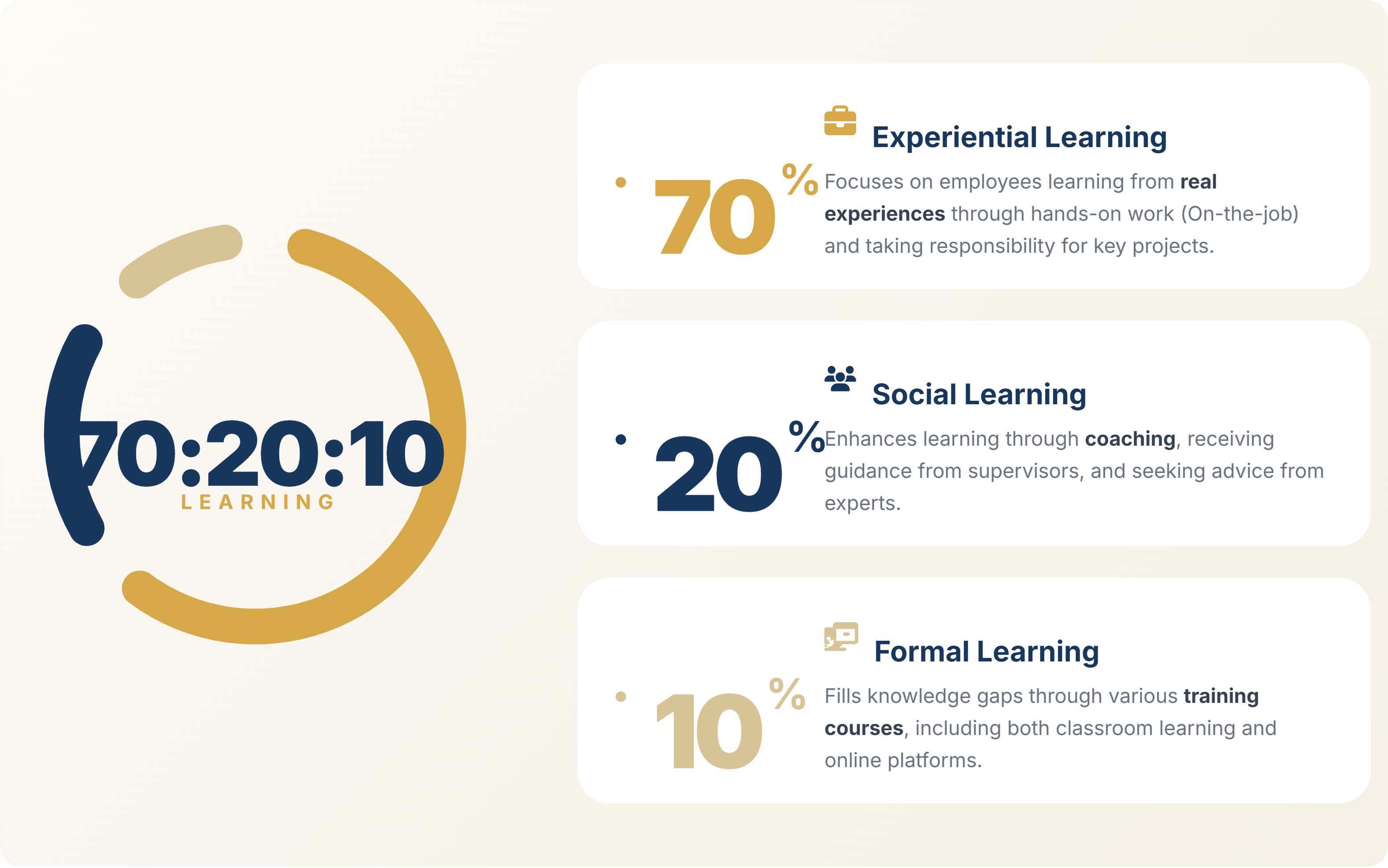
Furthermore, the Company aims to enhance employees' digital capabilities to support the increased integration of technology in the workplace, covering digital tool usage, data analytics, and fundamental AI knowledge, alongside promoting wellbeing to ensure employees are physically and mentally ready for work. All of these developments are systematically implemented through the 70:20:10 Learning Model, focusing on learning from real experience at 70% through on-the-job activities and key projects, learning through coaching and experts at 20%, and learning through various training courses at another 10%, in both classroom and online formats, to ensure that the organization's human development occurs comprehensively and sustainably.
Promoting Employee Relations and Participation
The Company is committed to building a corporate culture of engagement and trust by establishing concrete communication and listening mechanisms. This aims to enhance well-being and maintain strong relationships between employees and the organization in the long term.
Engagement Mechanisms via Employee Representation
The Company focuses on fostering a culture of engagement through the proactive efforts of the Employee Welfare Committee, which consists of employee representatives. They play a vital role in consulting with management to co-determine, monitor, and improve welfare provisions to align with the actual needs of the workforce. Meetings are held at least four times a year to ensure that all beneficial suggestions for employees are considered and tangibly implemented, establishing a foundation of trust and long-term positive relations between employees and the organization.
Two-way Communication via Digital Channels
To ensure internal communication is rapid and comprehensive, the Company has developed various digital channels to support interactive communication between the organization and its employees. These include the Line Official Account ‘HC Guru’ for human resource consultations, the internal network system (S Net) for accessing benefits information and corporate policies, and the Line group ‘S Internal Communication’ for timely news updates. These tools enable employees at all levels to access information regarding their rights and welfare accurately and quickly.
Whistleblowing Mechanisms and Employee Protection (Whistleblowing & Privacy)
The Company places the highest priority on human dignity and equal treatment, providing a confidential grievance mechanism for complaints and concerns covering human rights issues, harassment, and workplace misconduct. This operates under a fair, transparent, and accountable investigation process, supported by a stringent non-retaliation to create a truly safe work environment that respects the individual rights of every employee. Furthermore, the Company focuses on comprehensively listening to and understanding employee expectations by conducting the Employee Opinion Survey (EOS) every two years to utilize deep insights for systematic organizational development, with PRIDE Agents serving as the primary mechanism to drive change into practice.
Driven by the collective voice of our employees, the Company launched the "Butterfly Project" at the corporate level to promote the smart use of technology and innovation to mitigate and reduce work process redundancies, focusing on significantly increasing speed and agility in operations. Meanwhile, at the departmental level, the "EOS Boost-up Project" was initiated to perform a deep-dive analysis of the 2024 survey results to design development plans that meet the specific needs of each employee group. These commitments reflect the intent to create a work environment that promotes happiness at work alongside sustainably enhancing personnel productivity.
Migrant/foreign Labor and Child Labor
The Company is committed to conducting business ethically with respect for human rights in accordance with applicable domestic and international laws, encompassing stakeholders across the entire value chain. We maintain a zero-tolerance policy against supporting any form of human rights violations, which includes opposing forced labor, indentured labor, and human trafficking, as well as strictly prohibiting the employment of child labor below the legal age limit. Furthermore, the Company rigorously oversees the work environment to ensure safety and hygiene. Regarding the management of migrant labor, S Group focuses on legal employment in every area of operation and maintains a clear stance against supporting business partners or stakeholders whose operations contradict the Company’s human rights guidelines. Even in areas beyond its direct managerial control, the Company remains dedicated to monitoring, supporting, and advocating for compliance with human rights standards through appropriate governance mechanisms to foster shared responsible and sustainable business practices.
Safety and Occupational Health at Work
The Company regards safety, occupational health, and environment (SHE) as a fundamental foundation for sustainable business operations, focusing on strict compliance with laws and international standards. This is achieved through a proactive risk management process aimed at achieving zero accident and preventing work-related illnesses. The Company is also dedicated to creating a safe working environment and promoting the well-being of employees, business partners, and all stakeholder groups equitably. Furthermore, the Company prioritizes efficient resource management based on circular economy principles to reduce environmental impacts and prevent pollution from business operations in all dimensions. We foster awareness and a corporate safety culture through continuous communication and training, as well as supporting the participation of all sectors to elevate the SHE management system toward sustainable development and alignment with the vision of quality growth.
Plan Areas
| Plan Area |
|---|
| Fair employee compensation |
| Employee training and development |
| Promoting employee relations and participation |
| Migrant/foreign labor |
| Child labor |
| Occupational health and safety in workplace |
Employees — Workforce
Workforce Data
| Metric | Current Year | Previous Year | Two Years Ago |
|---|---|---|---|
| Total number of employees (Persons) | 2,938 | 3,222 | 3,174 |
| Number of male employees (Persons) | 1,841 | 1,982 | 1,998 |
| Number of female employees (Persons) | 1,097 | 1,240 | 1,176 |
| Total employment of disabled persons (people) | 6 | ||
| Total disabled employees (people) | 3 | ||
| Total male disabled employees (people) | 3 | ||
| Total female disabled employees (people) | 0 | ||
| Total disabled workers who are non-employee (people) | 3 | ||
| Contributions to the fund for promoting and improving the quality of life for disabled persons | 1 | 1 | |
| Total number of male employees in operational level (Persons) | 1,648 | 1,775 | 1,769 |
| Total number of male employees in management level (Persons) | 168 | 179 | 199 |
| Total number of male employees in executive level (Persons) | 25 | 28 | 30 |
| Total number of female employees in operational level (Persons) | 988 | 1,126 | 1,051 |
| Total number of female employees in management level (Persons) | 95 | 97 | 102 |
| Total number of female employees in executive level (Persons) | 14 | 17 | 23 |
Employees — Remuneration & Provident Fund
Remuneration & Provident Fund
| Metric | Current Year | Previous Year | Two Years Ago |
|---|---|---|---|
| Total disabled employees (people) | 2,298,856,428 | 2,319,026,048 | 2,188,789,869 |
| Total male employee remuneration (Baht) | 1,418,392,815 | 1,510,421,472 | 1,437,717,745 |
| Total female employee remuneration (Baht) | 880,463,613 | 808,604,576 | 751,072,124 |
| Number of employees eligible to participate in PVD (persons) | 1,275 | 1,320 | 1,242 |
| Total number of employees joining employee provident fund (Persons) | 990 | 953 | 944 |
| Percentage of total number of employees joining employee provident fund to total number of employees (%) | 73 | 68 | 70 |
| Number of PVD members / Total eligible employees (%) | 77.65 | 72.2 | 76.01 |
| Total amount of provident fund contributed by the Company (Baht) | 43,966,784 | 42,857,128 | 37,542,740 |
| Total amount of provident fund contributed by employee (baht) | 49,436,688 | 49,329,493 | 44,272,588 |
Employees — Training & Development
Training Data
| Metric | Current Year | Previous Year | Two Years Ago |
|---|---|---|---|
| Average employee training hours (Hours / Person / Year) | 58 | 45.77 | 42.44 |
| Employee development and training expenses (baht) | 5,462,679 | 3,450,063.54 | 8,362,941.93 |
Employees — Occupational Health & Safety
Occupational Health & Safety Data
| Metric | Current Year | Previous Year | Two Years Ago |
|---|---|---|---|
| Total number of lost time injury incidents by employees (Cases) | 1 | 0 | 3 |
Employees — Labour Relations
Labour Relations Data
| Metric | Current Year | Previous Year | Two Years Ago | Remark |
|---|---|---|---|---|
| Total voluntary resignations (Persons) | 552 | 749 | 793 | |
| Male employees who voluntary resigned (Persons) | 330 | 487 | 499 | |
| Female employees who voluntary resigned (Persons) | 222 | 262 | 294 | |
| Percentage of employee turnover leaving the Company voluntarily (%) | 18.79 | 23.25 | 24.98 | |
| Evaluation result of employee engagement | 0 | 1 | 0 | The Company conducts an Employee Opinion Survey (EOS) on a biennial basis to systematically assess employee engagement. |
Employees — Employee Representation
Introduction
Freedom of Association and Employee Engagement
The Company respects the rights of employees to associate and has established concrete mechanisms for engagement through the establishment of the Employee Welfare Committee. This committee serves as the employees' representative in expressing opinions and providing suggestions regarding welfare and well-being. The Employee Welfare Committee plays a key role in consulting with management to determine and improve welfare benefits to align with the needs of employees, while also regularly monitoring and following up on the Company's welfare operations. Furthermore, the committee has the right to propose any measures beneficial to employees to the Labour Welfare Committee as stipulated by law. The Company consistently supports the functioning of employee representatives by organizing joint meetings at least 4 times per year to maintain positive relations and foster mutual understanding between employees and the organization.
Employees Are Represented Collectively
Yes
Forms of Representation
| Form |
|---|
| Welfare committee |
Employees — Targets
Has Set Employee Targets
Yes
Targets
| Indicator | Target Areas | Target Year | Target Year — Description |
|---|---|---|---|
| Average Training Hours per Employee (Per Annum) | 2984 · Description: Employee training and development | 2,030 | Stipulated an average training requirement of 45 hours per person per year, ensuring equitable access to professional development for employees at all levels. |
| Employee Engagement Survey (EOS) score | 2985 · Description: Promoting employee relations and participation | 2,040 | Employee Engagement Survey (EOS) score exceeding 80% |
Employees — Performance & Outcomes
Has Performance Results
Yes
Performance Description
Employee Training and Development
In 2025, the Company implemented human capital management and development initiatives to support business strategies as follows:
Building Change Readiness: The Company prioritizes building readiness for change, starting from the leadership level, by communicating strategic directions and the significance of change through the Management Information Meeting (MIM). This ensures that business approaches are effectively cascaded to employees at every level. In addition to corporate-wide communication, the Company encourages deep-dive communication at the departmental level, led by senior executives of each unit, to foster shared understanding and effectively mitigate potential concerns arising from change.
To cultivate a "Change Readiness Mindset" and foster teamwork, the Company organized the "Iceberg Board Game: Readiness for Change" workshop for all employees, alongside the "Agile Project Management" course. These initiatives are designed to enhance collaborative efficiency, strengthen adaptability, and support creative problem-solving within teams. Furthermore, the Company implemented the "Butterfly Project," inspired by the Butterfly Effect concept, which focuses on improving small work processes within individual units to create positive outcomes that scale and enhance overall organizational efficiency. This project encourages employees to strategically leverage technology and innovation to eliminate redundancies and accelerate operational speed. These concerted efforts not only reflect the organization’s "Dynamic" value but also empower employees to adapt swiftly, meet business and customer needs with confidence, and serve as a vital foundation for the Company’s sustainable growth.
Core Competency Development: The Company prioritizes embedding its core values, "PRIDE" (Partnership, Refined, Integrity, Dynamic, Entrepreneurship), as the behavioral foundation and cornerstone of its corporate culture, essential for fostering sustainable organizational growth and resilience. In 2025, the Company launched the "PRIDE+ Spark Your Next" project. This strategic framework is designed to inspire employees to integrate the PRIDE values into their daily operations and drive tangible self-development, with the following key components
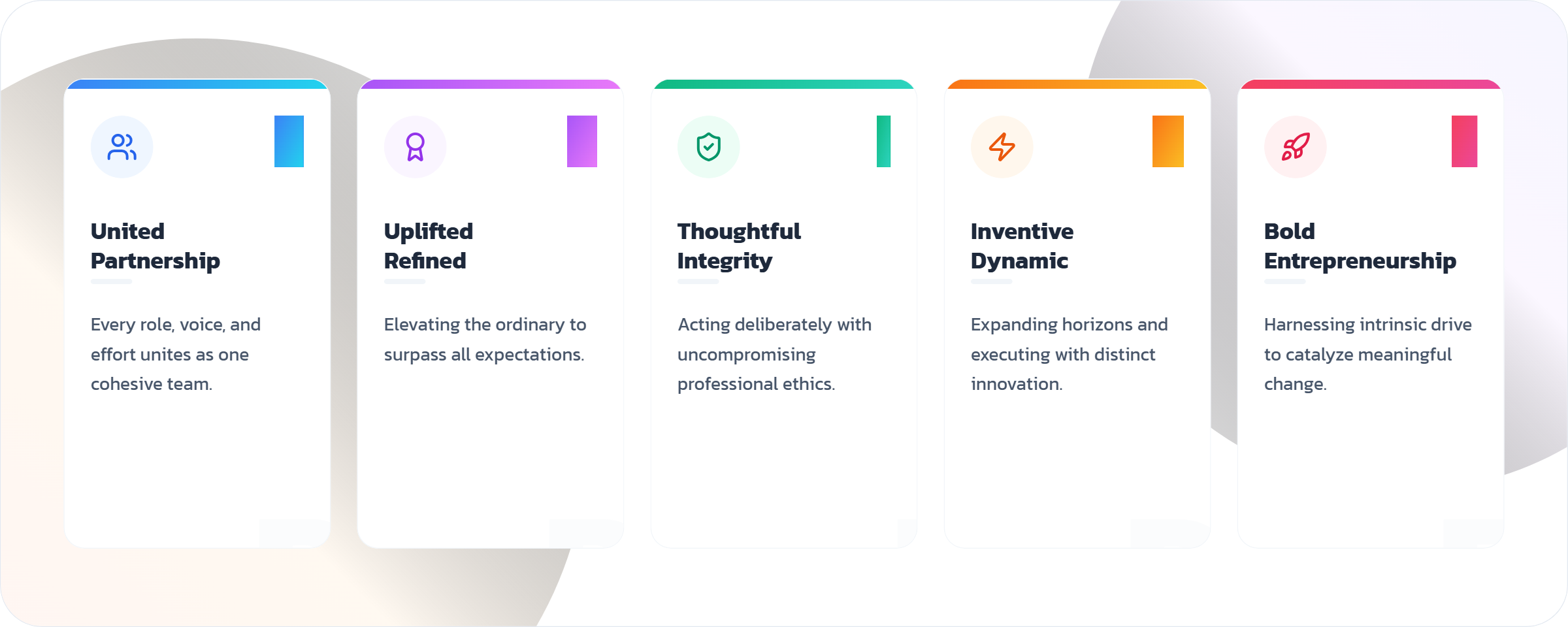
To ensure that the PRIDE values are embedded from the very first day of employment, the Company conducts the "S Onboarding Program." This comprehensive program consists of orientation (S’ Estiny), fostering inspiration and engagement through core values (S’ Perience & PRIDE Connect), and experiential learning (S’ Journey). The systematic drive of the PRIDE culture is facilitated by "PRIDE Ambassadors," who serve as role models and representatives of the Company's values, fostering and scaling the corporate culture while monitoring project progress. They work in tandem with "PRIDE Agents," who are responsible for executing activities and encouraging employees within their respective functions to demonstrate behaviors aligned with PRIDE values. Additionally, PRIDE Agents serve as effective communication channels, ensuring the seamless and efficient dissemination of company projects and initiatives to every department. The collaborative efforts of these two groups ensure that the PRIDE values are deeply rooted in the mindset, work practices, and collaboration of employees at all levels.
Competency Development for Leaders, Successors, and High-Potential Employees to Support Business Growth
3.1 Leadership Competency Development: Leaders are essential mechanisms in driving organizational success and fostering employee engagement. Consequently, the Company conducts 180-Degree Assessments to evaluate leadership and management competencies, using the results to formulate Leadership Development Plans and Individual Development Plans (IDPs). The Company also promotes learning through the 70:20:10 model, such as coaching and feedback from supervisors, cross-functional learning, and experience-sharing sessions to encourage the practical application of knowledge in the workplace.
3.2 Successor and High-Potential (High-Potential) Development: The Company prepares successors for executive and key positions through a selection process and potential development plans, in collaboration with the current management team. For the High-Potential employee group, the Company utilizes the 9-Grid Box tool to evaluate performance alongside potential, creating comprehensive learning and development plans to prepare them for future career advancement opportunities.
Digital Capability Enhancement: The Company is dedicated to advancing the digital capabilities of its workforce to ensure the effective integration of technology into business operations. This commitment encompasses digital tool proficiency, data analytics, and fundamental Artificial Intelligence (AI) knowledge. Training programs are specifically tailored to employee roles, including courses such as "Generative AI in Action," "MS Excel Macro VBA," and various digital media creation tools, all designed to enhance skill sets and operational agility. Furthermore, the Company prioritizes digital security through its "Cyber Security Awareness" program. Under the theme “Cyber Threats: Awareness, Prevention, and Safe AI Usage,” the initiative equips employees with the essential knowledge and skills to utilize technology securely and remain resilient against evolving digital risks.
Development of New Learning Channels and Lifelong Learning: Recognizing the vital importance of fostering a lifelong learning culture, the Company has developed innovative learning channels and formats that align with modern work environments. These initiatives are designed to support employees in continuously upskilling and reskilling to meet evolving professional demands. In 2025, the Company intensified its human capital development through a blended learning strategy. This included the launch of "Project S Plorer," an internal e-learning platform featuring comprehensive courses in leadership, management, and operational efficiency, providing employees with convenient and rapid access to knowledge resources. This digital approach is complemented by interactive workshops conducted in collaboration with IRIS Consulting, covering soft skills, functional skills, and well-being initiatives. These workshops cultivate a collaborative learning atmosphere and prepare employees for sustainable career growth. Furthermore, the Company organized site visits to various group projects, encouraging experiential learning while fostering organizational engagement and pride, ensuring the Company and its people grow together sustainably.
Promoting Employee Well-being: The Company recognizes that well-being is a key factor in enhancing work efficiency and employee happiness. Consequently, it has implemented the "S Vitality" project to promote work-life balance across five key dimensions: Physical, Mental, Emotional, Financial, and Social. This is achieved through various life-skill enhancement activities, such as "Green Mindset Hour" for positive thinking, "Dhamma for a Better Life" for mental balance, "Bridge The Gap" to foster an understanding of diversity, and "Reverse Your Age" for preventive healthcare. Furthermore, the Company focuses on systematic financial wealth creation through the "Financial Wealth 3 Steps" framework: Wealth Creation, Wealth Protection, and Wealth Accumulation, preparing employees for a high-quality retirement. The Company also operates the "S Vitality: Office Syndrome Therapy" initiative by supporting the employment of visually impaired individuals to provide massage therapy for employees. This not only alleviates office syndrome symptoms but also reflects a supportive corporate culture and sustainable social health. In 2025, employees achieved an average of 58 training hours per person per year (exceeding the target of 30 hours). In addition to formal learning, the Company promotes development through experiential learning, such as on-the-job training, project assignments, and task assignments. We also support coaching & feedback through the Individual Development Plan (IDP), with year-end evaluations. Notably, supervisors actively implemented 274 IDPs, representing 58.41% of the total 469 development plans (Data specifically for the Company).
Promoting Employee Relations and Engagement
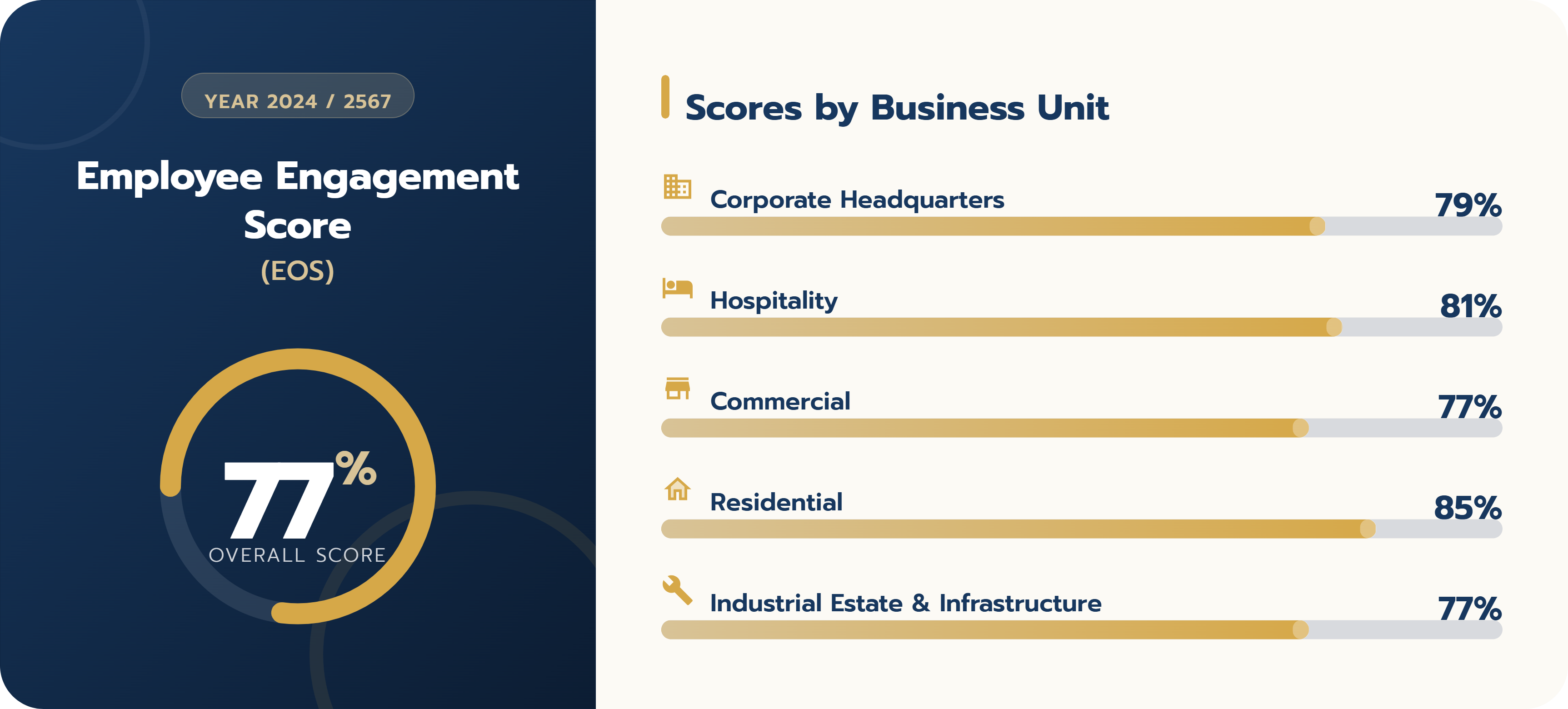
The Company conducts a biennial Employee Opinion Survey (EOS) across all business units, including the Corporate Office, Residential Real Estate, Commercial Real Estate, Hospitality, and Industrial Estate and Infrastructure. This serves as a systematic mechanism for listening to the "Employee Voice," reflecting engagement levels, satisfaction, and work environment issues as part of human resource governance under good corporate governance principles. The Company utilizes the survey results for in-depth analysis to enhance operations and develop strategic plans and measures aimed at fostering employee engagement and elevating the quality of work-life in the long term. In 2024, the Company conducted the employee opinion survey from October 15 to 25, 2024, with the results summarized as follows:
Occupational Health and SafetyTo ensure that personnel have good physical and mental health and are safe at work, the Company prioritizes the care of safety, hygiene, and the working environment through various projects, activities, communications, and regulations in 2025 as follows:
The appointment of Occupational Health, Safety, and Working Environment Committees for the Company and its subsidiaries as required by law, including the registration of safety officers at both executive and supervisory levels for the company that each safety officer belongs to. Members of the committee have fully completed the training courses according to the requirements of the Ministry of Labour.
Organized the training course “Disaster Response: How to Prepare When Disaster Strikes” for all employees to build understanding so they can handle emergency situations correctly and maintain effective business continuity.
The Company provides equipment and develops the relevant work environment, including annual work environment inspections by professional safety officers (lighting, noise, temperature) to ensure suitability for work.
There is communication regarding safety guidelines and requiring personnel to maintain cleanliness by providing knowledge on proper waste segregation and preparing equipment for waste separation in operational and communal areas to align with the Company’s environmental policy.
Basic fire-fighting training and annual fire evacuation drills.
First aid training and the use of Automated External Defibrillators (AED).
Annual health check-ups, with added lung function tests for employees at risk from their work.
Promoting activities and recreation through the football club, running cub, and music club to allow personnel to relax and get adequate exercise to take care of their health and have a proper lifestyle.
Medical benefits for ill personnel and coverage benefits for personnel who become disabled or pass away, including providing gift baskets for ill personnel or various types of financial assistance.
Prepared air purifiers for employees working at various project sites, as well as PM 2.5 masks so that employees can work hygienically.
Monthly meetings of the Occupational Health, Safety, and Working Environment Committee to improve and solve safety and hygiene issues based on complaints received, including preparing preventive measures for potential incidents.
In 2025, there was 1 workplace accident. The Company provided medical care and treatment for the affected employee until a full recovery was made. Furthermore, the Company has conducted a review of safety measures and established standards to prevent similar incidents from recurring in the future, in order to continuously elevate the work safety for all employees.
Customers — Plan & Guidelines
Has a Customer Management Plan
Yes
Plan Description
Beyond adhering to conditions, offers, or commitments made to customers, the Company focuses on creating maximum customer satisfaction by upholding the concept of developing quality work to elevate the quality of life. We emphasize meticulousness, creating 'Best in Class' standards, and differentiating ourselves through outstanding design and premium services, alongside building and maintaining positive and sustainable relationships with customers. Furthermore, the Company is committed to communicating information that is complete, accurate, and truthful, as well as conducting ethical marketing to prevent customers or the general public from being misled regarding quality, price, sales conditions, or services that exceed reality. The Company also places great importance on strictly maintaining confidential information and the right to privacy protection for customers, in accordance with the Personal Data Protection Act (PDPA).
Plan Areas
| Plan Area |
|---|
| Responsible production and services for customers |
| Communication of product and service impacts to customers/consumers |
| Development of customer satisfaction and customer relationship |
| Protection of customer personal information |
Customers — Satisfaction Results
Customer Satisfaction Results
| Metric | Current Year | Previous Year | Two Years Ago |
|---|---|---|---|
| Evaluation results of customer satisfaction | 1 | 1 | 1 |
Customers — Targets
Has Set Customer Targets
Yes
Targets
| Indicator | Target Areas | Target Year | Target Year — Description |
|---|---|---|---|
| Creating Satisfaction for Customers, Consumers, and Service Users | 3009 · Description: Development of customer satisfaction and customer relationship | 2,030 | Maintain customer, consumer, and service user satisfaction scores at no less than 90% across all business groups. |
| Protection of Personal Data of Stakeholders | 3010 · Description: Consumer data privacy and protection | 2,030 | Focus on maintaining the highest safety standards, with a goal of zero personal data breach incidents across all business groups. |
Customers — Performance & Outcomes
Has Performance Results
Yes
Performance Description
In 2025, the Company achieved average customer satisfaction scores for each business higher than 90%, consisting of:
Residential Real Estate: 95.90%
Commercial Real Estate: 94.22%
Hospitality: 93.25%
In the past year, the Company had no complaints regarding the leakage of customers' personal data.
Community & Social — Plan & Guidelines
Has a Community & Social Plan
Yes
Plan Description
The Company is committed to conducting business with social responsibility by integrating sustainability concepts into every dimension of its work processes. We focus on creating a balance between business growth and elevating the quality of life for surrounding communities through systematic management mechanisms and stakeholder engagement, transforming business spaces into areas for learning and creating mutual, sustainable well-being. Our core management guidelines are as follows:
Operating on the basis of equality: The Company is committed to management that considers all stakeholder groups with equity and equality, in accordance with human rights and corporate governance principles.
Developing real estate for society: The Company focuses on sharing public spaces as an "Urban Asset for Society," emphasizing not only economic value but also the development of spaces that benefit the society and environment surrounding its projects.
Proactive listening and impact management mechanisms: The Company provides systematic channels for listening to community feedback, along with proactive management plans to prevent impacts from construction projects, in order to create correct understanding and prevent various complaints.
Supporting infrastructure: The Company promotes real estate development projects that help elevate infrastructure for public benefit and the long-term quality of life of the community.
Promoting local economy and clture: The Company places importance on local hiring and supporting local products (Local Procurement), as well as conserving and passing on local culture for long-term sustainability.
Plan Areas
| Plan Area |
|---|
| Employment and professional skill development |
| Education |
| Religion and culture |
| Forests and natural resources |
| Occupational health, safety, health, and quality of life |
| Disadvantaged and vulnerable groups |
| Reducing inequality and promoting social equality |
Community & Social — Targets
Has Set Community & Social Targets
Yes
Targets
| Indicator | Target Areas | Target Year | Target Year — Description |
|---|---|---|---|
| Promoting the Well-being of People, Communities, and Society | 3036 · Description: Employment and professional skill development · 3037 · Description: Education | 2,030 | • Maintain a local hiring proportion of more than 60%.
• Focus on expanding opportunities for youth and the general public through the three learning centers, with a target of more than 25,000 visitors per year.
|
Community & Social — Performance & Outcomes
Has Performance Results
Yes
Performance Description
In 2025, the Company’s local hiring accounted for 62% of total employment (specifically within the hospitality business). Additionally, there were 20,664 visitors to the two Marine Discovery Centres and 10,705 visitors to the Maldives Discovery Centre, totaling 31,369 visitors. These visits were for studying sustainable development at the CROSSROADS project by local schools in the Republic of Maldives, non-governmental organizations (NGOs), and other educational institutions. Furthermore, the Company also provided a practical internship program for 25 students from various institutions, allowing them to learn and gain real work experience in appropriate positions.
Law Violation Incidents
Law Violation Incidents
| Metric | Current Year | Previous Year | Two Years Ago |
|---|---|---|---|
| The total number of cases or incidents of significant violations of laws or regulations regarding social and human rights (Cases) | 0 | 0 | 0 |
| The total number of cases or incidents that cause significant labor disputes (Cases) | 0 | 0 | 0 |
| The total number of cases or complaints related to consumer rights violations (Cases) | |||
| The total number of cases or complaints related to partner rights violations (Cases) | |||
| The total number of cases or incidents that cause disputes with the community/society (Cases) | |||
| The total number of cases or incidents related to cyber security or customer data breaches (Cases) | |||
| The total number of cases or incidents related to safety and occupational health at work (Cases) |