

Board Performance · 2025
In this section14 topics
- Prevention of Conflicts of Interest3 items
- Prevention of the Use of Inside Information3 items
- Anti-Corruption5 items
- Whistleblowing4 items
- Selection of Directors & Chief Executives7 items
- Selection of Independent Directors2 items
- Director Development1 item
- Evaluation of Board & Subcommittee Performance2 items
- Subcommittees1 item
- Meeting Attendance & Remuneration5 items
- Supervision of Subsidiaries & Associated Companies4 items
- Board Duty Performance — Overview1 item
- Audit Committee Duty Performance2 items
- Executive Committee Duty Performance1 item
Prevention of Conflicts of Interest
Has the Company Acted to Prevent Conflicts of Interest?
Yes
Operations in the Past Year
The Board of Director shall ensure that the Company commands a clear and transparent process of connected transactions and strictly complies with the criteria, methods, and disclosure of connected transactions as required by applicable laws or the regulators, the details of policy and practices on the Company’s conflict of interest supervision are as follows:
Report of conflicts of interest: To comply with the relevant notifications of the Capital Market Supervisory Board regarding the report on conflict of interest of directors, executives, and other related persons, the Board of Directors has approved the criteria for preparing report on conflict of interest of which directors and executives shall be responsible for annually reporting vested interest of them and their related persons and any changes to be reported quarterly. The Company Secretary shall be responsible for compiling and filing copies of such report to the Chairman of the Board of Directors and the Chairman of the Audit Committee for acknowledgement within 7 business days thereafter the date of receipt. The information, therefore, shall be kept for internal use only.
Consideration of entering into connected transactions and/or related party transactions : In deliberating connected transactions and/or related party transactions, the Company and subsidiaries shall comply with the relevant laws, notifications or regulations thereof. The director(s) or executive(s) with vested interests shall not be allowed to participate in the consideration process and entitled to approve the said matter. The chairman of the meeting shall request the director with vested interested to identify himself/herself and abstain from voting or leave the meeting until the end of consideration of such matter. It is the Company’s policy to engage in any transactions with connected parties and/or related parties on an arm’s length basis, namely at the market price and in the normal course of business, with primary regard for the best interests of the Company. In addition, the Board of Directors has stipulated Connected Transaction Policy as guidelines on entering into connected transaction of the Company and subsidiaries with transparency with abstention from conflict of interest, including ensuring that such transaction shall be in accordance with relevant laws. In case such connected transaction potentially to be considered as the related party transaction or transaction with related person or company prescribed under the accounting standards of Thailand Federation of Accounting Professions, the Company shall also proceed and comply with the requirements of such standards.
In this regard, to ensure that the Company’s policies and guidelines concerning the prevention of conflicts of interest are correctly and comprehensively implemented, the Company distributed the Corporate Governance Policy and Business Code of Conduct to all directors, executives, and employees. It also required all personnel to complete a compliance self-assessment and sign an acknowledgement agreeing to adhere to the Conflict of Interest Prevention policies and guidelines (which are part of the Corporate Governance Policy and Business Code of Conduct) via an electronic system. Furthermore, the Company organized seminars titled 'Anti-Corruption: Trust-Building Through Transparency' and 'ESG Risks Oversight: Key Mechanism for Strengthening Corporate Defenses' for the year 2025, specifically for directors and executives. Additionally, all executives and employees were required to participate in the ESG E-Learning course, which includes a specific module on the prevention of conflicts of interest, achieving a 100% attendance and passing rate to continuously strengthen their understanding of the Company’s relevant policies and guidelines on conflict of interest prevention. Further information is available under the section 6.3, 'Material changes and developments in policy and corporate governance system over the past year.' The Company has disclosed these conflict of interest governance guidelines under the Corporate Governance Policy and the Anti-Fraud and Anti-Corruption Policy on both the Company’s website and the corporate Intranet (S Net).
The Corporate Governance Policy

The Anti-Fraud and Anti-Corruption Policy

Number of Conflict-of-Interest Cases
| Metric | Current Year | Previous Year | Two Years Ago |
|---|---|---|---|
| Total number of cases or issues related to conflicts of interest (cases) | 0 | 0 | 0 |
Prevention of the Use of Inside Information
Has the Company Acted to Prevent the Use of Inside Information?
Yes
Operations in the Past Year
The Board of Directors has defined a policy on the control of the use of inside information and the transactions of the Company’s securities to foster equality and fairness among all shareholders and prevent directors, executives, employees from exploiting inside information for personal gains or unlawful gains of others. Such policy is also announced to all directors, executives and employees through various channels, i.e., annual report (Form 56-1 One Report) and its public website, whereby the Company has determined the policy and practices regarding the prevention of inside information usage, as follows:
Control of the inside information usage: All directors, executives and employees shall strictly refrain from utilizing the Company’s inside information that is material and unpublished for their own benefit or the benefit of others.
Reporting of securities holdings: Directors, executives, and auditors of the Company are obligated to report their securities holdings, including those of (1) themselves, (2) their spouses or cohabiting partners, and (3) their minor children, as well as those of legal entities in which the aforementioned individuals collectively hold more than 30% of the total voting rights and possess the largest shareholding. This reporting is conducted in compliance with the Securities and Exchange Act, notifications issued by the SEC Office, and related Capital Market Supervisory Board notifications. The preparation and submission of these reports are executed via the SEC Office’s electronic data transmission system, adhering to the following guidelines:
Filer Category | Reporting Method (Choose one option) | |
(a) Submission of a report each time a transaction involving the purchase, sale, transfer, or acquisition of securities occurs | (b) Submission of a report upon reaching a specific period or cumulative transaction value | |
| Within 7 business days from the transaction date | Submit a report upon fulfilling either of the following conditions, whichever occurs first:
This submission must be made within 3 business days from the fulfillment of the respective condition. |
| Within 3 business days from the transaction date | |
Furthermore, the Company Secretary is responsible for compiling information on the securities holdings of directors, executives, their spouses, and minor children. This compiled data is then reported to the Board of Directors at each quarterly meeting.
Policy on Securities Trading: Directors and executives entitle to trade the Company’s securities. However, to avoid conflicts of interest or the use of inside information for their own or others’ benefit, the Company seeks cooperation from directors, executives and the designated persons, including their spouses, and minors, in abstaining from purchasing, selling, transferring, or accepting transfer of the Company’s securities prior to disclosure of quarterly and year-end financial statements and operating results to the public at least 30 days and resuming trading at least 24 hours after public disclosures thereof as well as other periods the Company deemed appropriate and prior to entering into any significant transaction or investment of the Company. Moreover, the Company has stipulated that the directors, executives and employees wishing to trade the Company’s securities shall report such trade to the Board of Directors and/or the designated person by the Board of Directors at least 1 day in advance before proceeding.
The Company has established clear guidelines for monitoring compliance with its policies and practices regarding the prevention of inside information usage, including regular communication and education for directors, executives, and employees. In 2025, the Company circulated email notifications to directors, executives, and designated persons regarding the black-out periods for trading the securities of the Company and its subsidiaries prior to the disclosure of quarterly and year-end operating results of the Company. In this regard, there were no reported instances of securities trading by directors, executives, or designated persons during the restricted periods, nor were there any practices found in violation of the Company’s policies and guidelines concerning the prevention of inside information usage. In addition to these notifications, the Company further strengthened its measures to emphasize and raise awareness by providing educational materials that illustrate the methods and importance of reporting changes in securities holding, as well as the significance of preventing inside information usage, to directors, executives, and relevant persons. This is to bolster understanding and monitor to ensure that the policies and guidelines regarding the prevention of inside information usage are correctly and comprehensively implemented.
Additionally, in the same year, the Company distributed the Corporate Governance Policy and Business Code of Conduct to all directors, executives, and employees. The Company also required all personnel to complete a compliance self-assessment and sign an acknowledgement agreeing to adhere to the insider information usage policies and guidelines (which are part of the Corporate Governance Policy and Business Code of Conduct) via an electronic system. Furthermore, the Company organized seminars titled 'Anti-Corruption: Trust-Building Through Transparency' and 'ESG Risks Oversight: Key Mechanism for Strengthening Corporate Defenses' for the year 2025, specifically for directors and executives. Additionally, all executives and employees were required to participate in the ESG E-Learning course, which includes a specific module on the prevention of inside information usage, achieving a 100% attendance and passing rate to continuously strengthen their understanding of the Company’s relevant policies and guidelines regarding inside information prevention.
Further information is available in the Policy on Securities Trading of Directors, Executives, and Employees, which is disclosed on the Company’s website.

Summary of changes in securities holding of directors and executives in 2025 and 2024
(List of directors and executives as of 31 December 2025)
Directors and Executives | Number of Shares (Shares) | Increase / (Decrease) | Shareholding Proportion | |
2025 | 2024 | |||
| - - | - - | - - | - - |
| - 50,000 | - 50,000 | - - | - 0.001 |
| - - | - - | - - | - - |
| - - | - - | - - | - - |
| - - | - - | - - | - - |
| 4,000,000 - | 4,000,000 - | - - | 0.058 - |
| - - | - - | - - | - - |
| 340,728 212,500 | 340,728 212,500 | - - | 0.005 0.003 |
| 160,000 - | 160,000 - | - - | 0.002 - |
| - - | - - | - - | - - |
| - - | - - | - - | - - |
| 297,032 - | 297,032 - | - - | 0.004 - |
| - - | - - | - - | - - |
| - 16,000 | - 16,000 | - - | - 0.0002 |
Remark: As of 31 December 2025, the Company’s total number of issued and paid-up shares was 6,853,719,395 shares.
Number of Inside-Information Cases
| Metric | Current Year | Previous Year | Two Years Ago |
|---|---|---|---|
| Total number of cases or issues related to the use of inside information to seek benefits (cases) | 0 | 0 | 0 |
Anti-Corruption
Has the Company Acted on Anti-Corruption?
Yes
Operations in the Past Year
The Company is committed to a vision of driving business toward sustainable growth, recognizing that bribery and corruption are significant risks that could impede the achievement of organizational goals. Accordingly, the Board of Directors has established the Anti-Fraud and Anti-Corruption Policy to serve as a framework for directors, executives, and employees at all levels within the Company and its subsidiaries. This ensures that duties are performed with fairness, transparency, and in full compliance with the law across all jurisdictions and business units. Furthermore, the Company has integrated "Integrity" as one of its core values, incorporating it into the orientation program to instill ethical awareness in all new recruits. Our leadership serves as a practical benchmark (Tone at the Top) for these values, which are further reinforced by clear preventive measures and disciplinary actions stipulated in the employee regulations. In 2025, the Company’s key anti-corruption initiatives were as follows:
Review of anti-corruption adequacy
The Board of Directors’ Meeting No. 9/2025, held on 12 November 2025, reviewed and approved the Anti-Fraud and Anti-Corruption Policy. This review was conducted to ensure that the Company's measures remain up-to-date, robust, and in full compliance with the requirement for an annual policy review.
Participation in anti-corruption initiatives
On 30 September 2025, the Company achieved its initial certification as a member of the Thai Private Sector Collective Action Against Corruption (CAC). This milestone reflects the Company’s unwavering commitment to operating with transparency and maintaining zero tolerance for all forms of bribery and corruption. Furthermore, to ensure the concrete implementation of its anti-corruption measures, the Company has declared its stance by enforcing a 'No Gift Policy' during festive seasons, such as the New Year. This commitment has been communicated through both internal and external channels (online and offline) to ensure that all stakeholders are well-informed and compliant. Such initiatives are established to set corporate standards and safeguard the Company against activities prone to corruption risks, ensuring long-term sustainability.
In addition, the Company has published an invitation on its official website, encouraging business partners, alliances, and related companies to join the Thai Private Sector Collective Action Against Corruption (CAC) network. This serves as part of the Company’s proactive advocacy to promote collective action in tackling corruption issues.

Corruption risk assessment and Audit Committee’s review of adequacy
The Company has systematically conducted corruption risk assessments and identified anti-corruption management measures, while developing comprehensive manuals and communicating them to all personnel to ensure strict adherence. Furthermore, the Company has integrated the review of these measures into the internal audit plan. Concurrently, the Audit Committee independently reviews financial reports and internal control systems, as well as serving as one of the primary whistleblowing channels. The Committee also monitors and evaluates the adequacy of compliance with policies and procedures related to anti-corruption and anti-bribery.
Communication and training on Anti-Fraud and Anti-Corruption Policy and guidelines, and monitoring of policy compliance
Fostering a culture of integrity: The Company focuses on shaping an ethical workplace through a robust orientation process for new employees, ensuring that the core value of "Integrity" is deeply instilled from the start of their tenure. This is conducted alongside comprehensive communication of the Company’s anti-fraud and anti-corruption guidelines to mitigate risks and sustainably uphold ethical standards.
Communication of Guidelines: The Company consistently communicates key anti-fraud and anti-corruption guidelines on an annual basis. These include policies regarding the acceptance or giving of gifts, business entertainment, charitable donations, sponsorships, conflict of interest prevention, and political contributions.
Proactive Trainings: In 2025, the Company conducted intensive training sessions to enhance knowledge and understanding through seminars titled "Anti-Corruption: Trust-Building Through Transparency" and "ESG Risks Oversight: Key Mechanism for Strengthening Corporate Defenses" for directors and executives. Furthermore, the Company integrated the ESG E-Learning course, which specifically includes modules on anti-corruption and anti-bribery, into its personnel development system, achieving a 100% attendance and passing rate. Further details can be found in the section 6.3, 'Material changes and developments in policy and corporate governance system over the past year.'
Compliance Monitoring: In 2025, all directors, executives, and employees of the Company completed the annual compliance self-assessment regarding the Corporate Governance Policy, Business Code of Conduct, and Anti-Fraud and Anti-Corruption Policy via an electronic system. A 100% completion rate was achieved, with all personnel signing an acknowledgement and agreement to strictly adhere to these policies.
Further information is available in the Anti-Fraud and Anti-Corruption Policy, which is disclosed on the Company’s website.

Form of Anti-Corruption Operations
| Operation |
|---|
| Review of appropriateness in anti-corruption |
| The participation in anti-corruption projects |
| Assessment and identification of corruption risk |
| Communication and training for employees on anti-corruption policy and guidelines |
| The monitoring of the evaluation of compliance with the anti- corruption policy |
| Review of the completeness and adequacy of the process by the Audit Committee or auditor |
Number of Corruption Cases
| Metric | Current Year | Previous Year | Two Years Ago |
|---|---|---|---|
| Total number of cases or issues related to corruption (cases) | 0 | 1 | 0 |
Details of Corruption Cases
| Status | Period Type | Start of Period | End of Period | Details of the Case or Issue | Investigation Results | Corrective Actions |
|---|---|---|---|---|---|---|
| Incident no longer subject to action | Within (month/year) | 2024-05 | 2024-05 | Misconduct concerning the Business Code of Conduct and actions falling under bribery and corruption | The investigation identified violations of established policies, rules, and work regulations. | 1. Disciplinary action has been taken against the employee in accordance with relevant regulations.
2. Enhanced training and communication of relevant policies and guidelines to reinforce correct practices. |
Whistleblowing
Has the Company Implemented Whistleblowing Procedures?
Yes
Operations in the Past Year
The Company has established a Whistleblowing Policy to provide all stakeholder groups with channels to report complaints or provide leads regarding any misconduct by directors, executives, or employees. Stakeholders may submit details and supporting evidence in cases of suspicion or discovery of activities that violate laws, rules, or Company regulations, as well as infringements of stakeholder rights. Furthermore, inquiries or suggestions can be submitted to the Company through the following channels:
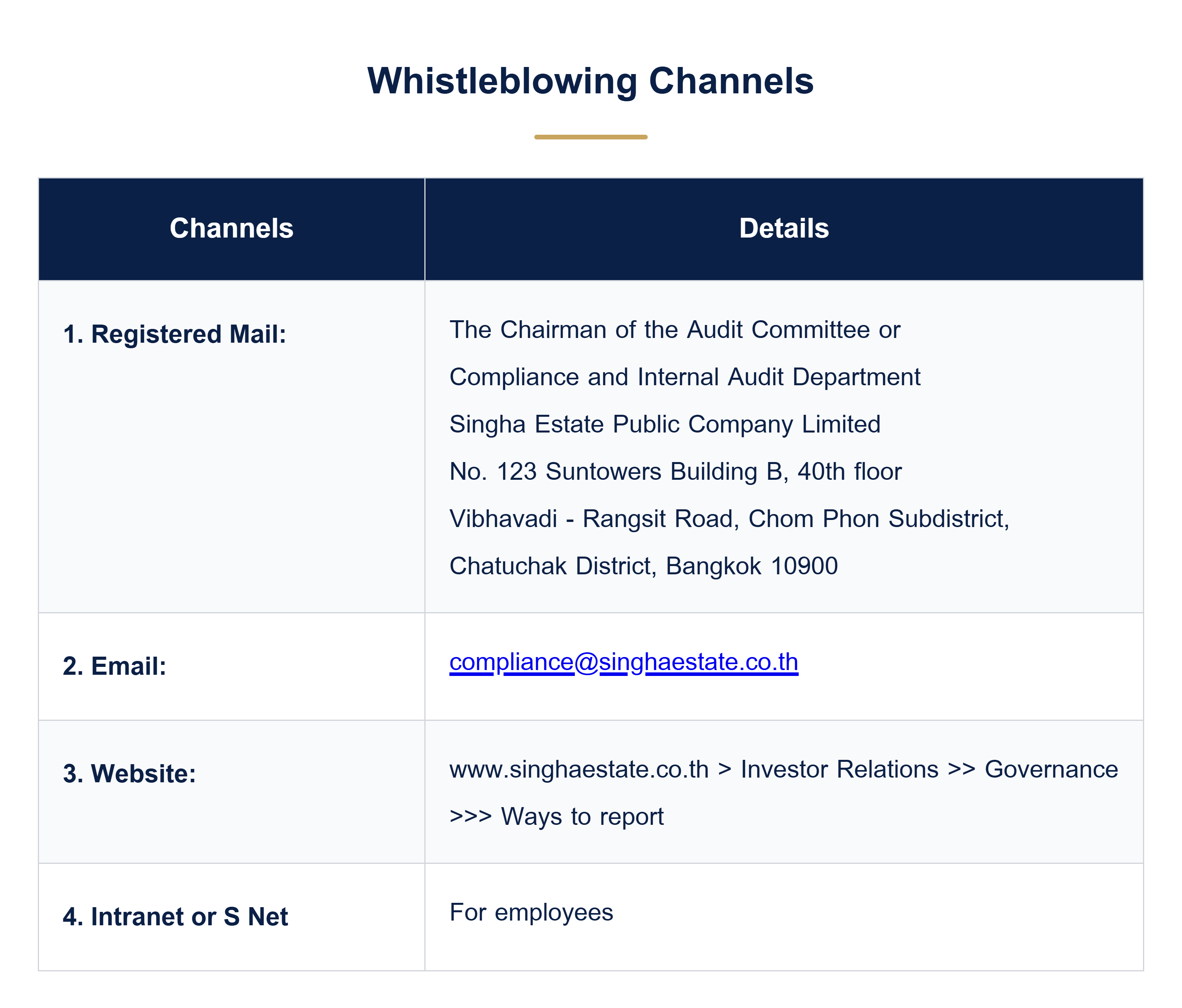
In 2025, the Company significantly elevated its corporate governance standards and human rights commitment through concrete policy advancements. At the Board of Directors’ Meeting No. 9/2025 on 12 November 2025, a resolution was passed to enhance the Whistleblowing Policy, specifically expanding the "Eligible Complainants" section to bolster human rights protection. This strategic amendment broadens the scope to allow both internal and external stakeholders to report any misconduct involving directors, executives, employees, or representatives of S Group. To ensure a safe reporting environment, the Company strictly enforces anti-retaliation measures, safeguarding whistleblowers and those cooperating with investigations from harassment, intimidation, or any form of unfair treatment. The Company accepts reports submitted both with identity disclosure and on an anonymous basis. In the case of anonymous submissions, the Company will proceed based on the clarity and sufficiency of the evidence provided. In all instances, all whistleblowers are guaranteed comprehensive protection of their rights and safety under this policy.
Furthermore, the Company has established a clear, appropriate, efficient, transparent, and fair complaint management process in accordance with international standards. Suggestions and complaints are forwarded to the relevant departments for fact-finding, clarification, correction, improvement, and summarization of results to be reported to the Board of Directors. This ensures that the Directors and Independent Directors are informed and can proceed according to the steps and timelines stipulated in the said policy. In 2025, there was one complaint found through the Company’s designated channels, which pertained to misconduct against internal human rights guidelines. The Company has already proceeded in accordance with the steps specified in the Whistleblowing Policy, as well as the Company’s rules and regulations.
Whistleblowers or complainants will receive appropriate protection, with their information kept strictly confidential and not disclosed to unauthorized persons, unless disclosure is required by law. Furthermore, to prevent the recurrence of misconduct regarding violations of the Business Code of Conduct and other policies - which may cause damage or negative impacts on S Group - the Company consistently communicates correct behavioral guidelines to executives and employees through various channels. These include internal training sessions, announcements via the corporate Intranet (S Net), and communication through online and offline channels. Furthermore, the Company monitors compliance with the Business Code of Conduct and its various policies through a self-assessment process. This allows directors, executives, and employees to evaluate their own conduct and sign an acknowledgment agreeing to adhere to all relevant policies and guidelines. In 2025, the Company also organized seminars for directors and executives titled "Anti-Corruption: Trust-Building Through Transparency" and "ESG Risks Oversight: Key Mechanism for Strengthening Corporate Defenses." Additionally, all executives and employees completed the ESG E-Learning course, which specifically includes modules on whistleblowing procedures. The program achieved a 100% completion and passing rate, ensuring a continuous and robust understanding of the Company’s whistleblowing framework. Further details can be found in the section 6.3, 'Material changes and developments in policy and corporate governance system over the past year.'
Further information is available in the Whistleblowing Policy, which is disclosed on the Company’s website.

Number of Whistleblowing Cases
| Metric | Current Year | Previous Year | Two Years Ago |
|---|---|---|---|
| Total number of cases or issues received through whistleblowing channels (cases) | 1 | 2 | 0 |
Details of Whistleblowing Cases
| Status | Period Type | Start of Period | End of Period | Details of the Case or Issue | Investigation Results | Corrective Actions | Case or Issue |
|---|---|---|---|---|---|---|---|
| Incident no longer subject to action | Within (month/year) | 2024-05 | 2024-05 | Misconduct concerning the Business Code of Conduct and actions falling under bribery and corruption | The investigation identified violations of established policies, rules, and work regulations. | 1. Disciplinary action has been taken against the employee in accordance with relevant regulations.
2. Enhanced training and communication of relevant policies and guidelines to reinforce correct practices. | 3201 · Other name: Business Code of Conduct · Description: Other · 3189 · Description: Anti-corruption |
| Incident no longer subject to action | Within (month/year) | 2024-05 | 2024-05 | Misconduct concerning the Business Code of Conduct | The investigation identified violations of established policies, rules, and work regulations. | 1. Disciplinary action has been taken against the employee in accordance with relevant regulations.
2. Enhanced training and communication of relevant policies and guidelines to reinforce correct practices. | 3201 · Other name: Business Code of Conduct · Description: Other |
| Incident no longer subject to action | Within (month/year) | 2025-10 | 2025-10 | Misconduct concerning the internal human rights policy and guidelines | The investigation identified violations of established policies, rules, and work regulations. | 1. Disciplinary action has been taken against the employee in accordance with relevant regulations.
2. Enhanced training and communication of relevant policies and guidelines to reinforce correct practices. | 3197 · Description: Human rights |
Selection of Directors & Chief Executives
Directors & Chief Executives — Introduction
Nomination and appointment of directors
The Nomination and Remuneration Committee is entrusted with the duty of recruiting and selecting qualified candidates to serve as directors of the Company, and subsequently proposing such individuals to the Board of Directors for appointment or to the shareholders’ meeting for approval, in strict adherence to the Company’s Articles of Association, through the following procedures:
The Nomination and Remuneration Committee shall identify and recruit individuals possessing the requisite qualifications as prescribed by relevant laws and regulations for proposal to the Board of Directors and/or the shareholders’ meeting for directorial appointment. The recruitment process is strategically aligned with the organization’s business direction and objectives, utilizing a 'Board Skill Matrix' to evaluate essential competencies and fortify the Board of Directors’ collective expertise. This process is executed in conjunction with the promotion of board diversity, encompassing a broad spectrum of knowledge, professional capabilities, and experiences, without discrimination based on gender, age, religion, race, or national origin. To ensure the acquisition of truly distinguished experts, the Company has established diverse and inclusive recruitment channels, which include: granting shareholders the opportunity to nominate candidates in advance of the Annual General Meeting of Shareholders; considering candidates recommended by directors, executives, and reputable external parties; referencing the director pool database of the Thai Institute of Directors (IOD); and engaging in the search and screening process through professional consultancy firms. These measures are undertaken to guarantee that the organization secures personnel with the highest potential to drive sustainable business growth.
In considering the reappointment of retiring directors for another term, the Nomination and Remuneration Committee shall take into account various factors, including performance results, records of meeting attendance and participation, and contributions to the Board of Directors' activities and missions. In the case of independent directors, their continued independence shall also be specifically evaluated. Furthermore, the Board of Directors (upon the recommendation and screening of the Nomination and Remuneration Committee) may consider appointing or proposing to the shareholders' meeting the reappointment of an independent director who has served for more than nine consecutive years. Such consideration shall be based on the determination that the knowledge, experience, and expertise of said independent director remain essential and beneficial to the Company's business operations, and that the director continues to perform their duties and provide opinions with full independence.
The election or appointment of directors shall be conducted in accordance with the Company’s Articles of Association and relevant legal requirements, ensuring full transparency and clarity.
In the event that a directorship becomes vacant for reasons other than the expiration of the term of office, the Nomination and Remuneration Committee shall recruit a qualified expert possessing the requisite qualifications aligned with the Company’s business strategies and direction. Such recruitment shall consider the specific essential skills currently lacking within the Board of Directors. The Committee shall then propose the candidate to the Board of Directors for appointment to fill the vacancy at its next meeting. The person so appointed shall hold office only for the remainder of the term of the director whom they replace. Furthermore, the resolution for such appointment must be passed by a vote of not less than three-fourths of the number of remaining directors, unless the remaining term of the vacating director is less than two months, in which case the appointment to fill the vacancy shall be proposed to the shareholders’ meeting for consideration.
At the 2025 Annual General Meeting of Shareholders, which was convened on 25 April 2025, resolved to approve the election of (1) Mrs. Chananyarak Phetcharat, (2) Chayanin Debhakam, D.B.A., and (3) Mr. Vorapat Chavananikul, all 3 original directors, to return to hold the position of directors of the Company for another term, whereby Mrs. Chananyarak Phetcharat possesses the qualifications of an independent director. In addition, the Board of Directors Meeting No. 6/2025, held on 18 June 2025, resolved to approve (with the opinion and under the scrutiny of the Nomination and Remuneration Committee) for Mr. Chairath Sivapornpan to assume the position of director in replacement of the vacant position, who possesses the requisite knowledge, expertise, and professional experience to enhance the overall Board of Directors' composition and diversity, effectively addressing the skill requirements essential to the Company’s operations and strategic direction. Consequently, the Board of Directors is currently well-aligned with its board diversity targets, featuring at least one non-executive director with extensive experience directly relevant to the Company’s business.
Nomination and appointment of Chief Executive Officer
The Board of Directors has mandated the Nomination and Remuneration Committee to develop a comprehensive Chief Executive Officer (CEO) succession plan to ensure business continuity in the event of a vacancy. The Committee is responsible for establishing guidelines and procedures for identifying and evaluating potential candidates of the Chief Executive Officer, both from within the organization and externally, before presenting the final candidate to the Board of Directors for appointment. The selection criteria encompass various key aspects, including expertise in the real estate development industry and essential leadership skills for corporate management. These include strategic planning that is both adaptable and responsive to market changes , leadership and organizational management, financial and budgetary oversight, negotiation and networking skills, and the ability to leverage technology to enhance operational efficiency. The ideal candidate shall possess a strong track record, unquestionable integrity, and a forward-looking vision to drive the Company's sustainable growth and success. In addition to candidate identification, the Nomination and Remuneration Committee is responsible for regularly reviewing and updating the Chief Executive Officer succession plan, monitoring the development and performance of potential successors, and reporting its findings to the Board of Directors at least annually. Further, a robust pipeline of qualified leaders shall be regularly reviewed.
In 2025, the Board of Directors’ Meeting No. 6/2025, held on 18 June 2025, resolved to approve (with the opinion and vetting from the Nomination and Remuneration Committee) the appointment of Mr. Chairath Sivapornpan to assume the position of Chief Executive Officer, effective as of 1 July 2025.
Nomination and appointment of senior executives
The Nomination and Remuneration Committee determines the composition of the Company’s senior executives (C-Level) together with required and appropriate qualifications for the senior executives to be guidelines for recruitment. Chief Executive Officer shall follow the guidelines in recruiting and appointing a person equipped with qualifications suitable for the positions, duties, and responsibilities from those competent ones with knowledge, capability and experiences beneficial to the Company’s operation. In addition, the recruitment of the senior executives shall be in accordance with Human Capital Department’s personnel recruitment protocols.
In 2025, the Board of Directors' Meeting No. 6/2025, held on 18 June 2025, resolved to approve (with the opinion and scrutiny of the Nomination and Remuneration Committee) the appointment of Ms. Kanokwan Sriphian to assume the position of Senior Vice President (Acting) of the Finance and Accounting Department, who is the highest-ranking executive in the Finance and Accounting Department, effective as of 1 July 2025.
Executive succession plan
Furthermore, the Nomination and Remuneration Committee has assigned the Human Capital Department to formulate a succession plan for the Chief Executive Officer and senior executives, which are regarded as critical positions for organizational management. This plan explicitly identifies designated successors and includes individual development plans aimed at enhancing their potential and competencies to ensure comprehensive readiness. In instances where a position does not yet have a successor prepared for immediate assumption of duties, the Company has established a secondary-level personnel development system to ensure preparedness, alongside external recruitment plans. To guarantee that this process is executed with rigor and effectiveness, the Company has also designated successor development as one of the Key Performance Indicators (KPIs) for senior executives in 2026. These measures collectively ensure that the Company’s operations are transitioned and driven continuously, leading to sustainable growth and appropriately fostering confidence among all groups of stakeholders.
Are Directors Selected Through the Nomination Committee?
Yes
Are Chief Executives Selected Through the Nomination Committee?
Yes
Directors from Major Shareholders — Introduction
Singha Property Management Group (wholly owned by Boon Rawd Brewery Group) and Mr. Santi Bhirombhakdi’s Group were major shareholders whose aggregate shareholding was approximately 70.51% of the Company’s total issued shares (as of 30 December 2025, the book closing date), exerting de facto significant influence on the Company’s policies or business operation because of their 4 representative directors, namely Chayanin Debhakam, D.B.A., Mr. Voravud Bhirombhakdi, Mr. Nutchdhawattana Silpavittayakul, and Mr. Vorapat Chavananikul, on the ten-man board.
Number of Directors from Major Shareholders
4
Rights of Minority Shareholders on Director Appointment
Prior to the annual general meeting of shareholders each year, the Company provides an opportunity for minority shareholders to propose agenda items for the shareholders' meeting and to nominate individuals for consideration and election as directors in advance. These proposals are submitted to the Nomination and Remuneration Committee for consideration, and subsequently presented to the Board of Directors' Meeting and the Annual General Meeting of Shareholders. Minority shareholders may study the details, procedures, and conditions, as well as download the relevant forms, from the Company’s website.
In 2025, the Board of Directors provided an opportunity for shareholders to nominate qualified individuals to be considered for election as directors in advance, and granted shareholders the right to propose agenda items for inclusion in the 2025 Annual General Meeting of Shareholders, in accordance with the criteria and conditions announced on the Company’s website. For the 2025 Annual General Meeting of Shareholders, the Company invited shareholders to nominate individuals from 1 October 2024, to 31 January 2025. It appeared that no shareholder nominated any individual for consideration and election as a director at the Annual General Meeting of Shareholders whatsoever.
Method of Director Appointment
| Method |
|---|
| Method whereby each director requires approval votes more than half of the votes of attending shareholders with voting rights |
Selection of Independent Directors
Criteria for Selecting Independent Directors
The Company’s Corporate Governance Policy stipulates that the Board of Directors shall consist of independent directors numbering at least one-third of the total number of directors, and shall in no case be fewer than three persons. The Nomination and Remuneration Committee is charged with the responsibility of recruiting and selecting qualified individuals for proposal to the Board of Directors for appointment and/or to the shareholders’ meeting for approval, in accordance with the Company’s Articles of Association.
Furthermore, the Company requires that independent directors fully satisfy the criteria defined under the Company’s “Director Qualifications” and “Independent Director Qualifications,” which are more stringent than the minimum requirements prescribed by the Capital Market Supervisory Board. This is to ensure that independent directors can equitably safeguard the interests of all shareholders, remain free from any conflicts of interest, and effectively perform their duties in reviewing and providing a system of checks and balances over the Board of Directors’ administration. Moreover, they are expected to provide independent opinions on significant transactions, prioritizing the utmost benefit of the organization and its shareholders.
At present, the Board of Directors comprises five independent directors, namely Mr. Petipong Pungbun Na Ayudhya, Mr. Prasan Chuaphanich, Mr. Charamporn Jotikasthira, Assoc. Prof. Thanavath Phonvichai, Ph.D. and Mrs. Chananyarak Phetcharat.
In this regard, further details concerning the recruitment and appointment of directors, as well as the qualifications of directors and independent directors, may be found in the Corporate Governance Policy disclosed on the Company’s website.

Did Any Independent Director Have a Business or Professional Relationship?
No
Director Development
Development of Directors in the Past Year
To promote the efficiency of the Board of Directors in performing their duties, in 2025, the Company conducted orientation sessions for new directors and organized in-house training seminars for the Board of Directors and senior executives on various topics to continuously enhance the knowledge and skills essential for the performance of their duties, as follows:
Anti-Corruption and ESG Risk Oversight Seminar
On 15 January 2025, the Company organized a seminar featuring Mrs. Warunee Preadanon, a distinguished advisor on Corporate Governance, Risk Management, and ESG, who also serves as the Chairperson of the Accounting System Profession Committee at the Federation of Accounting Professions under the Royal Patronage of His Majesty the King. As the keynote speaker, she shared her expertise on two pivotal topics:
"Anti-Corruption: Trust-Building Through Transparency": This session provided an in-depth analysis of corruption statistics and global overviews, the identification of internal organizational risk points, and the potential business and legal ramifications. It further underscored the roles and responsibilities of the Board of Directors and executives in systematically overseeing anti-corruption and anti-bribery initiatives.
"ESG Risks Oversight: Key Mechanism for Strengthening Corporate Defenses": This topic focused on understanding global ESG risk trends and utilizing risk management as a vital mechanism to fortify corporate stability and drive sustainable business growth. It also emphasized the concrete and effective roles of the Board of Directors and executives in overseeing ESG-related risks.
Market Overview and Strategic Analysis SeminarOn 17 December 2025, the Company organized a seminar to broaden the business vision and enhance the strategic understanding of its leadership. The session featured distinguished experts from CBRE (Thailand) Co., Ltd., who presented a comprehensive overview and the 2026 market outlook for the real estate industry. The seminar included an in-depth competitive analysis covering the Company’s core business sectors, providing the Board of Directors and executives with critical industry insights and trends. These perspectives serve as a vital foundation for strategic direction-setting, business planning, and holistic risk assessment, thereby strengthening the Company’s competitive advantage and ensuring its resilience and sustainable growth amidst a rapidly evolving business environment.
New Director Orientation
On 20 January 2025 and 7 July 2025, the Company conducted orientation sessions for two newly appointed directors to ensure comprehensive readiness and a thorough understanding of their respective roles and responsibilities. The participants included Ms. Khaomai Tunvirachaisakul, who was appointed as an Executive Director by the Board of Directors’ Meeting No. 1/2025 on 15 January 2025, and Mr. Chairath Sivapornpan, who was appointed as a Director, Member of the Risk Management Committee, and Member of the Corporate Governance and Sustainable Development Committee by the Board of Directors’ Meeting No. 6/2025 on 18 June 2025. These orientation sessions encompassed briefings on the business overview, strategic plans, and management structure, including rules, regulations, and practices in the capacity of a director of a listed company according to relevant laws, along with the delivery of the Director’s Handbook and necessary documents, so that all directors can perform their duties in accordance with the principles of Good Corporate Governance and effectively support the operations of each sub-committee.
Evaluation of Board & Subcommittee Performance
Criteria for Evaluating Board Performance
The Board of Directors requires that a performance evaluation of the Board of Directors and sub-committees be conducted on a collective basis (as a whole), and that a performance evaluation of directors be conducted on an individual basis, annually. This serves as a framework to comprehensively verify the performance of the Board of Directors' duties and whether they have been carried out according to good practices, in order to improve the Board of Direcotors’ performance and to review the problems and obstacles that occurred during the past year. In 2025, the Company updated both sets of the 2025 performance evaluation forms for the Board of Directors and sub-committees to be more concise and convenient for the consideration of the Board of Directors and sub-committees, while still maintaining the essential substance in accordance with the principles of good corporate governance and the duties of the Board of Directors and sub-committees as stipulated in the relevant charters. The said updated evaluation forms were screened by the Nomination and Remuneration Committee’s Meeting No. 6/2025, held on 30 September 2025, and approved by the Board of Directors’ Meeting No. 9/2025, held on 12 November 2025. These evaluation forms contain content that comprehensively covers matters regarding director structure, director qualifications, roles, duties and responsibilities, meeting attendance, self-development, and the performance of other duties, with the objective to review the performance, problems, and various obstacles in the past year, in order to develop the performance of duties of the Board of Directors and sub-committees for maximum efficiency.
Evaluation of Board Performance in the Past Year
The Company has developed the Self-Assessment Forms for the Board of Directors and sub-committees in an electronic format to facilitate ease of use and enhance data management efficiency. These assessment forms are primarily based on the guidelines and recommendations of regulatory authorities, and are reviewed and updated annually to ensure appropriateness with the business nature and the structure of both the Board of Directors and sub-committees. The assessment consists of 2 sets of forms as follows:
Board of Directors and sub-committee performance evaluation (collective assessment)
Individual director performance evaluation (self-assessment)
The evaluation criteria cover key areas, including:
Structure and qualifications of the Board of Directors and sub-committees
Meeting conduct of the Board of Directors and sub-committees
Roles, responsibilities, and duties of the Board of Directors and sub-committees
Other aspects, such as independent decision-making, relationships with management, delineation of roles and responsibilities between the Board of Directors and management, and directors’ self-development.
Scoring methodology - For each evaluation criterion, scoring is based on a 5-point scale, as follows:
1 | Strongly disagree or no action taken on the matter |
2 | Disagree or minimal action taken on the matter |
3 | Agree or moderate action taken on the matter |
4 | Mostly agree or good action taken on the matter |
5 | Strongly agree or excellent action taken on the matter |
Evaluation process The Nomination and Remuneration Committee is responsible for considering, endorsing, and reviewing the performance evaluation forms for presentation to the Board of Directors for approval. Subsequently, the Company Secretary will distribute the said evaluation forms in an electronic format to all directors for assessment at the end of each year. The results are then processed and compiled into a summary report to be presented to the Nomination and Remuneration Committee for consideration in determining annual director remuneration. Furthermore, the evaluation results are reported to the Board of Directors for acknowledgment, as well as for discussing guidelines for the further development of the Board of Directors’ performance.
Evaluation results
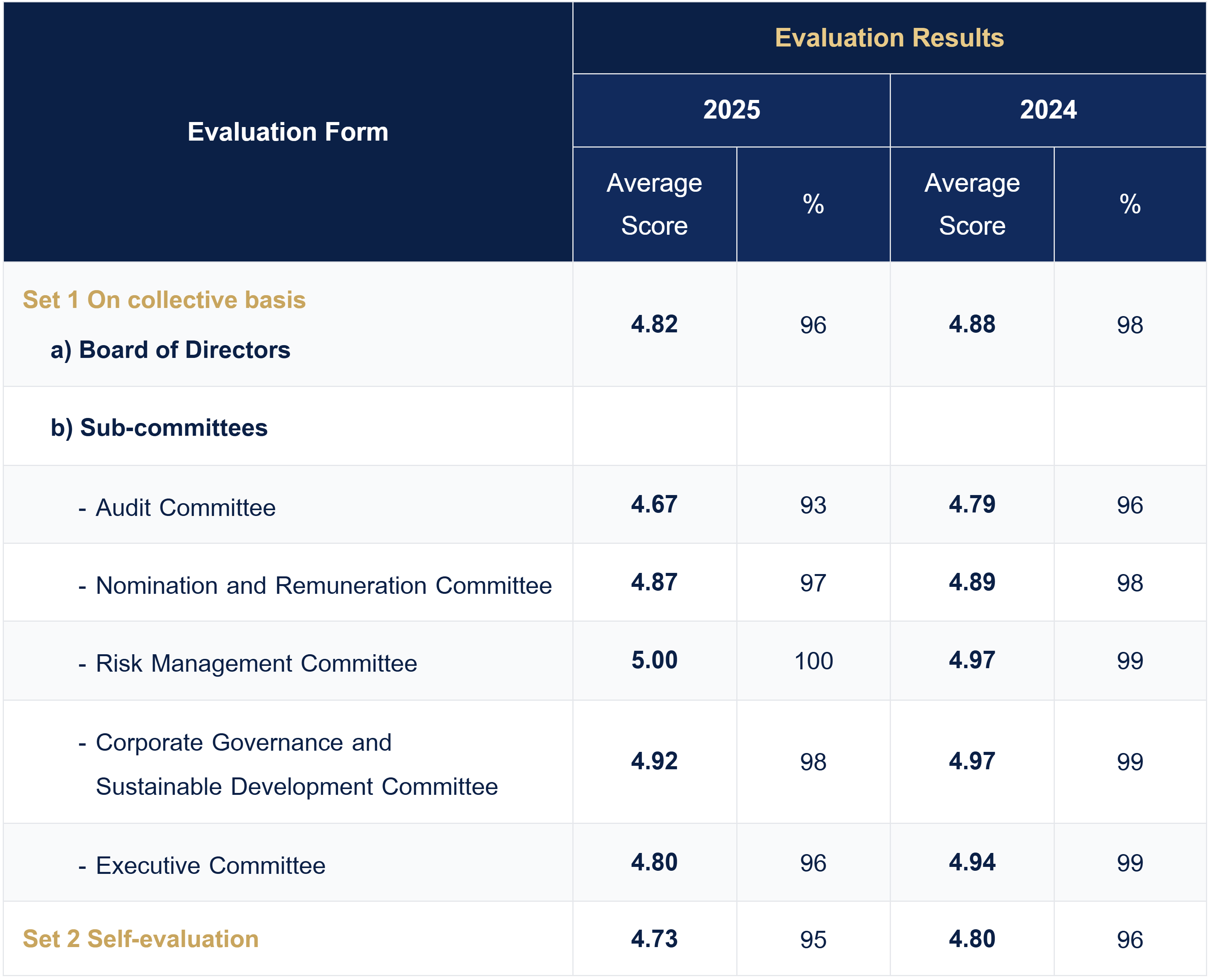
The results of the 2025 Board of Directors’ Performance Evaluation are summarized as follows:
Subcommittees
Subcommittees
| Results of the Subcommittee's Duty Performance |
|---|
The Nomination and Remuneration Committee performed any matters in accordance with authorities, duties and responsibilities assigned by the Board of Directors. In 2025, the Nomination and Remuneration Committee held a total of 6 meetings to consider matters under the scope of its powers, duties and responsibilities, with Ms. Nattaporn Paereerattanasomporn, Vice President of Company Secretary Section - Corporate Affairs and Business Transformation Department and the Company Secretary, serving as the Secretary to the Nomination and Remuneration Committee. The significant results of the Nomination and Remuneration Committee’s performance can be summarized as follows:
In summary, the Nomination and Remuneration Committee performed its duties fully, prudently, and fairly as assigned by the Board of Directors under the scope of authority, duties and responsibilities specified in its charter. |
The Risk Management Committee performed any matters in accordance with authorities, duties and responsibilities assigned by the Board of Directors. In 2025, the Risk Management Committee convened a total of 4 meetings. At every meeting, the Risk Management Committee members attended in full to constitute a quorum, with Mrs. Amornrat Suarchawarat, First Vice President of Corporate Affairs and Business Transformation Department, serving as the Secretary to the Risk Management Committee. The key outcomes of the Risk Management Committee's performance of its duties can be summarized as follows:
In summary, the Risk Management Committee has comprehensively discharged its duties within the scope of authority and responsibilities assigned by the Board of Directors. This ensures that the enterprise risk management is efficient, achieves the designated objectives and targets, and sustainably creates long-term value for the Company's shareholders and stakeholders. |
The Corporate Governance and Sustainable Development Committee performed any matters in accordance with authorities, duties and responsibilities assigned by the Board of Directors. In 2025, the Corporate Governance and Sustainable Development Committee held a total of 4 meetings to consider matters under the scope of its powers, duties and responsibilities, with Ms. Sirirthon Thamrongnawasawat, Vice President of Sustainable Development Department, served as a secretary to the Corporate Governance and Sustainable Development Committee. The significant results of the Corporate Governance and Sustainable Development Committee’s performance can be summarized as follows:
In summary, the Corporate Governance and Sustainable Development Committee performed its duties fully, prudently, and fairly as assigned by the Board of Directors under the scope of authority, duties and responsibilities specified in its charter. |
Meeting Attendance & Remuneration
Meeting Attendance — Introduction
The Board of Directors stipulates that meetings be held at least once every 3 months, with extraordinary meetings convened as necessary. In this regard, the Company pre-determines the meeting dates for the Board of Directors and sub-committees for the entire year in advance to ensure that all directors are able to allocate time for collective attendance. The Company Secretary informs the directors of the meeting schedule and the (tentative) agendas for the entire year in advance, starting from the end of the year prior to the following year's meetings. Furthermore, the Company Secretary distributes the notice of the meeting, specifying the date, time, venue, and business to be discussed, and/or supporting documents, to all directors no less than 5 business days prior to the meeting date to allow sufficient time for the directors to study the information before attending. An exception applies in cases of urgent necessity to protect the Company's rights and interests, where notice of the meeting may be provided via electronic means or other methods, and the meeting date may be scheduled sooner.
In this regard, to constitute a quorum for a Board of Directors’ meeting, no less than half of the total number of directors must be present. In practice, for meetings involving voting on significant matters, the Board of Directors maintains a policy to ensure that the quorum at the time of the Board of Directors' resolution is always no less than two-thirds of the total number of the Company’s directors. The Chairman of the Board shall preside over the meeting. If, at any meeting, the Chairman is not present or is unable to perform their duties, the Vice Chairman, if any, shall preside as the Chairman of the meeting. If there is no Vice Chairman or if the Vice Chairman is unable to perform their duties, the directors present at the meeting shall elect one director to preside as the Chairman of the meeting. The Chairman of the meeting shall control the meeting to ensure it proceeds in an orderly and concise manner within the designated timeframe, and provide opportunities for each director to fully express their opinions and raise inquiries, as well as encourage relevant senior executives to attend the meeting to provide in-depth information for consideration. Resolutions of the Board of Directors’ meeting shall be decided by a majority vote, with each director holding one vote. In the event of a tie, the Chairman of the meeting shall cast an additional vote as the deciding vote. Furthermore, directors with a conflict of interest in any agenda item shall have no right to vote on that specific item.
The Company has a policy for non-executive directors to hold meetings among themselves without the presence of executive directors or the management team at least once a year, in order to discuss and exchange opinions on matters related to their roles and responsibilities. In 2025, the Board of Directors arranged one such meeting among themselves without the presence of executive directors or the management team on 17 December 2025. The results of the said meeting were disclosed to the management team for acknowledgment, to be implemented and/or improved upon in accordance with the provided recommendations.
Justification for Directors' Non-Attendance
Remarks:
Mr. Petipong Pungbun Na Ayudhya was absent from the Board of Directors’ Meeting No. 9/2025 held on 12 November 2025 due to significant business commitment, where he had duly notified his absence to the Board of Directors prior to the meetings for acknowledgement.
Mr. Charamporn Jotikasthira was absent from the Board of Directors’ Meeting No. 10/2025 held on 17 December 2025 and 2 meetings of the Audit Committee, i.e. No. 2/2025 held on 8 May 2025 and No. 5/2025 held on 7 November 2025 due to significant business commitments, where he had duly notified his absence to the Board of Directors and the Audit Committee prior to the meetings for acknowledgement.
Chayanin Debhakam, D.B.A was absent from the Board of Directors’ Meeting No. 5/2025 held on 14 May 2025; 6 meetings of the Executive Committee, i.e. No. 3/2025 held on 18 March 2025, No. 4/2025 held on 29 April 2025, No. 5/2025 held on 20 May 2025, No. 6/2025 held on 24 June 2025, No. 7/2025 held on 22 July 2025, and No. 11/2025 held on17 November 2025; and the Corporate Governance and Sustainable Development Committee’s Meeting No. 2/2025 held on 14 July 2025 due to significant business commitments, where he had duly notified his absence to the Board of Directors, the Executive Committee, and the Corporate Governance and Sustainable Development Committee prior to the meetings for acknowledgement.
Mr. Voravud Bhirombhakdi was absent from 2 meetings of the Board of Directors, i.e. No. 5/2025 held on 14 May 2025 and No. 6/2025 held on 18 June 2025 due to significant business commitments, where he had duly notified his absence to the Board of Directors prior to the meetings for acknowledgement.
Mr. Nutchdhawattana Silpavittayakul was absent from the Board of Directors’ Meeting No. 3/2025 held on 12 March 2025 due to significant business commitment, where he had duly notified his absence to the Board of Directors prior to the meeting for acknowledgement.
Mr. Vorapat Chavananikul abstained from attending one meeting to refrain from considering agendas that may involve a conflict of interest; therefore, he was required to attend a total of 9 Board of Directors' meetings. He was absent from the Board of Directors’ Meeting No. 5/2025, held on 14 May 2025, , as well as 4 meetings of the Executive Committee, namely No. 3/2025 held on 18 March 2025, No. 6/2025 held on 24 June 2025, No. 8/2025 held on 19 August 2025, and No. 11/2025 held on 17 November 2025, due to other commitments. He had duly notified the Board of Directors and the Executive Committee in advance prior to the meetings for acknowledgement.
Mrs. Thitima Rungkwansiriroj abstained from attending one meeting to refrain from considering agendas that may involve a conflict of interest while holding the position of director. She ceased to hold the positions of director, member of the Risk Management Committee, and member of the Corporate Governance and Sustainable Development Committee on 1 July 2025. Therefore, the number of meetings required for her attendance was 5 Board of Directors’ meetings, 2 Risk Management Committee meetings, and 1 Corporate Governance and Sustainable Development Committee meeting.
Mr. Chairath Sivapornpan was appointed to serve as the Company's director in replacement of vacancy, effective on 1 July 2025, pursuant to the resolution of the Board of Directors' Meeting No. 6/2025 held on 18 June 2025. Therefore, the number of meetings required for her attendance was 5 Board of Directors’ meetings, 2 Risk Management Committee meetings, and 1 Corporate Governance and Sustainable Development Committee meeting.
The Board of Directors held 1 meeting without the presence of executive directors and the management, which was held on 17 December 2025.
Types of Remuneration of the Board of Directors
Structure of directors’ remuneration
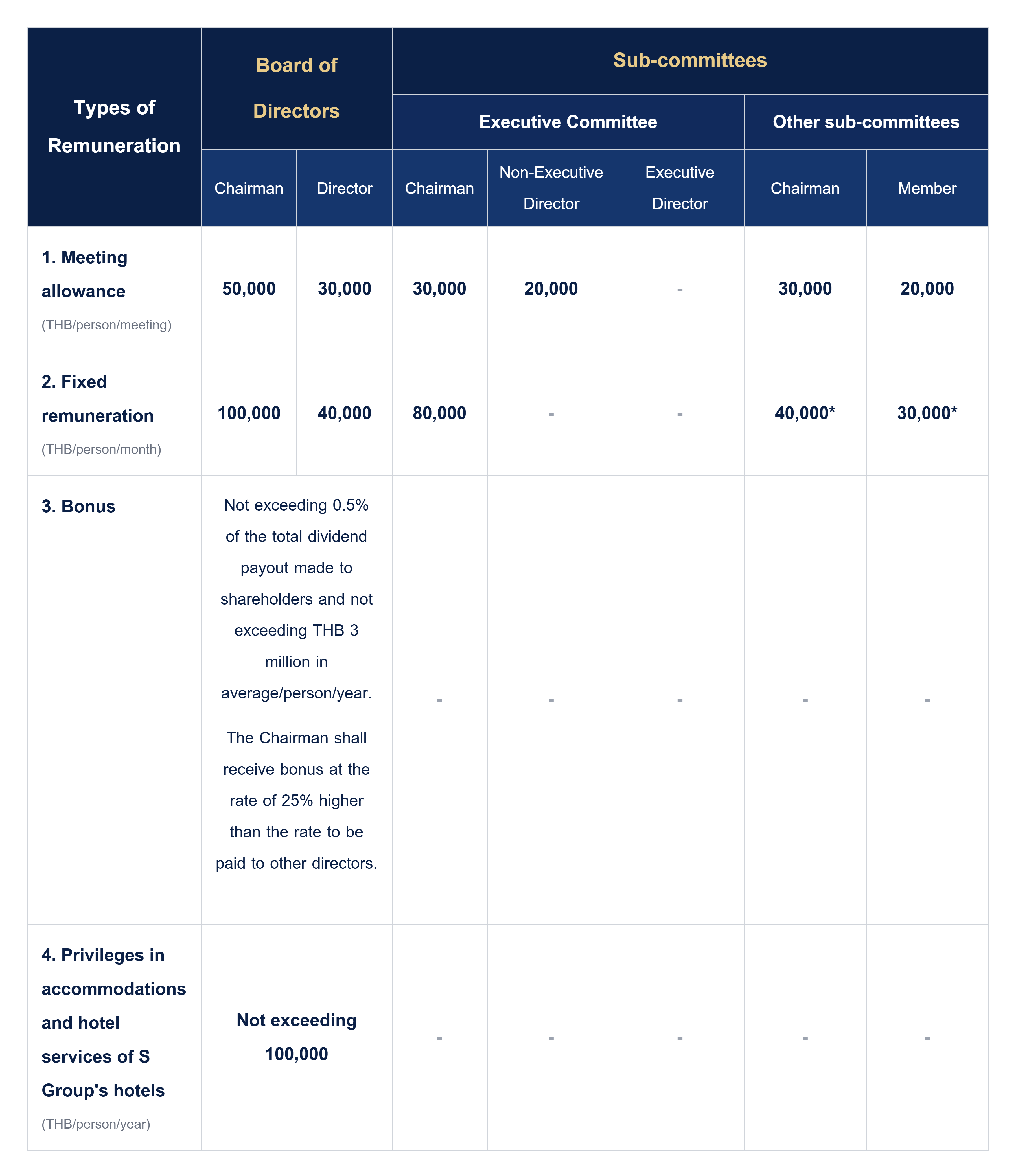
The 2025 Annual General Meeting of Shareholders resolved to approve the remuneration for the Board of Directors and sub-committees in the forms of monthly remuneration, meeting allowance, privilege in accommodations and hotel services of S Group’s hotels, and bonus, as detailed as follows:
Remark:
* For the fixed remuneration of the sub-committee, it was set out only for the Audit Committee.
Remuneration of the Board of Directors
Remuneration or Benefits Payable to the Board
| Metric | Amount (Baht) |
|---|---|
| Remunerations or benefits pending payment to the board of directors over the past year (baht) | 0 |
Supervision of Subsidiaries & Associated Companies
Does the Company Have Subsidiaries or Associated Companies?
Yes
Is There a Mechanism for Overseeing Subsidiaries and Associated Companies?
Yes
Mechanism for Overseeing Management of Subsidiaries
The Company is committed to establishing a robust foundation for sustainable corporate governance by implementing the Policy on Supervision and Management of Subsidiaries and Associate Companies. This policy serves as a primary mechanism to ensure that the operations of subsidiaries and associates are strictly aligned with the Company’s core policies and business strategies. This framework is designed to enhance management transparency and efficiency, while ensuring full compliance with relevant laws and regulatory requirements. By prioritizing S Group’s best interests and the rights of all stakeholders, the Company aims to foster mutual sustainable growth. Key essences of the policy are detailed as follows:
Appointment of Representatives as Directors and Executives: The Company has established principles for appointing representatives as directors or executives in its subsidiaries and associates, based on shareholding proportions or shareholder agreements. This is conducted through a selection process rooted in good governance and transparency. In the case of subsidiaries and associates listed on the Stock Exchange of Thailand, the Nomination and Remuneration Committee shall nominate qualified candidates (including the Company’s Chief Executive Officer by virtue of position) to the Board of Directors for endorsement before submitting the names to the respective subsidiaries and associates for further consideration, in accordance with the principle of exercising rights based on the Company’s shareholding proportion. For non-listed subsidiaries and associates, the Nomination and Remuneration Committee shall approve the organizational structure and designate executive groups with skills aligned with the nature of the business, enabling the management to proceed with the appointments accordingly. Furthermore, such representatives are responsible for voting in meetings in accordance with the Company’s strategic direction and must obtain approval from authorized persons pursuant to the Company’s regulations prior to voting on all significant agendas.
Duties and Responsibilities of Company Representatives: Persons appointed as the Company's representatives must perform their duties with the duty of care and duty of loyalty. They are responsible for ensuring that the business operations of subsidiaries and associates strictly comply with S Group's core policies, strategic direction, and all relevant laws and regulations. Furthermore, representatives are responsible for overseeing the disclosure of related party transactions, the acquisition or disposal of assets, or any significant transactions that may impact the Company’s financial position and operating results within the specified timeframe. They must also strictly adhere to the Business Code of Conduct regarding the protection of inside information, whereby such persons are prohibited from using non-public information for personal gain or the benefit of others, whether directly or indirectly.
Governance Mechanisms and Internal Control : The Company has established a robust internal control system prioritized on transparency and accountability. It is mandated that any material transactions or actions undertaken by subsidiaries and associates must undergo an approval process by the Executive Committee or the Board of Directors, depending on the level of significance and the authorized power. Examples of such actions include capital restructurings that impact shareholding proportions, significant amendments to the articles of association, business dissolution, as well as non-ordinary business transactions or transactions with sizes falling under the criteria set by the Stock Exchange of Thailand. Furthermore, the Company's representatives are responsible for monitoring and reporting strategic plans and quarterly operating results, as well as promptly notifying the Company of any significant incidents or issues upon detection to ensure effective risk management.
Confidentiality and Information Support : The Company is committed to enhancing the operational efficiency of its representatives by providing necessary data, information, and analytical tools from relevant departments. These resources are intended to support executive decision-making to maximize benefits for subsidiaries and associates. In this regard, any information obtained through the performance of duties is considered S Group's trade secret. Representatives and relevant departments are obligated to maintain confidentiality and prevent the unauthorized use of such information for any purpose other than their assigned duties, in order to protect S Group’s interests and maintain its sustainable competitive advantage.
In 2025, the Board of Directors' Meeting No. 7/2025, held on 13 August 2025 (following the review and screening by the Nomination and Remuneration Committee), resolved to endorse the nomination of Mr. Chairath Sivapornpan, the Company’s Chief Executive Officer, to the Board of Directors of S Hotels and Resorts Public Company Limited. This nomination is for further consideration and appointment as the Company’s representative director in S Hotels and Resorts Public Company Limited.
Further information is available in Policy on Supervision and Management of Subsidiaries and Associate Companies, which is disclosed on the Company’s website.

Oversight Mechanisms
| Mechanism |
|---|
| Sending representatives to act as directors, executives or controlling persons in proportion to shareholdings |
| Defining the scope of powers, duties and responsibilities of directors and executives who represent the company in setting important policies |
| Disclosure of financial information and operating results |
| Transactions between the Company and related persons |
| Other important transactions |
| Acquisition or disposal of assets |
| Internal control system of the subsidiary operating the core business is appropriate and sufficient in the subsidiary operating the core business |
Board Duty Performance — Overview
Board Duty Performance — Overall Description
The Board of Directors is steadfastly committed to conducting business in accordance with the principles of good corporate governance, regarding it as the fundamental cornerstone for creating sustainable corporate value. The Board of Directors discharges its duties with accountability, duty of care, and duty of loyalty, strictly adhering to the law, the Company’s objectives and articles of association, shareholders' resolutions, and the best practices standards for directors of listed companies. This commitment is aimed at enhancing competitive capabilities alongside fostering unwavering confidence among shareholders, investors, and all stakeholder groups equitably.
In 2025, the Board of Directors oversaw and deliberated upon crucial strategic issues to ensure the organization’s agility in navigating challenges and operating with maximum efficiency. The key operational highlights across various dimensions are as follows:
Regulatory Compliance and Governance Oversight: The Board of Directors carefully and prudently reviewed and approved significant transactions within its scope of authority. This included the approval of financial statements, the deliberation of dividend payments, the convening of the shareholders' meeting, and the appointment of sub-committees. Furthermore, the Board of Directors monitored connected transactions and material transactions with a primary focus on the best interests of the Company and its shareholders, ensuring that all processes strictly complied with relevant laws and regulatory requirements.
Corporate Governance Excellence: The Board of Directors closely monitored management practices in line with ethical governance principles by overseeing the reporting of interests and tracking the securities holdings of directors and executives. The Board f Directors also regularly reviewed the Charters of the Board of Directors and its sub-committees to ensure alignment with contemporary practices. As a result of these commitments, in 2025, the Company achieved a perfect score of 100 in the AGM Checklist Assessment by the Thai Investors Association and received an "Excellent" (5-star) CG Scoring in the Corporate Governance Report of Thai Listed Companies (CGR Checklist) by the Thai Institute of Directors (IOD). These accolades reflect the Company's robust and widely recognized corporate governance standards.
Strategic Direction & Policy Governance: The Board of Directors prioritizes the formulation of the Company’s vision and business direction by systematically reviewed corporate strategies and updated key policies to align with economic, social, and environmental (ESG) challenges, while consistently monitoring operational performance to ensure that management achieves the established goals and delivers sustainable returns.
To ensure that corporate governance is executed efficiently and comprehensively across all dimensions, the Company convened a total of 10 Board of Directors meetings in 2025. Additionally, a dedicated non-executive directors' meeting was held on 17 December 2025, to provide an exclusive forum for the independent discussion of management issues.
Audit Committee Duty Performance
Audit Committee Duty Performance — Introduction
The Audit Committee of the Company, appointed by the Board of Directors, consists of 3 independent directors who are fully qualified according to the specified criteria, and have adequate knowledge and experience in reviewing the reliability of the financial statements.
Results of the Audit Committee's Duty Performance in the Past Year
The Audit Committee discharged its duties as assigned by the Board of Directors with independence and had unrestricted access to relevant information, with well cooperation from the Company and its external auditors in accordance with the duties and responsibilities stipulated in the Audit Committee Charter and the regulations of the Stock Exchange of Thailand. During the 2025 fiscal year, the Audit Committee convened a total of 6 meetings, engaging in discussions and exchanging viewpoints with the Management, relevant executives, internal auditors, and the external auditors. Ms. Oracha Kunajiranat, First Vice President, Group Internal Audit and Compliance Division, served as a secretary to the Audit Committee.
The key essence of the Audit Committee’s discharge of its duties can be summarized as follows:
Review of Financial Reports
The Audit Committee reviewed the Company’s quarterly and annual separate and consolidated financial statements, key accounting policies, and material financial reports in conjunction with the Management and the external auditors. Furthermore, the Audit Committee inquired with the external auditors regarding the accuracy and completeness of the financial statements, Key Audit Matters (KAMs), significant accounting adjustments, newly revised accounting standards, and audit observations impacting the financial statements, including the adequacy of information disclosures. Moreover, the Audit Committee considered and concurred the provision of non-assurance services by the external auditors to ensure that the scope of such services would not impair their independence. The Audit Committee also held one exclusive meeting with the external auditors, without the presence of the Management, to independently discuss the acquisition of information and their independence in discharging their duties.
Consequently, the Audit Committee was of the opinion that the financial statements reviewed and audited by the external auditors were accurate, complete, and prepared in accordance with the Thai Financial Reporting Standards, including selection of appropriate, reasonable accounting policies and adequate information disclosure in financial statements.
Review of the Adequacy of the Internal Control System and Risk Management
The Audit Committee reviewed the adequacy of the internal control system by evaluating the internal audit reports and the follow-up results on corrective actions undertaken by the internal auditors, alongside the review and audit reports presented by the external auditors. The Audit Committee also reviewed and monitored the risk management and risk assessment of the Company and its subsidiaries on a quarterly basis, providing recommendations for adequate and appropriate internal controls that were effectively adaptable to changing circumstances and in compliance with good corporate governance principles. Furthermore, the Audit Committee reviewed the internal control adequacy assessment form, established in accordance with the criteria of the Securities and Exchange Commission, which was evaluated by the Management and verified by the internal auditors.
The Audit Committee opined that the Company had an adequate and appropriate internal control system with supervisory oversight, and no material deficiencies were identified.
Oversight of Internal Audit
The Audit Committee reviewed and oversaw the internal audit function to ensure its independence and efficiency. Throughout the internal auditing process, there was collaborative coordination with the Management and operational staff to facilitate timely audit conclusions and the monitoring of corrective actions. The Audit Committee evaluates the operational performance and the quality of the internal audit function on an annual basis. In addition, the Audit Committee approved the review of the Internal Audit Charter and the annual internal audit plan, formulated utilizing a risk-based approach, to provide governance for internal audit activities to assess the Company's internal control systems including operations, financial transactions and documentation and compliance with policies, procedures, and applicable laws. This oversight is conducted concurrently with supporting the Internal Audit Department’s personnel in continually enhancing their knowledge, capabilities, and deeper understanding of the Company's business operations. The Audit Committee opined that the Company's internal audit function operates with independence and effectiveness.
Review of Compliance with the Securities and Exchange Act B.E. 2535 (as amended), the Regulations of the Stock Exchange of Thailand, and Laws Relevant to the Company’s Business
The Audit Committee reviewed compliance with the Securities and Exchange Act B.E. 2535 (as amended), the regulations of the Stock Exchange of Thailand, and laws relevant to the Company’s business by assigning the internal audit function to incorporate a compliance audit as a part of its audit scope, alongside consistently monitoring the progress of Management's corrective actions. The Audit Committee was of the opinion that, in 2025, no incidents were identified indicating that the Company operated in material contravention of the law, the regulations of the Stock Exchange of Thailand, or other laws relevant to the Company's business.
Review of the Acquisition or Disposition of Assets Deemed as Material Transaction, the Connected Transactions, or Transactions that May Entail a Conflict of Interest
The Audit Committee reviewed the acquisition or disposition of asset transactions deemed as material transaction, the connected transactions, and transactions that may entail a conflict of interest on a quarterly basis, which are required to comply with the laws and regulations of the Securities and Exchange Commission and the Stock Exchange of Thailand, as well as the Company's relevant policies and procedures. The Audit Committee opined that the acquisition and disposition of asset transactions of the Group Company deemed as material transaction and the transactions made between the Company and connected companies or persons during the fiscal year were in compliance with applicable laws, regulations and relevant policies and were normal business and/or supporting normal business transactions, consistent with ordinary commercial practices on arm’s length basis, reasonableness, and in the best interests of the Company and its shareholders. Information disclosure was deemed adequate in accordance with the criteria of the Stock Exchange of Thailand and the Securities and Exchange Commission.
Review of the Mechanism for Supervision and Monitoring the Use of Funds Raised from the Capital Market
The Audit Committee has established mechanisms to oversee and monitor the use of raised funds in accordance with the disclosed objectives. The Audit Committee also required the Management to report detailed information regarding the use of funds raised from the capital market and monitored this utilization on a quarterly basis. In 2025, the Audit Committee reviewed and monitored the use of raised funds with the Management every quarter and was of the opinion that the Company’s utilization of the raised funds was appropriate, aligned with the disclosed objectives, and complied with the reporting timeframes prescribed by the Securities and Exchange Commission.
Review of Anti-Fraud and Anti-Corruption Measures
The Audit Committee endorsed the submission for certification with the Thai Private Sector Collective Action Against Corruption (CAC), for which the Company successfully received certification in the 2nd quarter of 2025. Furthermore, in 2025, the Internal Audit Department performed a compliance audit of the policy and procedures related to anti-fraud and anti-corruption. Based on the audit report, it was concluded that the Company's operations adequately and appropriately complied with the designated Anti-fraud and Anti-corruption Policy and operational procedures. This includes the effective handling and reporting of whistleblowing to the respective sub-committees in accordance with the established policies.
Consideration on Selection, Nomination and Remuneration for the External Auditor
The Audit Committee considered the selection and nomination of qualified auditors based on its assessment of the external auditors’ independence, professional ethics, skills, knowledge, competency, proficiency in the business and ability to provide services for significant subsidiaries, as well as appropriateness of the audit fee and the non-assurance service fee. According to the overall assessment, the qualifications and independence of the external auditors were deemed satisfactory and adequate. Consequently, the Audit Committee concurred to nominate the auditors from EY Office Limited as the Company’s external auditors, alongside proposing the annual audit fee for 2025 to the Board of Directors' meeting and the 2025 Annual General Meeting of Shareholders for their respective consideration.
Review of the Audit Committee Charter
The Audit Committee annually reviews the Audit Committee Charter to deliberate on the roles, responsibilities, and operational guidelines assigned to the Committee. This ensures strict alignment with the criteria and best practice guidelines prescribed by the Securities and Exchange Commission.
Evaluation of the Audit Committee’s Performance
The Audit Committee conducts an annual self-assessment of its performance as an entire committee and subsequently reports the results to the Board of Directors for acknowledgment. The assessment outcomes indicated that the Audit Committee has comprehensively discharged its duties and responsibilities as stipulated in the Audit Committee Charter, employing requisite knowledge and capabilities with due care and adequate independence.
In summary, for the 2025 fiscal year, the Audit Committee was of the overall opinion that the Company had placed emphasis on the internal control and risk management system which were sufficient and appropriate as well as its compliance with relevant laws and government agencies’ regulations. The Company had undergone continual improvements, enhancing efficiency and quality towards sustainable success in line with the Company’s overall objectives and goals, under good corporate governance. The Company’s financial reports were deemed accurate, complete, and reliable in accordance with generally accepted accounting standards.
Executive Committee Duty Performance
Results of the Executive Committee's Duty Performance in the Past Year
The Executive Committee performed any matters in accordance with authorities, duties and responsibilities assigned by the Board of Directors. In 2025, the Executive Committee held a total of 14 meetings to consider matters under the scope of its powers, duties and responsibilities, with Ms. Nattaporn Paereerattanasomporn, Vice President of Company Secretary Section - Corporate Affairs and Business Transformation Department and the Company Secretary, serving as the Secretary to the Executive Committee.
The significant results of the Executive Committee’s performance can be summarized as follows:
Performed all undertakings under applicable laws, the Company’s objectives and Articles of Association as well as resolutions of the Board of Directors’ and shareholders’ meetings, with a fiduciary duty of honesty, prudence, responsibility and integrity, by taking into account the best interests of all shareholders in a fair manner.
Provided recommendations to the management on the Company’s strategic direction, management structure, business plan and annual budget before they were submitted to the Board of Directors for approval. In 2025, the Executive Committee reviewed and endorsed S Group’s 2026-2030 business strategy and the Company’s 2026 budget proposal before tabling to the Board of Directors for approval.
Supervised and provided guidance on managing the Company’s residential, commercial, hospitality, including industrial estate and infrastructure businesses as well as investment funds to achieve the objectives, vision, mission, strategies and policies set out by the Board of Directors to ensure full compliance with laws, conditions, rules, regulations of competent agencies with the supervisory authority and the Company’s Articles of Association, including monitoring the operating performance from the Company’s core business operations and presenting progress, performance in key matters, resolutions and undertakings under the Executive Committee’s responsibilities and duties to the Board of Directors for acknowledgement on a regular basis.
Supervised, examined and monitored the financial performance and financial position of S Group through meetings of the Executive Committee held on monthly basis to ascertain that S Group’s business operations fully align with the specified goals, policies and business plans as well as controlling expenditures according to the approved budget and regularly reporting the said performance and financial position to the Board of Directors for acknowledgement.
Reviewed and approved transactions with a value not exceeding THB1,000 million and/or screened and endorsed transactions with value exceeding THB1,000 million before tabling to the Board of Directors for approval, where those transactions included acquisition or disposition of assets and connected transactions according to the rules of the SET, investment or joint venture with any individual, legal entity or organization and any material transaction of the Company and its subsidiaries which were not listed companies, including any financial transaction with a bank or a financial institution for borrowing, applying for credit facility, banking and financial services for the benefit of the Company’s operations.
Conducted an annual review of the charter of the Executive Committee, which was reviewed in the Executive Committee’s Meeting No. 11/2025 held on 17 November 2025 to ensure that the authority, duties and responsibilities of the Executive Committee was up-to-date, comprehensive and in compliance with the principles of good corporate governance.
Evaluated performances of the Executive Committee for the year 2025.
In summary, the Executive Committee performed its duties fully, prudently, and fairly as assigned by the Board of Directors under the scope of authority, duties and responsibilities specified in its charter.