CG Policy · 2025
In this section7 topics
Corporate Governance Policy
Has a Corporate Governance Policy
Yes
Policy Description
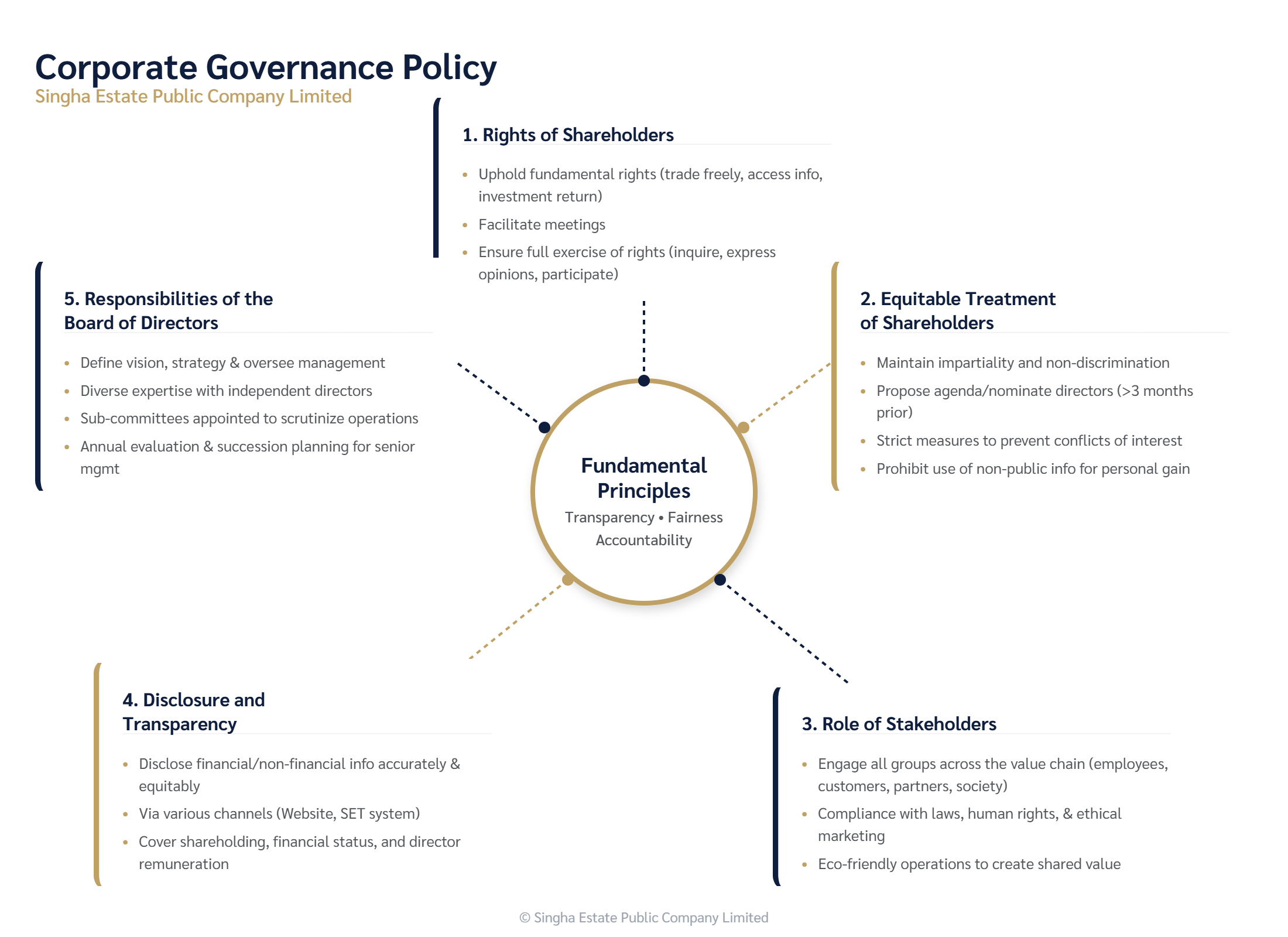
The Company is steadfast in conducting its business with transparency, fairness, and accountability. It regards good corporate governance principles as the cornerstone for fostering sustainable growth and enhancing its global competitive edge. Consequently, the Board of Directors has formulated comprehensive policies and practical guidelines in strict alignment with the Corporate Governance Code for Listed Companies 2017 (CG Code) prescribed by the Securities and Exchange Commission and the Stock Exchange of Thailand, the criteria of the Corporate Governance Report of Thai Listed Companies (CGR) by the Thai Institute of Directors (IOD), as well as international best practices. These serve as a definitive framework for directors, executives, and employees at all levels to strictly adhere to, emphasizing responsibility toward all stakeholder groups through efficient management mechanisms. Furthermore, it is mandated that these policies undergo regular review at least once annually. The Company’s Corporate Governance Policy is fully applicable to and binding upon the directors, executives, and employees of the Company and its subsidiaries, inclusive of all stakeholders.
The Board of Directors actively promotes continuous communication, monitoring, and oversight to ensure that all directors, executives, and employees comprehensively understand and adhere to the Corporate Governance Policy with firm conviction and dedication, seamlessly embedding it into a robust corporate culture. This endeavor is directed toward establishing enduring stability and fostering continuous, sustainable growth.
Further details regarding the Company’s Corporate Governance Policy are publicly disclosed and accessible on the Company's official website.

Policy Document Link
https://investor.singhaestate.co.th/storage/document/governance/s-corporate-governance-policy-en.pdf
Page Number in Report
1-37
Policy & Practices — Board of Directors
Has Policy & Guidelines for the Board
Yes
Board Guidelines
| Guideline | Other — Please Specify | Detail | Document Link | Page Number in Report | ||||||||||||
|---|---|---|---|---|---|---|---|---|---|---|---|---|---|---|---|---|
| Nomination of Directors | Criteria and Procedures The Board of Directors has assigned the Nomination and Remuneration Committee to recruit and nominate persons equipped with appropriate qualifications specified in the Securities and Exchange Act B.E. 2535 (as amended), including other applicable laws and in accordance with the Company’s defined qualifications. Then, a short list shall be proposed to the Board of Directors’ meeting and/or the shareholders’ meeting for consideration and appointment (as the case maybe) in accordance with the Company’s Articles of Association. In so doing, the Nomination and Remuneration Committee shall consider through the following sources:
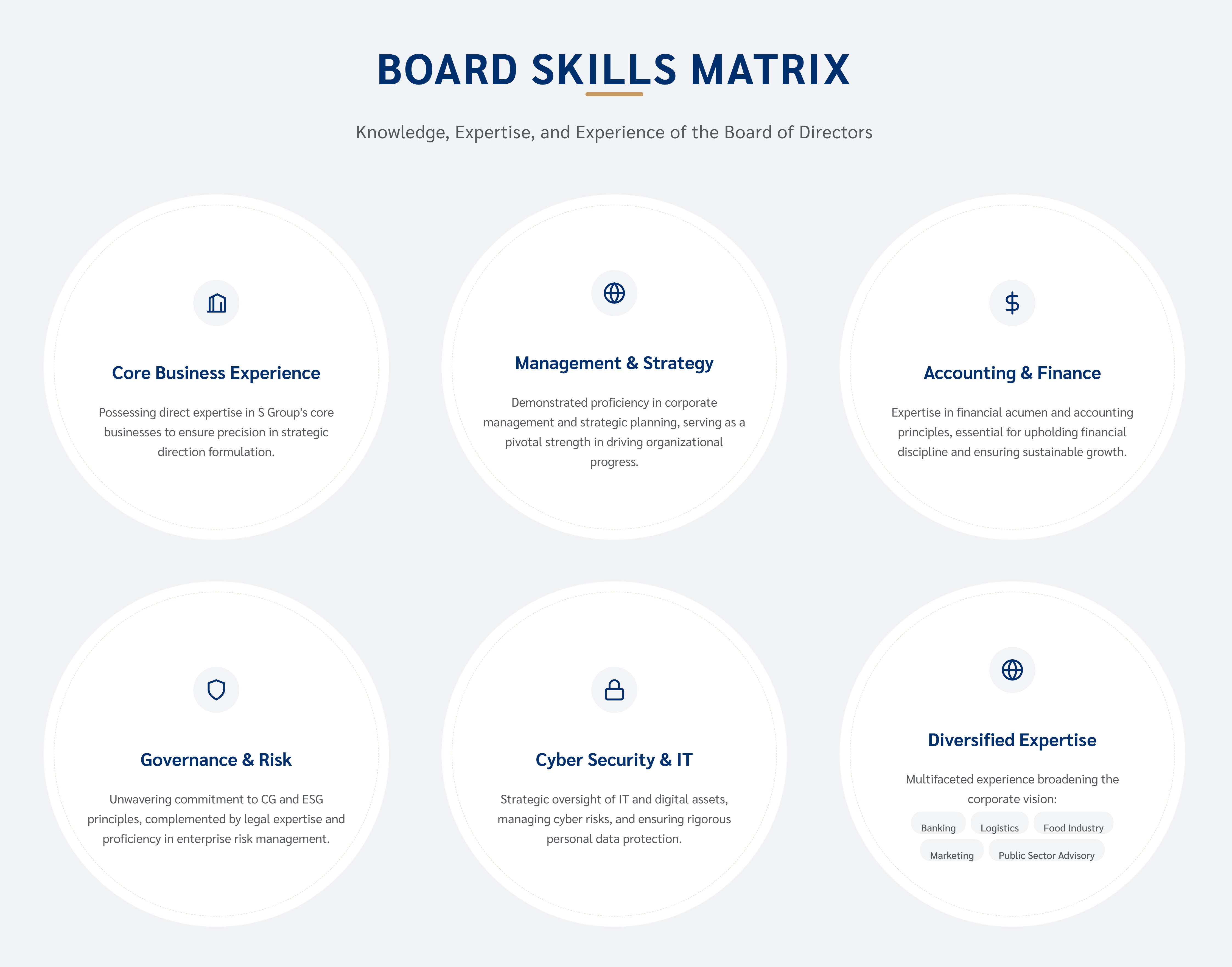
The Company recognizes the importance of Board Diversity as a vital mechanism for establishing balance and fostering a diverse exchange of perspectives for the organization’s maximum benefit. Consequently, in the nomination and appointment process, the Company prioritizes gender diversity alongside the specific skills, experiences, and attributes essential to its business strategies, facilitated by the regular preparation and review of the Board Skill Matrix. Furthermore, to reflect our commitment to promoting equality and the role of women, the Company has established a directional target to maintain an appropriate proportion of female directors. This selection process takes into account the organizational context and individual merit as primary factors, ensuring the Board's operational efficiency and the creation of sustainable value for all stakeholders. In this regard, additional information regarding the qualifications of directors and independent directors can be further studied in the Board of Directors' Charter, which is publicly disclosed on the Company's website.
The Nomination and Remuneration Committee annually reviews the skills and characteristics of individual directors and the Board of Directors' overall composition to ensure alignment with corporate strategy. A board skill matrix is utilized to identify necessary skills that may be lacking and to establish annual recruitment criteria. This review considers diversity in knowledge and experience, as well as the ability to dedicate sufficient time to the Company’s affairs. Selection is made without prejudice toward gender, age, religion, race, nationality, or origin. The Board of Directors comprises experts with a diversity of expertise critical to the real estate and international investment sectors, categorized as follows:
Nomination and Appointment Process Vacancy of director’s office caused by retirement by rotation In the event the director retires by rotation, the Nomination and Remuneration Committee shall recruit and nominate persons equipped with qualifications suitable for the Company’s director. Then, it shall be further proposed to the Board of Directors’ meeting and the annual general meeting of shareholders, respectively, for consideration and approval of election. In the case that nominating the retiring director to be re-elected for another term, the Nomination and Remuneration Committee shall consider several factors, including performance, historical records of meeting attendance and participation, and support given to activities of the Board of Directors. For an independent director, his or her independence in expression of opinions shall also be taken into account. Directors’ election conforms to the Company’s Articles of Association and in compliance with applicable laws which must be conducted in transparent and clear manner, where the criteria and procedures of director’ election at a shareholders’ meeting are as follows: 1) In voting for the election of director, each shareholder’s votes equal his or her number of shares held, one share per one vote. 2) In voting for the election of director, it is required the meeting to vote for each director individually by casting their total votes for individual directors, one by one. 3) To pass the resolution for election of director, it requires a simple majority vote of the shareholders who attend the meeting and cast a vote. 4) Those that secure the highest votes in descending order shall be elected as the director up to the number of directors required to be elected at such meeting. Should there be more than one person with equal votes for a given position, the chairman of the meeting shall have a casting vote. Vacancy of director’s office caused by any reasons other than the retirement by rotation The Nomination and Remuneration Committee will consider the necessary skills which are still lacking in the Board of Directors, and then recruit and nominate a person equipped with appropriate qualifications in line with the Company’s strategy and business direction to propose to the following Board of Directors’ meeting for consideration and appointment in replacement of the vacancy and the director in replacement shall entitle to hold an office only for a period of remaining term of director office. The appointment of the director in replacement of the vacant director office requires a resolution of the Board of Directors’ meeting passing by an affirmative vote of not less than three-fourths of the total remaining directors. Unless the term of the vacant director office remains less than 2 months, it must be proposed to the shareholders’ meeting for consideration and appointment. Removal and dismissal of director 1) Other than retirement by rotation, the directors may be removed from their office in the following events: 1.1) Death; 1.2) Resignation; 1.3) Lack of qualifications or having forbidden characteristics under laws on public limited companies; 1.4) Removal by a resolution of the shareholders’ meeting; 1.5) Removal by court’s order. 2) Any directors wishing to resign from office shall tender their letter of resignation to the Company and the resignation shall take an effect on the date the letter of resignation arriving the Company. Such directors may also notify the public limited company registrar of their resignation.
| https://investor.singhaestate.co.th/storage/document/governance/s-corporate-governance-policy-en.pdf | 14, 24, 31 | |||||||||||||
| Determination of Director Remuneration | Criteria for Directors' Remuneration The Nomination and Remuneration Committee is responsible for defining the criteria for directors’ remuneration, including monetary and non-monetary remuneration; and propose the same to the Board of Directors for approval prior to tabling to the shareholders’ meeting for approval, which the following factors shall be taken into account:
Further details regarding director's remuneration are available in Section 8.1.2 "Meeting attendance and remuneration payment to each board member." | https://investor.singhaestate.co.th/storage/document/governance/s-corporate-governance-policy-en.pdf | 30 | |||||||||||||
| Independence of the Board of Directors from the Management | The Company clearly delineates the roles and responsibilities between the Board of Directors and the Management to ensure operational clarity, a robust system of checks and balances, and transparent, efficient administration. The specific roles, authorities, and responsibilities are clearly delineated as follows:
Although the Board of Directors delegates authority to the sub-committees, the Chief Executive Officer, and senior executives, it retains exclusive approval authority over the following material matters:
| https://investor.singhaestate.co.th/storage/document/governance/s-corporate-governance-policy-en.pdf | 19 | |||||||||||||
| Director Development | To promote the efficiency of the Board of Directors in performing their duties, the Company maintains a policy to encourage directors, executives, and personnel involved in corporate governance to participate in training sessions, seminars, and knowledge development programs that are beneficial to their roles. These programs are offered by various organizations and institutions, such as the Thai Institute of Directors (IOD), the Stock Exchange of Thailand, and the Thai Listed Companies Association. The Company proactively provides training schedules to all directors in advance and assumes responsibility for all associated expenses to ensure continuous performance improvement and the practical application of such knowledge for the Company’s benefit. Furthermore, in the event of a new directorial appointment, the Company has a policy to conduct a new director orientation. This session is presented by the Chief Executive Officer and/or senior executives to provide the new director with information regarding business operations, business directions, and other essential data beneficial to their duties. The Company also prepares and delivers a comprehensive package of key corporate documents to the new director, including the nature of business, corporate and management structures, business directions and strategies, as well as the charters of the Board of Directors and/or sub-committees, the Listed Company Director's Handbook, the Independent Director's Handbook, and other manuals relevant to the performance of duties within specific sub-committees (if any). Further details regarding director development over the past year are available in Section 8.1.1 "Selection, development and evaluation of duty performance of the board of directors." | https://investor.singhaestate.co.th/storage/document/governance/s-corporate-governance-policy-en.pdf | 30, 31 | |||||||||||||
| Board Performance Evaluation | The Board of Directors shall conduct an annual performance evaluation of itself and subcommittees on a collective basis and an individual basis which will result in a complete scope for monitoring performance and ensuring the Board of Directors and subcommittees performance are in line with its charters and in good practices in a complete and effective manners, so as to improve the Board of Directors’ performance and to review problems and obstacles during the past year. The Company has devised the self-assessment forms for the Board of Directors and sub-committees, encompassing both the assessment as a whole committee and the assessment on an individual basis, aligning with the guidelines of regulatory agencies by annually adapting and reviewing such guidelines into the nature of business and structure of the Board of Directors and sub-committees. Criteria for Evaluation Includes the Following Essential Points:
Further details regarding directors performance evaluation are available in Section 8.1.1 "Selection, development and evaluation of duty performance of the board of directors." | https://investor.singhaestate.co.th/storage/document/governance/s-corporate-governance-policy-en.pdf | 28-29 | |||||||||||||
| Corporate Governance of Subsidiaries and Associated Companies | The Board of Directors establishes the criteria and practical guidelines regarding investment and the governance of the operations of subsidiaries and associate companies, to enable the Company to manage the affairs and govern the subsidiaries and associate companies in alignment with the Company's various policies, strategic plans, and core business plans, and in accordance with the resolutions of the shareholders and the Board of Directors, under the relevant laws, objectives, articles of association, regulations, and criteria, including the guidelines for good corporate governance, and to ensure that the consideration and decision-making in various investment projects proceeds carefully, concisely, transparently, and on the same standard across the entire group, as well as arranging for the consistent monitoring and reporting of progress, including the problems and obstacles of various projects, which are operated by the subsidiaries and associate companies, for the Board of Directors to be informed and able to provide opinions or recommendations in a timely manner. In this regard, the Company has formulated the Policy on the Governance and Management of Subsidiaries and Associate Companies, which is publicly disclosed on the Company's website.
Further details regarding corporate governance of subsidiaries and associated companies are available in Section 8.1.3 "Supervision of subsidiaries and associated companies." | https://investor.singhaestate.co.th/storage/document/governance/05-s-2022-policy-on-supervision-and-management-of-subsidiaries-and-associated-companies-en.pdf | 37 | |||||||||||||
| Other guidelines regarding the board of directors | Recognize the Role and Responsibilities of the Board of Directors as Organizational Leaders Driving Sustainable Value Creation |
| https://investor.singhaestate.co.th/storage/document/governance/s-corporate-governance-policy-en.pdf | 20 | ||||||||||||
| Other guidelines regarding the board of directors | Establish Corporate Objectives and Core Targets Aligned with Sustainability | The Board of Directors places paramount importance on defining corporate objectives and core targets that enable sustainable growth in conjunction with societal advancement, thereby generating value and benefits for the organization, its customers, partners, employees, shareholders, stakeholders, and the broader community. The Board of Directors fosters the communication and internalization of these objectives and targets, ensuring they are reflected in the decision-making processes and operational conduct of all personnel at every echelon, thus cultivating an organizational culture founded on robust corporate governance principles. The Board of Directors mandates the Company’s development of an annual strategy and a 3-year operational plan, ensuring alignment with the vision of achieving sustainable growth and delivering enduring value to all stakeholders. In the formulation of the annual strategy, the Board emphasizes the solicitation and exchange of insights from all directors, aimed at expanding existing business ventures while exploring new strategic opportunities to diversify the Company’s revenue streams. Furthermore, the Board of Directors acknowledges the risks associated with operational activities that may lead to legal or ethical transgressions and ensures the effective dissemination of objectives and targets through comprehensive strategies and plans throughout the organization. The Company’s 3-year business strategy, spanning 2026 to 2028, integrates sustainability objectives across economic, social, and environmental dimensions, enabling the Company to pursue value creation and sustainable growth (Entrusted and Value Enricher) with a sense of responsibility. This includes the articulation of clear targets, such as achieving carbon neutrality by 2030, enhancing the quality of life and well-being of people through various S Group’s initiatives, preparing for global changes, notably climate change, maximizing the efficient utilization of all resources while preserving the environment across all S Group’s operating sites, and implementing nature-based solutions that reinforce the biodiversity of critical and endangered species, which is in alignment with the Sustainable Development Policy and the Biodiversity Policy, which are publicly disclosed on the Company's website. Sustainable Development Policy
Biodiversity Policy
| https://investor.singhaestate.co.th/storage/document/governance/s-corporate-governance-policy-en.pdf | 20 | ||||||||||||
| Other guidelines regarding the board of directors | Foster an effective Board of Directors | In addition to the practical guidelines relating to the nomination of directors, the determination of directors' remuneration, the independence of the Board of Directors from Management, the development of directors, the evaluation of the performance of duties of the Board of Directors, and the governance of subsidiaries and associate companies, as per the details proposed above, the Board of Directors also places importance on the enhancement of effectiveness in the performance of duties of the Board of Directors in other aspects as follows: The Board of Directors elects one of its members to serve as the Chairman of the Board of Directors and to lead the Board of Directors. This individual must not be the same person as the Chairman of the Executive Committee. The Chairman of the Board of Directors’ responsibilities are delineated as follows:
The Board of Directors is committed to ensuring that its operations are conducted in an orderly and efficient manner, with full access to all essential information. To facilitate these functions, the Board of Directors has appointed a Company Secretary who possesses the requisite knowledge, experience, and qualifications to serve as a vital support mechanism. The Company Secretary is legally responsible for preparing and maintaining key corporate documents, such as the Register of Directors, notices and minutes of Board and Shareholders' meetings, Annual Reports, and conflict of interest reports for directors and executives. Furthermore, the Company Secretary manages meeting arrangements, provides guidance on relevant laws and regulations, and coordinates efforts to ensure that all resolutions from Board of Directors and shareholders' meetings are accurately and fully implemented, while performing any other duties to support the Board’s operations as follows:
| https://investor.singhaestate.co.th/storage/document/governance/s-corporate-governance-policy-en.pdf | 14, 18, 23 | ||||||||||||
| Other guidelines regarding the board of directors | Nomination and Development of Senior Executives | The Board of Directors has tasked the Nomination and Remuneration Committee, in collaboration with the Human Capital Department, with establishing a succession plan for the Chief Executive Officer. This involves identifying qualified candidates with relevant expertise from both internal and external sources to ensure business continuity, with the plan and potential development progress being reviewed at least once annually. For senior management succession, the Board f Directors has delegated the Human Capital Department to implement individual development plans to prepare personnel for higher-level roles. Furthermore, the Company’s policy permits the Chief Executive Officer to hold directorships in other companies, provided that such positions do not impede the performance of their duties as Chief Executive Officer of the Company and that these companies do not engage in businesses that are competitive with or similar to the Company’s operations. Prior approval from the Board of Directors is required before accepting any such directorship. Furthermore, the Board of Directors has tasked the Nomination and Remuneration Committee with the responsibility of reviewing, approving, and evaluating the performance appraisal framework and conducting the performance evaluation of the Chief Executive Officer. The performance evaluation process for the Chief Executive Officer commences with the establishment of annual performance objectives in collaboration with the Chief Executive Officer. The Nomination and Remuneration Committee then evaluates the Chief Executive Officer’s performance against these pre-established objectives on an annual basis. The results of this evaluation, alongside the Company’s annual performance, are utilized in determining appropriate remuneration for the Chief Executive Officer. This remuneration is benchmarked against industry peers to ensure competitive and motivational levels. The Chief Executive Officer’s performance evaluation is structured in 3 key components: Component 1: Corporate key performance Indicators (KPIs) and strategic board priorities Component 2: Executive management performance measurement Component 3: Chief Executive Officer development and additional feedback Further details regarding executives' remuneration are available in Section 7.4.2 "Remuneration policy for executive directors and executives." | https://investor.singhaestate.co.th/storage/document/governance/s-corporate-governance-policy-en.pdf | 30-31 | ||||||||||||
| Other guidelines regarding the board of directors | Cultivating Innovation and Responsible Business Conduct | The Board of Directors emphasizes and supports the cultivation of innovation that generates business value, while concurrently delivering benefits to all stakeholders and maintaining a strong commitment to social and environmental responsibility. This focus is integrated into the Company’s strategic framework, cascading down to the operational strategies of each business unit, as detailed below:
| https://investor.singhaestate.co.th/storage/document/governance/s-corporate-governance-policy-en.pdf | 20-22 | ||||||||||||
| Other guidelines regarding the board of directors | Strengthen Effective Risk Management and Internal Control | The Company shall pay a great attention to the efficiency and effectiveness of its operations, the accountability and accuracy of its financial report as well as compliance with applicable laws, rules and regulations. To this end, the Company established Internal Audit Department to set up efficient internal control and internal audit systems across the organization. It also arranges for the annual assessment of the adequacy of the internal control system, covering the 5 following criteria:
The Board of Directors appoints and designates the Audit Committee to verify the Company’s operations and review efficiency of internal control and internal audit to ensure that any functions of all business units are effectively conducted, compliant with laws, regulations, good ethical standards, and that the Company’s financial reports accurately conform to standards and applicable relevant regulations without conflicts of interest and shall propose the same to the Board of Directors for consideration and giving opinion. The other additional details of the Audit Committee shall be in accordance with the charter of the Audit Committee. | https://investor.singhaestate.co.th/storage/document/governance/s-corporate-governance-policy-en.pdf | 32 | ||||||||||||
| Other guidelines regarding the board of directors | Ensure Disclosure and Financial Integrity | The Board of Directors is aware of its roles to maintain financial credibility with its shareholders and stakeholders through reliable financial reporting and auditing as well as monitoring the adequacy of liquidity and ability to debt service. Moreover, it focuses on transparent, accurate, complete disclosure of information in a timely manner pursuant to laws, rules and regulations, both financial and non-financial, to the shareholders, investors, analysts, mass media, and stakeholders. Respecting the right of equal access for all parties, the Company has therefore prepared regular disclosure of information in Thai and English through various communication channels:
The Company sets out its practices for disclosure of information, as follows:
In strict compliance with the information disclosure rules and regulations issued by the Office of Securities and Exchange Commission, the Stock Exchange of Thailand, and/or other competent agencies and pursuant to the domestic and international human rights practices, the Company shall disclose the following material information:
To prevent conflicts of interest, the Board of Directors has defined the criteria for the reports on directors’ and executives’ vested interests to be annually conducted along with quarterly reports of subsequent changes, the information of which shall be kept for internal use only. Strictly adhering to Policy on Information Disclosure and good governance principles of the Company, the Company assigns Investor Relations Department to represent the Company in communicating and providing accurate information to, including exchanging opinions with shareholders, institutional investors, securities analysts, and various stakeholders, whereby the communication and disclosure of such information shall be in accordance with the Company’s Information Disclosure Policy and Corporate Governance Policy, through the following conveniently accessible channels: Investor Relations In 2025, the S Group’s activities of investor relations included the following:
| https://investor.singhaestate.co.th/storage/document/governance/s-corporate-governance-policy-en.pdf | 12 | ||||||||||||
| Other guidelines regarding the board of directors | Ensure Engagement and Communication with Shareholders | Shareholders shall entitle to the ownership rights in the Company through the appointment of the Board of Directors as their representatives in performing its duties. Appreciating and respecting the rights of all shareholders, the Company shall take no action restricting their rights, with policies in place to promote and facilitate the exercise of shareholders’ rights to attend the shareholder’s meeting, along with equally safeguarding all shareholders’ fundamental rights and benefits, which include:
In addition, the Company has no shareholders agreement with significant impacts on itself and other shareholders, while having no policy on treasury stock. It is the Company’s policy to treat all shareholders with fairness, regardless of gender, age, skins color, race, nationality, religion, beliefs, or political views without discrimination against any group or individual shareholders. Moreover, the Company has a policy to encourage and facilitate the full exercise of rights relating to shareholders’ meetings. The following measures were undertaken in 2025:
| https://investor.singhaestate.co.th/storage/document/governance/s-corporate-governance-policy-en.pdf | 3-6 | ||||||||||||
| Other guidelines regarding the board of directors | Information Technology and Cybersecurity Risk Management | S Group has utilized information technology as a principal mechanism in business operations, encompassing internal work systems, data management, and the provision of services to customers, whereby the information systems and data of the Company, whether in the form of files, databases, documents, or any other electronic media, are all deemed as highly significant assets to business operations, business continuity, and the confidence of stakeholders. Therefore, the Board of Directors has formally formulated and endorsed the Information Security Policy of the Company, including mandating the review and update of the aforementioned policy at least once a year, or upon the occurrence of significant changes, to align with the business environment, technology, cyber risks, and the stipulations of the regulatory authorities. In addition, the Company has continuously proceeded to review and elevate the information security standards, by developing practical guidelines which are in accordance with the NIST Cyber Security Framework standards at an international level, and applying the Information Security Management System (ISMS), to enhance efficiency in information risk management to be appropriate for the characteristics and size of the business. The Company places paramount importance on the prevention of and response to cyber threats, which possess a continuous increasing trend in both frequency and complexity, by formulating information security management guidelines to encompass the identification, analysis, and evaluation of information risks, the determination of appropriate control measures, the preparation of clear processes and operational procedures in the management of data and information security incidents, as well as the consistent monitoring, verification, and evaluation of the effectiveness of the aforementioned control measures, to ensure that information security operations proceed efficiently and in alignment with the overall risk management framework of the organization, whereby Management shall proceed to report the operational performance results, risk status, and significant cyber incidents to the Board of Directors on a periodic basis, along with continuously reviewing and updating the operational guidelines, with the guidelines and operational performance results as follows: Governance The Company has established a comprehensive Information Security Management System (ISMS) framework, encompassing specific information security governance measures. This framework has been thoroughly reviewed and endorsed by senior executives and representatives from the Business Transformation and Risk Management Department, the Internal Audit and Compliance Department, the Finance and Accounting Department, and the Information Technology Department. This collaborative approach ensures that the S Group’s IT risk management is appropriate, consistent, and adheres to recognized standards. The key tenets of this policy can be summarized as follows:
As a result of the aforementioned governance, the results of the annual information security awareness testing through email phishing simulation revealed that the number of personnel at risk has decreased when compared to the year 2024. Risk Identification Due to the increasing trend of cyber attacks and threats, the Company has elevated the risk assessment process that may impact operations, by placing importance on sensitive data, such as financial data, customer data, and counterparty data, including the risks from attacks that may cause the disruption of work systems. In 2025, the Company implemented Tenable's Vulnerability Priority Rating (VPR) system, which is a predictive analysis, to be utilized in prioritizing vulnerabilities, in conjunction with the system's Vulnerability Assessment and Penetration Test, to enable the appropriate identification of risk types, and the determination of preventive and corrective measures precisely and in a timely manner to the situation. The results from the utilization of VPR assist the Company to be able to manage and allocate information security resources and personnel. Prevention and Mitigation The Company has strengthened the cyber threat prevention system by establishing the Security Operation Center (SOC) in conjunction with the Cyber Incident Response team, to monitor and verify threats 24 hours a day, and to enhance efficiency in responding to incidents in a timely manner. In 2025, the Company expanded the scope of prevention to encompass new systems occurring during the year, encompassing both Public Cloud and Private Cloud formats, along with proceeding to test the emergency backup plan (Business Continuity Plan) for significant information systems, by determining indicators in accordance with the Recovery Point Objective (RPO) and Recovery Time Objective (RTO). As a result of the aforementioned measures, consequently, in 2025, the Company possessed no core systems that were disrupted by cyber attacks. Improving System Access Standards to Prevent Cyber Attacks The Company places importance on elevating information system access standards, encompassing internal personnel, external personnel, and business partners, by proceeding as follows:
In this regard, additional information can be further studied in the Information Security Policy, which is publicly disclosed on the Company's website.
| https://investor.singhaestate.co.th/storage/document/governance/information-technology-policy-en.pdf | 1-4 | ||||||||||||
| Other guidelines regarding the board of directors | Implementation to Support Compliance with Personal Data Protection Laws | The Company recognizes and prioritizes the protection of and respect for personal data. Therefore, the Company maintains a robust data security system and adheres to internationally recognized operational procedures to prevent unauthorized access, disclosure, use, or modification of personal data. Processes have been updated and information technology systems enhanced to align with the Personal Data Protection Act. Key initiatives include:
In this regard, additional information can be further studied in the Personal Data Protection Policy, which is publicly disclosed on the Company's website.
| https://investor.singhaestate.co.th/storage/document/governance/personal-data-protection-policy-en.pdf | 1-10 |






Policy & Practices — Shareholders and Stakeholders
Introduction
The Board of Directors shall ensure the business operations by the management to be responsible for society and environment as reflected in the Company’s operating plans; and assure that all functions of the Company are operating in accordance with the Company’s objectives, core targets and strategic plans. Therefore, the Board of Directors prioritizes and respects the rights of all stakeholders concerning the Company’s operation, namely shareholders (inclusive of investors), customers, employees, suppliers, business competitors, creditors, communities and societies, environment and government agencies. The Company has the key mission to strengthen the confidence and understanding among all stakeholders throughout its value chain which will lead the Company to sustainable development. To achieve such mission, the Board of Directors has emplaced policy on stakeholder engagement to set communication guidelines, including hearing and considering stakeholder’s expectation via various channels under the following framework:
Stakeholders under policy on stakeholder engagement
The Company classifies stakeholders as follows:
Internal stakeholders | Shareholders |
Employees | |
External stakeholders | Customers |
Suppliers | |
Business competitors | |
Creditors | |
Communities and societies | |
Environment | |
Government agencies |
Guidelines on stakeholder engagement
Identification and prioritization of the stakeholders: The Company determines priority of stakeholders in each group by considering the degree of impact which the stakeholders are affected from the Company’s operations and intensity of the dependency on such stakeholders.
Engagement approaches: The Company recognizes the priority of building engagement with each group of the Company’s stakeholders, whereby the communication between the Company and each group of stakeholders has been set up on a regular basis to accurately and thoroughly acknowledge the needs, expectation and occurred issues. The Company forms a two-way communication with each group of stakeholders that is appropriate and accessible to all stakeholders and in an efficient way, i.e. meeting convention, communication via medias, independent survey and so on. In this respect, the Company adheres to be acceptive to all opinions from all groups of the Company’s stakeholders without bias, as a result, the Company will be able to receive the complete information analyzable to further develop the Company’s operational potential.
Identification and classification of materiality: Thereafter, the Company received the information through its communication with stakeholders, the Company conveys findings from the said communication to form, analyze and indicate problem to classify the materiality by considering matters prioritized by the stakeholders, the Company’s operational context, including condition and degree of impact such problem towards economy, environment and society. The Company shall arrange a review of material topics on an annual basis to keep abreast of current circumstances.
Development of stakeholder engagement: The Company drives to continually develop the stakeholder engagement to enhance potential of activities between the Company and all stakeholders, in which the Company prioritizes on reviewing and examining activities and channels of stakeholder engagement, including materiality on an annual basis to drive each activity and communication channel to appropriately perform and generate the utmost benefits.
Risk management that may occurred form the stakeholder engagement: Given that the stakeholder engagement may encounter discrepancy in some procedures resulted in misinterpretation of the information and disagreement, therefore, the Company places an importance on being widely acceptive to all opinions without bias and conducts a review for regular process development on shareholder engagement. The Company shall clarify the scope and objectives of each activity regarding stakeholder engagement, including straightening out the results and disclosing information in connection with such findings received from the communication between the Company and stakeholders by striving to create good understanding between the Company and stakeholders and all issues have fully been resolved and clarified. Therefore, to facilitate the communication between the Company and stakeholders to perform to its highest potential, the Company discloses information through various channels to ensure suitable approaches for each stakeholder group.
Has Policy & Guidelines for Shareholders and Stakeholders
Yes
Shareholder & Stakeholder Guidelines
| Guideline | Other — Please Specify | Detail | Document Link | Page Number in Report |
|---|---|---|---|---|
| Shareholder | The Company shall treat all shareholders and investors with equality. The Board of Directors, executives, and all employees commit to working with integrity, transparency and fairness by taking into account the utmost benefit to shareholders. They shall not engage in conflicts of interest, utilize inside information for the benefit of their own or their partisan, and shall not disclose confidential information to outsiders. Moreover, the Company recognizes and respects the rights of all shareholders and investors in having regular access to the complete and essential information regarding the Company’s operating performance. The Company shall publicize its operating results and essential information through various activities, such as quarterly investor meetings at the opportunity day event arranged by the Stock Exchange of Thailand, the investor relations webpage and overseas roadshow. | https://investor.singhaestate.co.th/storage/document/governance/s-corporate-governance-policy-en.pdf | 9-10 | |
| Employee | Employees are considered the most valuable resources of the Company. In this regard, the Company strictly complies with laws on labor protection, and social welfare, including human rights principles. It is the Company’s policy to treat all employees with fairness, equality, and without discrimination regardless of differences in race, skin color, place of birth, religion, gender, age or disability irrelevant to their duties. It is committed to ensuring that all employees have a healthy work attitude, awareness of duties and responsibilities, pride and confidence in the organization as well as focusing on teamwork. The Company’s core value and organization culture to be instilled in all employees is “PRIDE”. The Company also places guidelines on human resources development to encourage employees to take various trainings relevant and useful to work. The Company strives to support all employees’ career advancement and stability with equality, including paying attention to employees’ health by arranging annual physical check-ups for all employees, promoting safety and good work environment, and providing sufficient and suitable remuneration and welfare. Moreover, the Company has determined policy regarding the nomination, employment and unemployment of its employees based on equality and fairness, by which the consideration of employees’ remuneration is mainly based on the assessment of their performances with fairness, with linkage to the Company’s short-term and long-term operating results, comparable to their industry peers as well as the determination of the employees’ other welfares, i.e. welfares required by laws and other welfares beyond legal requirements, and encouraging saving and financial guarantee for the Company’s employees, such as establishment of provident funds. | https://investor.singhaestate.co.th/storage/document/governance/s-corporate-governance-policy-en.pdf | 10 | |
| Customer | Apart from insisting on conditions, offers, and commitments given to its customers, the Company strives to maximize customer satisfaction by adhering to provide its customers with quality products and services to raise their standard of living. The Company shall also focus on details and creation of the “Best-in-Class” standard, differentiating from competitors by its distinctive design and superior services. It is determined to foster good and lasting relations with customers, ensuring the complete, accurate, and truthful communication of information and marketing with ethics, in order to prevent customers or the general public from misunderstanding the quality, prices, or conditions of sales or provision of services that are beyond reality. Additionally, the Company strictly stress importance on retention of confidentiality and personal data protection in compliance with the Personal Data Protection Act. In 2025, the Company received no complaints regarding customer personal data. The Company has set up the whistleblowing channels for customers to receiving complaints, recommendations and suggestions via the Company’s website on www.singhaestate.co.th > Investor Relations >> Governance >>> Ways to Report. | https://investor.singhaestate.co.th/storage/document/governance/s-corporate-governance-policy-en.pdf | 10 | |
| Business competitor | The Company, under the Company’s policy framework, is committed to operating business in compliance with laws and regulations based on fairness and transparency; abstaining from seeking business competitors’ confidentiality through dishonest and unlawful means; slandering business competitors; engaging in any false and unfair acts; and violating others’ intellectual property rights. In 2024, the Company had no legal dispute with business competitors. | https://investor.singhaestate.co.th/storage/document/governance/s-corporate-governance-policy-en.pdf | 11 | |
| Business partner | The Company shall treat its suppliers with equality. The process for selecting suppliers and the procurement process shall be fair, transparent and environmentally sustainable, while systematically and effectively conducted under regulations and uprightness without demand, acceptance from, or payment of any benefits to suppliers. The Company shall focus on enhancing the supplier potential and maintaining healthy and sustainable relationships with suppliers, take account to common benefit and mutual trust, and strictly comply with business contracts, agreements, and other trade conditions. It shall maintain suppliers’ confidentiality and does not disclose such information for personal or others’ benefit, unless obtaining consents given by the suppliers. On 12-24 December 2025, the Company enhanced the potential and knowledge of its business partners in the social dimension, by organizing a special training course, “Human Rights & Business Ethics”, for business partners for the year 2025, by focusing on the creation of awareness and understanding in universal human rights issues, such as fair labor practices, the promotion of equality and non-discrimination, the prevention of the use of child labor and forced labor, as well as arranging to have efficient complaint-receiving mechanisms. In this regard, the aforementioned training placed importance on the group of small and medium-sized enterprise (SMEs) business partners that possess a commitment to development but still lack a concrete management system, whereby there were business partners demonstrating interest in attending the training totaling 9 companies, which the success in organizing the training on this occasion not only elevated the body of knowledge and operations in the social aspect of the business partners to align with international standards, but also constitutes the creation of a network of responsible business alliances, to mutually create balanced and sustainable growth henceforth. In addition, the Company has prepared guidelines for the pre-qualification of business partners in accordance with the Company's standards as follows:
To this end, the Company has determined Supplier Code of Conduct to ensure that the suppliers shall conduct their business operations under accountability and creating balance among economic, social and environmental aspects, placed as the Company’s standard and drives to its goals on collective sustainable development throughout the value chain.
| https://investor.singhaestate.co.th/storage/document/governance/s-corporate-governance-policy-en.pdf | 11 | |
| Creditor | The Company strictly complies with loan covenants and agreements, including loan and guarantee conditions with creditors. It repays principles and interests on time and manages loans in compliance with its objectives, not abusing loans which may lead to negative impact to the Company. It is committed to loans management with maximum efficiency to assure creditors of its financial status and its positive repayment capability. In case the Company fails to comply with any given contractual condition, the Company shall urgently inform its creditors to jointly find a solution. | https://investor.singhaestate.co.th/storage/document/governance/s-corporate-governance-policy-en.pdf | 11 | |
| Government agency | The Company attaches great important to public sector liaison on various matters related and necessary to S Group’s business operation in efficiently achieving it objectives, therefore, S Group pays attention to accuracy and completeness of the information disclosed or proposed to competent government agencies along with emphasizes S Group’s coordinator to laisse with the government agencies with transparency and corruption-free. | https://investor.singhaestate.co.th/storage/document/governance/s-corporate-governance-policy-en.pdf | 12 | |
| Community and society | The Company is well aware of the responsibility in society and communities, therefore, its business is conducted under the concept of collaborative value-creation between private sector and communities to ensure the Company’s operation would not cause a negative impact towards the quality of lives within society and communities, including conserving the historical landmark and folk cultures committing to build quality society of the communities brings together with S Group pursuant to “Social Policy” under the Sustainable Development Policy.
| https://investor.singhaestate.co.th/storage/document/governance/s-corporate-governance-policy-th.pdf | 11-12 | |
| Other guidelines regarding shareholders and stakeholders | Environment | The Company places emphasis on natural resources and environmental conservation considering the negative impact on the environment defiled by the business operation whether from land-based, water-based and air-based activities and encouraging conservation and restoration, including optimization of resources for the most benefits. For more details of environmental guidelines, please refer to the Sustainable Development Policy on the Company's website.
| https://investor.singhaestate.co.th/storage/document/governance/s-corporate-governance-policy-en.pdf | 12 |
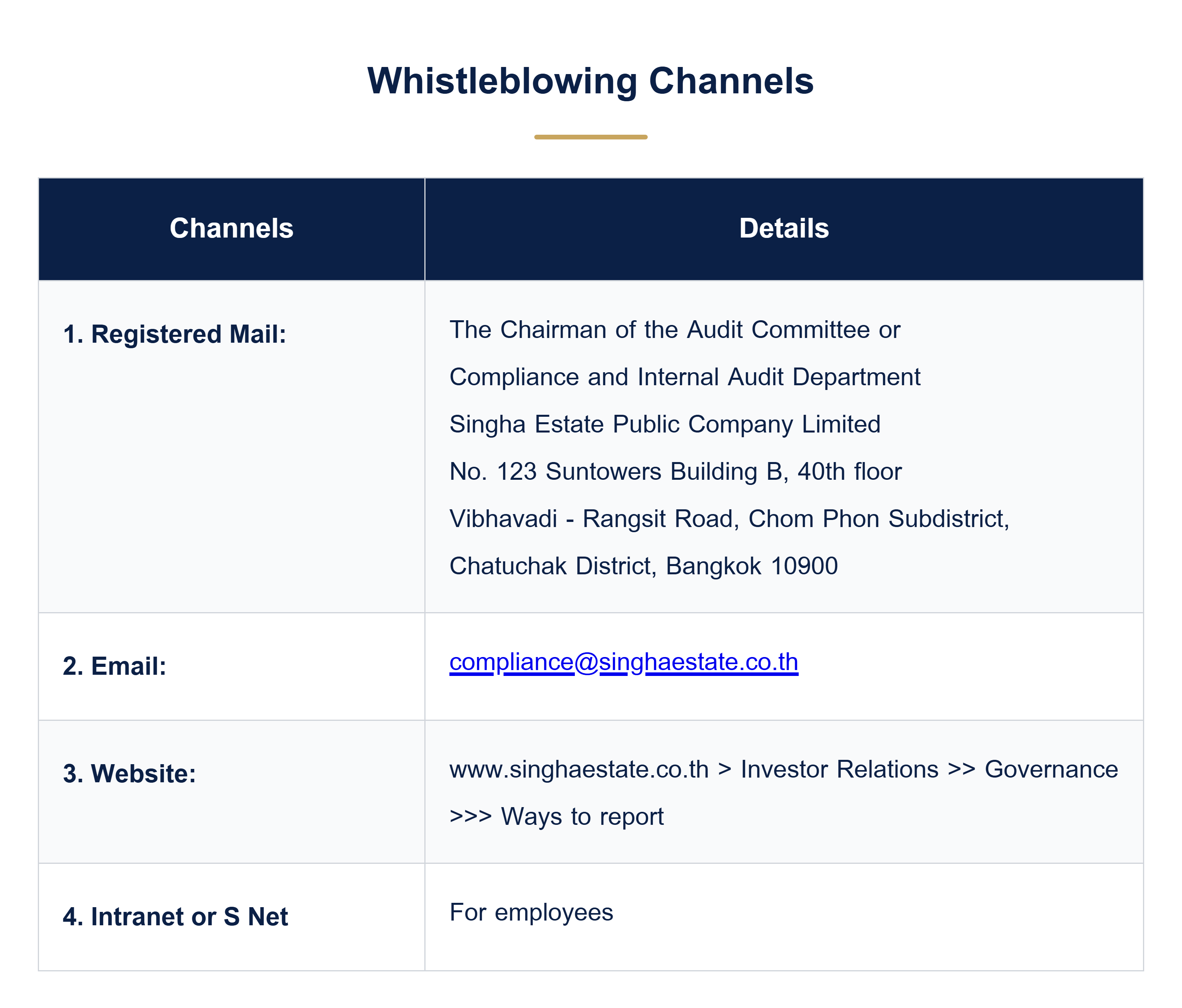
| Other guidelines regarding shareholders and stakeholders | Whistleblowing and Grievance Channels | Suppliers or any stakeholder groups of Singha Estate who wish to seek information, report whistleblowing leads, or file grievances regarding breaches of ethics, improper conduct, misconduct, or actions in contravention of the law, may submit such reports along with supporting evidence through the following contact channels:
| https://investor.singhaestate.co.th/storage/document/governance/procedures-of-supplier-code-of-conduct-en.pdf | 9 |



Code of Conduct
Has a Business Code of Conduct
Yes
Code of Conduct Description
The Company is committed to conducting its the business with transparency, integrity, fiduciary, creditability and orienting the mutual benefit of all stakeholders under the good corporate governance principles. To this end, this Business Code of Conduct is issued as a collection of good governance practices in writing for directors, executives and employees of the Company and subsidiaries, which is in compliance with the applicable laws and regulations as well as the Company’s policies. It is also to outline the scope, standard and behavior that are commonly acceptable for all directors, executives and employees ought to be done in business operations and working, at the same time, to ensure the compatibility with laws and regulations of the competent agencies, which includes the followings:
Board of Directors’ ethics;
Employees’ ethics;
Compliance with applicable laws, rules and regulations;
Anti-fraud and corruption matters;
Interest and conflict of interest;
Usage of inside information and confidential information;
Intellectual property;
Respect for human rights;
Occupational safety, health and environment;
Responsibilities for shareholders and investors;
Responsibilities for customers;
Responsibilities for employees;
Responsibilities for suppliers;
Responsibilities for business competitors;
Responsibilities for creditors;
Responsibilities for communities and society;
Responsibilities for environment;
Measures on whistleblowing; and
Measures on penalty andrepetition of offences prevention.
In this regard, additional details of the Business Code of Conduct can be further studied, which is publicly disclosed on the Company's website.

Code of Conduct Link
https://investor.singhaestate.co.th/storage/document/governance/s-coc-en.pdf
Page Number in Report
1-22
Code of Conduct Practices
| Guideline | Detail | Document Link | Page Number in Report |
|---|---|---|---|
| Prevention of Misuse of Inside Information | The Company firmly adheres to business operations that take into account the maximum benefit of the organization and stakeholders as a whole, under a management system that is transparent and verifiable, by mandating it as a significant duty of directors, executives, and employees at all levels to avoid becoming involved in interests or being related to operations in a manner that may cause a conflict of interest, which would impact the benefits of the Company. In the event that the aforementioned transactions cannot be avoided, the responsible department shall intervene to oversee the execution of those transactions to be clear and transparent, whereby if the aforementioned transaction falls within the scope of a related party transaction according to the notification of the Office of the Securities and Exchange Commission, the Company shall strictly comply with the stipulated criteria and methods. In this regard, personnel must refrain from utilizing opportunities or information received from the performance of duties to seek personal benefits, or operating businesses that compete with the Company, whereby in performing transactions that possess the necessity to be conducted with the Company, they shall be treated as if performing a transaction with an arm’s length basis with general commercial conditions that are reasonable, honest, and in good faith, whereby the person possessing an interest must not participate in the consideration and approval of that transaction. Furthermore, directors, executives, and related persons possess the duty to report their interests on a regular annual basis, and report immediately upon the occurrence of changes on a quarterly basis, to serve as a significant mechanism in preventing conflicts of interest efficiently. Further details regarding the prevention of conflicts of interest are available in Section 8.1.4 "The monitoring of compliance with corporate governance policy and guidelines." | https://investor.singhaestate.co.th/storage/document/governance/s-coc-en.pdf | 8-9 |
| Anti-corruption | The Company is committed to conducting business with transparency, fairness, and legality in every area in which it operates, by encouraging directors, executives, and employees at all levels to possess a consciousness in mutually resisting all forms of corruption, both directly and indirectly. In this regard, the Company strictly formulates practical guidelines to prevent personnel from inappropriately utilizing their authority or demonstrating intent in giving or receiving bribes to government officials and the private sector to seek undue benefits, or to create an unethical competitive advantage. In the event that actions falling within the scope of corruption are witnessed, personnel possess the duty to notify their supervisors or report through the stipulated channels, whereby the Company is prepared to provide fairness and protection to whistleblowers or those who refuse corruption in accordance with the Whistleblowing Policy. Furthermore, the Company also arranges to have risk assessments and the development of internal control systems that comprehensively encompass the processes of finance, accounting, and procurement on a regular basis, along with arranging to have efficient internal audits, to ensure that the operational performance of every department is in alignment with the good corporate governance guidelines and the Business Code of Conduct. The Board of Directors, therefore, formulated the Anti-Fraud and Anti-Corruption Policy to serve as explicit practical guidelines for directors, executives, and employees, to be in alignment with the relevant laws and rules, along with preventing personnel and related persons from committing acts that violate the law, whereby the Company has disclosed the aforementioned policy on the website for the public to be able to access. In addition, the Company also places importance on the communication of the Anti-Fraud and Anti-Corruption Policy to subsidiaries, business partners, and all stakeholder groups through diverse channels, to create understanding and awareness thoroughly throughout the business value chain. In this regard, the Company has mandated the reporting of business ethics and anti-corruption issues to the Board of Directors on a regular basis, to ensure that the corporate governance of the organization proceeds efficiently and sustainably. Additional details of the Anti-Fraud and Anti-Corruption Policy can be further studied, which is publicly disclosed on the Company's website.
Further details regarding the anti-corruption are available in Section 8.1.4 "The monitoring of compliance with corporate governance policy and guidelines." | https://investor.singhaestate.co.th/storage/document/governance/s-coc-en.pdf | 7-8 |
| Whistleblowing and Protection of Whistleblowers | The Company provides opportunities for personnel within S Group, all stakeholder groups, as well as external persons, to be able to notify leads or grievances upon witnessing or being impacted by actions that violate the law, contravene the Business Code of Conduct, or violate significant policies of the organization, such as the Anti-Fraud and Anti-Corruption Policy, the Human Rights Policy, as well as corruption in various forms, including embezzlement, the giving or receiving of bribes, and the window dressing of financial statements. In this regard, the Company has prepared diverse channels to facilitate and maintain the security of information, comprising sending mail to the Chairman of the Audit Committee or the Compliance and Internal Audit Department, sending electronic mail to compliance@singhaestate.co.th, notification through the channel on the Company’s website, including the Intranet system, which is a direct channel for internal personnel. Upon receiving a grievance, the Company shall proceed to verify in accordance with the process systematically under a clear timeframe. In this regard, the Company places paramount importance on anonymity (Anonymity) and the protection of the complainant from retaliation (Non-Retaliation), whereby the whistleblower can choose not to identify themselves, and if clear and sufficient evidence appears, the Company is prepared to proceed with fact-finding with fairness always. In the case where the identity is disclosed, personal data and notification details shall be strictly kept as a secret and restricted for access only by those involved. Furthermore, the Company firmly adheres to providing full protection, to ensure that the whistleblower and those cooperating in the verification must not receive negative impacts, must not be bullied, threatened, transferred, terminated from employment, or receive unfair treatment. Additional details of the Whistleblowing Policy can be further studied, which is publicly disclosed on the Company's website.
Further details regarding the whistleblowing are available in Section 8.1.4 "The monitoring of compliance with corporate governance policy and guidelines." | https://investor.singhaestate.co.th/storage/document/governance/whistleblowing-policy-en.pdf | 1-14 |
| Preventing the Misuse of Inside Information | The Company recognizes the importance of inside information or material news that impacts securities price changes which has not yet been publicly disclosed as being the confidential information of the Company, which directors, executives, and employees must maintain as a secret, and must not take inside information known from the performance of their duties to tell others, or utilize inside information to seek profits or benefits from securities trading inappropriately, or cause the Company to lose benefits whether directly or indirectly. The Board of Directors, therefore, formulated the Securities Trading Policy for Directors, Executives, and Employees to maintain the confidence of shareholders and investors in the Company’s securities. The aforementioned policy prohibits the Company’s personnel from utilizing inside information that has not yet been disclosed to the public to seek benefits in trading the Company’s securities, whether for themselves or other persons, which is in alignment with the laws on securities and exchange, including the relevant notifications of the Office of the Securities and Exchange Commission, by stipulating as a duty for directors, executives, auditors, and employees in departments that can access inside information to have the duty to report changes in the holding of the Company’s securities (including the securities of spouses or cohabitants as husband and wife, and minor children) to the Office of the Securities and Exchange Commission, along with submitting a copy to the Company Secretary to compile and report to the Board of Directors’ meeting on a quarterly basis, by determining the practical guidelines for the aforementioned persons to notify of the trading of the Company’s securities at least 1 day in advance before proceeding with the trade, and prohibiting the trading of securities during the period of 30 days prior to the disclosure of the quarterly and annual financial statements (Blackout Period) and continuing for at least another 24 hours following the disclosure of the aforementioned information to the public, to prevent the risk of the inappropriate use of inside information. In this regard, additional details of the Securities Trading Policy for Directors, Executives, and Employees can be further studied, which is publicly disclosed on the Company's website.
Further details regarding the prevention on inside information usage are available in Section 8.1.4 "The monitoring of compliance with corporate governance policy and guidelines." | https://investor.singhaestate.co.th/storage/document/governance/s-coc-en.pdf | 9-10 |
| Giving or receiving gifts, entertainment, or business entertainment | The Company strictly prohibits directors, executives, and employees from demanding or accepting gifts and entertainment from customers, business partners, or business-related parties for personal benefit, including prohibiting the acceptance of gifts in the form of cash or cash equivalents (such as checks, gold, or securities) in all cases. However, in the event that refusal is impossible, acceptance is permitted solely in the name of S Group, to maintain business etiquette on significant occasions or festivals only, whereby the aforementioned acceptance must be situated on the basis of business necessity, possess an appropriate value, not be extravagant or occur frequently, and must be transparently verifiable that it does not possess the characteristics of a bribe creating an obligation or inappropriately facilitating business benefits. In the aspect of providing gifts and entertainment, the Company prohibits proceeding with an ulterior motive to serve as a bribe or to reciprocate the inappropriate facilitation of business benefits. In this regard, the provision of gifts or entertainment can be executed solely in the name of S Group, in accordance with appropriate occasions or in accordance with etiquette practiced in society, by having to possess a reasonable value, possess necessity, not cause a conflict of interest, and be in alignment with the law, which the aforementioned process must receive written approval from the authorized executive, and must strictly comply with the internal procedures. In this regard, additional details can be further studied in the Anti-Fraud and Anti-Corruption Policy, which is publicly disclosed on the Company's website.
| https://investor.singhaestate.co.th/storage/document/governance/08-s-cg-anti-corruption-en.pdf | 8-9 |
| Compliance with laws, rules and regulations | The Company places paramount importance on business operations under the awareness of and strict compliance with relevant laws, regulations, and rules in every operational area, by mandating that all directors, executives, and employees possess the duty to study, understand, and comply with the laws, rules, regulations, and operational procedures relating to their respective responsibilities, as well as having to render respect towards local customs, traditions, and cultures in every country in which the Company invests. In this regard, personnel must not facilitate, assist, or support any actions that constitute the evasion or violation of the laws and regulations of the organization, and if witnessing actions that fall within the scope of the aforementioned violations, they must proceed to report to their direct supervisors or notify through the whistleblowing channels in accordance with the Company's policy immediately, to serve as a significant mechanism in maintaining the corporate governance standards of the organization to possess transparency and correctness in accordance with the rule of law. | https://investor.singhaestate.co.th/storage/document/governance/s-coc-en.pdf | 6-7 |
| Use and maintenance of data and assets | Directors, executives, and employees must recognize the importance of maintaining the confidential information of the Company that has not yet been publicly disclosed, or information that may impact business operations or securities prices, to prevent errors from carelessness that may cause information leakage, which may lead to massive damage and the loss of the Company's reputation. In this regard, personnel must strictly safekeep and conceal trade secrets, as well as non-disclosable documents and intellectual property which are deemed the rights of the Company, whereby it is prohibited to take secrets or insider information known from the performance of duties to be disclosed for the benefit of oneself or other persons, whether directly or indirectly, including prohibiting the utilization of opportunities or received information to seek personal benefits or to operate businesses competing with the Company, as well as absolutely prohibiting the forgery of data, documents, or reports of the Company. | https://investor.singhaestate.co.th/storage/document/governance/s-coc-en.pdf | 10-11 |
| Anti-competitive | The Company shall treat commercial competitors under the framework of the law and the policies of the Company, by adhering to the principles of fair and honest competition. In this regard, the Company shall conduct itself in accordance with the framework of the rules of good competition, support and promote free trade, by not committing any acts that constitute the reduction or restriction of commercial competition, not taking advantage of or seeking the confidential information of competitors through dishonest, inappropriate, or unlawful methods, as well as not destroying the reputation of commercial competitors through malicious accusations or the commission of any acts that are devoid of truth or unfair. | https://investor.singhaestate.co.th/storage/document/governance/s-coc-en.pdf | 17 |
| Cyber security | S Group places paramount importance on information technology and cybersecurity risk management, by deeming that information systems and all forms of data are significant assets that impact business continuity and the confidence of stakeholders. The Board of Directors, therefore, formulates the Information Security Policy in alignment with international standards, such as the NIST Cybersecurity Framework and ISMS, by encompassing governance in 3 primary dimensions, namely: the creation of awareness for personnel, the determination of explicit threat response processes, and the utilization of modern technology to prevent and deter threats efficiently. The Company continuously elevates risk identification and prevention, whereby in 2025, the predictive analysis system, Vulnerability Priority Rating (VPR), was implemented to prioritize vulnerabilities in conjunction with penetration testing, along with establishing a 24-hour security operation center (SOC) and a cyber incident response team to increase the rigor in overseeing sensitive data and significant work systems, in both public and private cloud formats. Furthermore, there is the improvement of system access standards through multi-factor authentication (MFA) and the utilization of a virtual private network (VPN), coupled with data leak protection measures according to data classification levels, resulting in no disruption of core systems from cyber attacks in 2025, and enabling the significant reduction of risk from email phishing simulations. In this regard, additional information can be further studied in the Information Security Policy, which is publicly disclosed on the Company's website.
| https://investor.singhaestate.co.th/storage/document/governance/information-technology-policy-en.pdf | 1-4 |
| Environmental management | The Company recognizes the importance of the mitigation of environmental impacts that may arise from the business operation processes, and deems it as one of the significant missions of the organization in driving the business towards sustainability, therefore having formulated explicit practical guidelines in environmental management, by focusing on the promotion, protection, and restoration of natural resources and ecosystems, coupled with the cultivation of consciousness and awareness in environmental preservation for personnel at all levels. Furthermore, the Company is committed to promoting the utilization of resources efficiently and with maximum benefit, through the invention and integration of energy conservation innovations that are environmentally friendly into business operations concretely, to mutually serve as a part in the caretaking and preservation of the environment in the long term. | https://investor.singhaestate.co.th/storage/document/governance/s-coc-en.pdf | 18 |
| Human rights | The Company firmly adheres to business operations in accordance with human rights principles at both the national and international levels, by focusing on treating all stakeholder groups with equality and free from discrimination in all dimensions, whether it be differences in race, skin color, origin, religion, gender, age, or disability, along with strictly monitoring and overseeing to ensure the organization does not become involved in human rights violations or the utilization of illegal labor in all forms. Furthermore, the Company has formulated practical guidelines encompassing the promotion of knowledge and understanding regarding human rights to employees for integration into operational performance, the respect for diversity and the rights to freedom of thought, the rigorous protection of personal data by not disclosing it to the public if consent is not obtained, as well as arranging to have grievance receiving channels to protect and provide assistance to employees who may have their rights violated or be treated unfairly, which reflects the commitment to creating an environment that genuinely respects human dignity. In addition, the Company places paramount importance on the respect for human rights in business operations, therefore having formulated the Human Rights Policy, to serve as explicit practical guidelines and prevent human rights violations throughout the value chain, possessing significant operational guidelines as follows:
In this regard, additional details can be further studied in the Human Rights Policy, which is publicly disclosed on the Company's website.
In this respect, to demonstrate the intent of the Company that continuously places importance on the respect for human rights, in 2025, the Board of Directors formulated the Human Resources Management Policy, by firmly adhering to the principles of respecting fundamental human rights, and aiming to avoid involvement in human rights violations in all forms, whereby significant practical guidelines to care for personnel have been formulated as follows:
Additional details of the Human Resource Management Policy can be further studied, which is publicly disclosed on the Company's website.
| https://investor.singhaestate.co.th/storage/document/governance/s-coc-en.pdf | 11-12 |
| Occupational health and safety | The Company places paramount importance on the elevation of the quality of life and welfare of personnel, by being committed to managing occupational health, safety, and the working environment to possess standards and continuous development, under the practical guidelines mandating that all directors, executives, and employees must strictly adhere to and comply with the laws and stipulations. In this regard, the Company has sufficiently allocated resources to drive measures in the comprehensive control and prevention of losses from accidents, fires, as well as illnesses from operational performance, coupled with communication to create the body of knowledge and cultivate safety consciousness to be molded into the daily lifestyle of employees, as well as arranging to have the consistent review and drilling of emergency response plans, to create a safe working environment free from danger to health, property, and the environment sustainably. Therefore, to achieve the aforementioned targets, the Company has formulated the Policy on Safety, Occupational Health, and Environment, possessing significant essence as follows:
In this regard, additional information can be further studied in Policy on Safety, Occupational Health, and Environment, which is publicly disclosed on the Company's website.
| https://investor.singhaestate.co.th/storage/document/governance/s-coc-en.pdf | 12-13 |








Promoting Compliance with the Code of Conduct
Promotes Compliance by Directors, Executives and Employees
Yes
Description
The Company places importance on the continuous cultivation and promotion of personnel at all levels to firmly adhere to compliance with the Business Code of Conduct, to serve as a significant foundation in driving the organization in accordance with corporate governance principles and sustainable growth, whereby the Company has conducted the following significant matters:
Communication and the Creation of Awareness: The Company focuses on communication through diverse and comprehensive channels, in both online and offline formats, for all directors, executives, and employees within S Group to acknowledge, through various channels such as announcements in the Company's internal communication system, emails, the LINE application, and learning media posted for employees to be able to access and study, under learning media in various significant topics, to create an understanding of the Corporate Governance Policy, the Business Code of Conduct, and the Anti-Fraud and Anti-Corruption Policy, along with grievance reporting channels, to stimulate personnel to recognize roles and responsibilities and be able to apply ethical principles in daily operational performance concretely. In this regard, in the past year, the Board of Directors, executives, and employees of the Company received communication to create awareness regarding the Business Code of Conduct completely, accounted for as 100 percent. Furthermore, in 2025, the Company also announced and strictly emphasized the “Refraining from Accepting Gifts” (No Gift Policy) practical guideline during the New Year festival and every festival throughout the year.
Training and the Evaluation of Knowledge and Understanding: The Company arranges to have training to enhance knowledge in business ethics, including measures against the giving or receiving of bribes and corruption consistently, by integrating the content into the new employee orientation course and the online learning system, to create correct knowledge and understanding regarding the intent, practical guidelines, and penalties in the event of a violation. Furthermore, the Company mandated the evaluation of results of knowledge and understanding regarding the Corporate Governance Policy, the Business Code of Conduct, and the Anti-Fraud and Anti-Corruption Policy on a regular annual basis, encompassing employees, business partners, and business alliances, whereby the latest evaluation in 2025 proceeded through diverse channels including the online system, to facilitate the access to information, whereby from the operational performance results, it was found that 100 percent of the directors, executives, and employees of the Company received communication, attended the training, and passed the aforementioned evaluation of knowledge and understanding completely.
Monitoring and Evaluation of Compliance with the Business Code of Conduct: The directors, executives, and employees of the Company participated in performing the compliance evaluation for the Corporate Governance Policy, the Business Code of Conduct Manual, and the Anti-Corruption Policy for the year 2025 through electronic forms in the proportion of 100 percent of the total number of directors, executives, and employees of the Company.
Anti-Corruption Networks & Projects
Introduction
With the firm intent of the Company that aims to drive the business to grow sustainably upon the foundation of transparency and advanced corporate governance principles, on 30 September 2025, the Company achieved success in anti-corruption operations, by being officially certified as a member of the Thai Private Sector Collective Action Against Corruption (CAC) for the first time.
Joined or Declared Intent to Join Anti-Corruption Networks
Yes
Networks & Projects Joined
| Network / Project | CAC Certified |
|---|---|
| Thai Private Sector Collective Action Against Corruption: CAC | Y |
| United Nations Global Compact (UNGC) | |
| Participation of anti-Corruption networks and initiatives |
Material Changes & Developments in CG
Reviewed the CG Policy or Board Charter in the Past Year
Yes
Material Changes or Developments in the Past Year
Yes
Policy Review — Description
Developments of the Company's Significant Policies
Formulation of the Human Resource Management Policy: Prepared to serve as an operational framework in personnel management systematically, transparently, and equally, encompassing from the recruitment process, employment, development, performance evaluation, provision of remuneration and welfare, as well as the creation of a safe working environment, by placing importance on 2 primary issues to align with international standards, namely: (1) Fair practices in employment and non-discrimination, and (2) The prevention and management of bullying (Bullying) and harassment (Harassment) behaviors, which are the significant heart of respecting human rights in the workplace.
Amendment to Policies
Sustainable Development Policy and Human Rights Policy: Improving the content by adding guidelines in creating value for society and creating occupational opportunities in the community, to ensure the policies possess modernity, and to possess alignment with the laws, notifications, regulations, and international standards on sustainability.
Whistleblowing Policy: Expanding the scope of persons possessing the right to complain to encompass both internal and external persons of the organization, as well as those acting on behalf of the Group of Companies, along with elevating measures to protect complainants from retaliation (Non-Retaliation), such as the prohibition of bullying, threatening, or unfair treatment regarding employment. Furthermore, the Company also supports whistleblowing with anonymity, by primarily considering the sufficiency of evidence, to provide a guarantee in the full protection of the complainant's rights.
Procurement Policy and Supplier Code of Conduct: Improving the content to align with current situations, legal provisions, and international standards, along with elevating the intensity in human rights issues.
Policy on Governance and Management of Subsidiaries and Associate Companies: Amending the criteria regarding the nomination of representative directors.
Safety, Occupational Health, and Environment Policy and Business Continuity Management Policy: Improving to align with current situations, laws, notifications, and relevant regulations.
Annual Policy Review
To ensure the corporate governance mechanisms constantly possess rigor, the Company reviewed
9 significant policies, comprising: (1) Personal Data Protection Policy, (2) Information Security Policy,
(3) Corporate Governance Policy, (4) Business Code of Conduct, (5) AntpAnti-Corruption Policy,
(6) Related Party Transaction Policy, (7) Securities Trading Policy for Directors, Executives, and Employees, (8) Information Disclosure Policy, and (9) Enterprise Risk Management Policy.
Developments of the Board of Directors' Charter and Sub-Committee Charters
Amendment to Charters
Nomination and Remuneration Committee Charter: Amending the section relating to the nomination of representative directors in subsidiaries and associate companies, to align with current practical guidelines, by mandating the Chief Executive Officer of the Company to be nominated for appointment as a representative director in subsidiaries that are listed companies by position.
Corporate Governance and Sustainable Development Committee Charter: Mandating the Chief Executive Officer to possess the duty to oversee climate change risks (Climate Change Risk) in every step of operational performance, under the governance of the Corporate Governance and Sustainable Development Committee.
Annual Charter Review
The Company proceeded to review the charters of 4 sub-committees, namely: (1) Board of Directors Charter, (2) Risk Management Committee Charter, (3) Audit Committee Charter, and (4) Executive Committee Charter.
Communication
The Company places importance on the communication of the Business Code of Conduct Manual, Corporate Governance Policy, Securities Trading Policy, and Anti-Corruption Policy for all directors, executives, and employees to acknowledge thoroughly, through diverse channels both online and offline, such as the orientation for new directors and employees, and announcements through the internal communication system (Intranet).
In 2025, the directors, executives, and employees of the Company, accounted for in the proportion of 100 percent, completed the compliance evaluation for the Corporate Governance Policy, the Business Code of Conduct, and the Anti-Fraud and Anti-Corruption Policy through electronic forms completely.
Training
Elevation of the Corporate Culture through the ESG E-Learning System: Developing and launching an online training project to cultivate consciousness in business ethics, encompassing the issues of conflict of interest prevention, insider trading prevention (Insider Trading), anti-corruption, and whistleblowing mechanisms, whereby executives and employees attended and passed the evaluation at 100%.
Training to Develop the Potential of the Board of Directors and Senior Executives: Organizing internal training by receiving the honor from Mrs. Warunee Preadanon, an expert in corporate governance, to lecture on the topic “Anti-Corruption: Trust-Building Through Transparency” (Anti-Corruption and the Identification of Risk Points) and the topic “ESG Risks Oversight: Key Mechanism for Strengthening Corporate Defenses” (ESG Risk Management to serve as a Business Defense Shield).
Training to Elevate the Potential of Business Partners: Organizing a special training course, “Human Rights & Business Ethics” (Human Rights and Business Ethics), for business partners for the year 2025, by focusing on the creation of awareness and understanding in universal human rights issues, such as fair labor practices, the promotion of equality and non-discrimination, the prevention of the use of child labor and forced labor, as well as arranging to have efficient complaint-receiving mechanisms. In this regard, the aforementioned training placed importance on the group of small and medium-sized enterprise (SMEs) business partners that possess a commitment to development but still lack a concrete management system, whereby there were business partners demonstrating interest in attending the training totaling 9 companies, which the success in organizing the training on this occasion not only elevated the body of knowledge and operations in the social aspect (Social Aspect) of the business partners to align with international standards, but also constitutes the creation of a network of responsible business alliances, to mutually create balanced and sustainable growth henceforth.
Implements the CG Code for Listed Companies
No
CG Code — Description
The Company places paramount importance on compliance with the principles of good corporate governance for listed companies, in accordance with the guidelines of the Stock Exchange of Thailand and the Office of the Securities and Exchange Commission. In this regard, in 2025, the Board of Directors considered and reviewed the application of the Corporate Governance Code for listed companies (CG Code), including the Corporate Governance Report of Thai Listed Companies assessment form (CGR Checklist), to be applied to possess appropriateness to the business context of the organization, whereby it was found that the Company had already applied the majority of the practical principles concretely. In addition, the Company also proceeded to review the aforementioned policy consistently, to ensure it possesses modernity and appropriateness to current circumstances, whereby the Company is committed to developing and elevating compliance with good corporate governance principles to be more comprehensively complete sequentially in the future. However, at present, there remain certain practical principles regarding good corporate governance that the Company is still unable to apply entirely, which possess supporting details and reasons as follows:
Criteria on CG Code / CGR Checklist | Reason / Explanation |
Independent director serves more than 9 years | In case where an independent director has served his/her term of office exceeding 9 consecutive years, the Board of Directors, through endorsement and consideration of the Nomination and Remuneration Committee, shall consider the knowledge, experience and competency of such independent director in terms of necessity and benefits to the Company’s business operations, as well as his/her performance and independency on opinion, and propose the re-election as a director for another term. |
All members of the Nomination and Remuneration Committee shall be independent directors. | According to the charter of the Nomination and Remuneration Committee, the Nomination and Remuneration Committee shall consist of at least than 3 directors, with at least half of them being independent directors, and none of the members is the same person with the Chairman of the Board of Directors or Chief Executive Officer. As of 31 December 2025 the Company’s Nomination and Remuneration Committee consisted of 3 members, with 2 members being independent directors, which exceeded one-half of the total member of the Nomination and Remuneration Committee as stipulated in its charter. However, the Nomination and Remuneration Committee was able to perform its duties with full ability and independence as assigned. Based on the Nomination and Remuneration Committee’s past performance, it was evident that their actions were in the best interests of the Company and its shareholders. |
The Corporate Governance and Sustainable Development Committee comprises more than 50% of independent directors and the Chairman of the Corporate Governance and Sustainable Development Committee must be the independent director | According to the charter of the Corporate Governance and Sustainable Development Committee, the Corporate Governance and Sustainable Development Committee shall consist of at least 3 directors and the Chairman of the Corporate Governance and Sustainable Development Committee shall not be the same person with the Chairman of the Board of Directors or Chief Executive Officer. As of 31 December 2025, the Company’s Corporate Governance and Sustainable Development Committee comprised of 3 directors and the Chairman of the Corporate Governance and Sustainable Development Committee was not the same person as the Chairman of the Board of Directors and Chief Executive Officer as stipulated in its charter. However, the Corporate Governance and Sustainable Development Committee was able to perform its duties with full ability and independence as assigned, including checks and balances to ensure transparency and efficiency of the Company’s management and administration, and to safeguard the best interests of the Company and its shareholders. |
Other CG Performance & Outcomes